Follow Us on Google
By John Ogunsemore
The Inter-Party Advisory Council (IPAC) has demanded the amendment of controversial provisions in the newly enacted Electoral Act 2026.
The council warned that the 2027 general election could be boycotted by political parties in the country unless the provisions were amended.
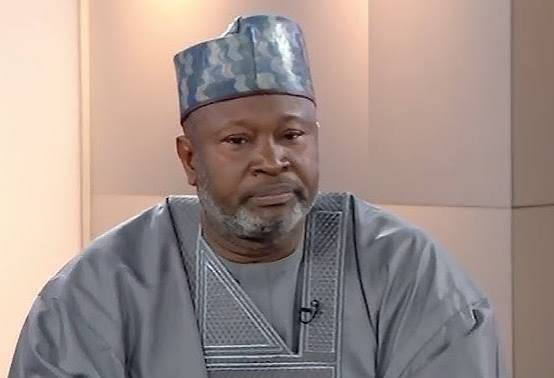
IPAC National Chairman, Yusuf Dantalle spoke in a media chat on Thursday after an emergency meeting with leaders and representatives of political parties at the council’s National Secretariat in Abuja.
Dantalle observed that while the Electoral Act 2026 was intended to correct anomalies in the Electoral Act 2022, some of its provisions could undermine internal party democracy and weaken the credibility of the electoral process.
According to him, the council has resolved to mobilise parties nationwide to resist the provisions if the National Assembly fails to amend them.
“While appreciating the considerable effort and energy invested in the enactment of the new Electoral Act 2026, the Council notes with concern that certain provisions in the Act have introduced new issues that are not conducive to the development of political parties, particularly in view of IPAC’s guiding principle of ‘Deepening Democracy in Nigeria.’
“Unfortunately, there are clear indications that some aspects of the new Electoral Act 2026 undermine this fundamental objective and are inconsistent with the spirit of multiparty democracy,” he said.
Dantalle said of particular concern was Section 84(2) of the Act, which excludes the use of indirect primaries by political parties.
Other News
“It is an established principle, affirmed by several judicial pronouncements, that political parties possess certain fundamental rights in the administration of their internal affairs. However, the new Electoral Act 2026 has curtailed this right through Section 84(2), which excludes indirect primaries.
“IPAC believes that the exclusion of indirect primaries constitutes a violation of the constitutional right of political parties to regulate their internal affairs, including determining the method of nominating their candidates for elections,” he stated.
Dantalle also faulted the decision to remove mandatory electronic transmission of election results, noting that the absence of such a provision contributed to controversies that trailed the 2023 Nigerian presidential election.
The IPAC Chairman said, “The mandatory electronic transmission of election results after announcement at polling units must be restored. Its absence was a major flaw during the 2023 presidential election, and such a lapse must not be allowed to undermine future elections, including the 2027 General Elections.
“The requirement that members of political parties must possess and upload their National Identification Number (NIN) should be expunged. This provision will disenfranchise a significant number of Nigerians who do not have access to NIN and constitutes a violation of their rights under Article 13 of the African Charter on Human and Peoples’ Rights.”
The umbrella body of political parties also called for the expungement of Sections 77(4–7), stronger penalties for vote buying, and the restoration of forged certificates as grounds for election petitions.
Dantalle said the National Assembly must do the needful or the body would escalate the issue to the international community.
“In the present circumstances, IPAC cannot fold its arms. The time to act is now. Accordingly, IPAC has resolved to draw the attention of Nigerians and the international community, including the United Nations (UN), the European Union (EU), ECOWAS, the US and UK embassies and Nigerians in the diaspora to these concerns.
“Should the National Assembly fail to address these anomalies through urgent amendments to the Act, political parties under the umbrella of IPAC will be compelled to boycott the 2027 General Elections. In such circumstances, the outcome of the elections will be rejected as illegitimate and will not be recognised by the political parties,” he stressed.