Follow Us on Google


Interswitch Group and its partner banks are advancing the deployment of payment tokenisation in Nigeria, introducing technology designed to replace sensitive card details with secure digital tokens and enable contactless payments through compatible smartphones and other connected devices.
The initiative marks a new phase in the evolution of Nigeria’s digital payments infrastructure, with the technology expected to support faster point-of-sale transactions, improve the protection of payment credentials and expand the use of digital wallets across the financial ecosystem.
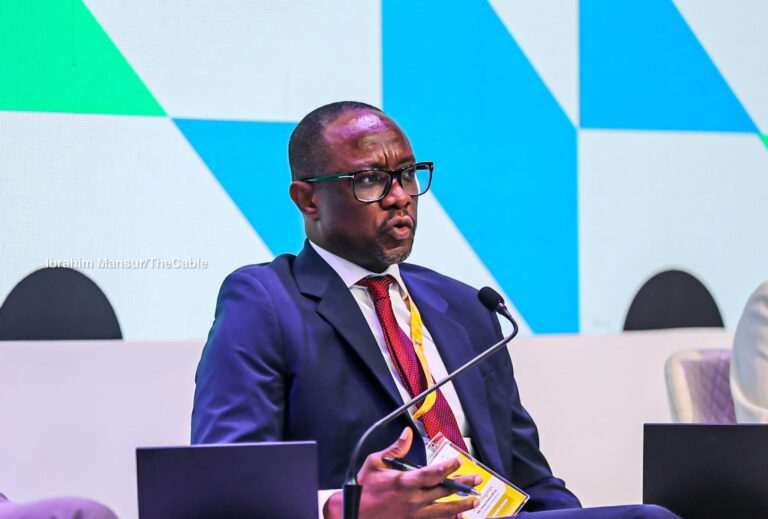
Speaking at the premiere of Interswitch’s tokenisation documentary in Lagos, the company’s Managing Director of Payments, Switching and Processing, Akeem Lawal, described tokenisation as a significant technological shift comparable to the introduction of interoperable ATM switching, card payments and online payment infrastructure.
He said the technology would change how payment credentials are stored, transmitted and used during transactions, while reducing the exposure of customers’ original card details.
Tokenisation replaces sensitive payment information, such as a card number, with a substitute identifier known as a token. The token can be configured for a particular device, merchant or payment environment, depending on the implementation, reducing the usefulness of compromised payment credentials.
Unlike conventional card transactions in which sensitive details may be entered manually, tokenised payments allow customers to authenticate themselves on compatible devices and tap payment terminals to complete transactions.
Lawal said the technology could also simplify online payments by reducing the need for customers to repeatedly enter card details, supporting more streamlined checkout experiences.
He noted that the technology incorporates encryption, device security and authentication mechanisms to strengthen protection around payment transactions.
However, he acknowledged that merchants would need to understand the security architecture and dispute-management procedures associated with contactless payments to build confidence in the system.
A major component of the initiative is the integration of tokenised payment credentials with supported mobile devices and digital wallets.
Responding to questions about whether customers would need new smartphones or separate applications, Lawal explained that the technology could be delivered through different channels, including supported digital wallets and participating banks’ applications.
These channels include Apple Pay and Google Pay, where available and supported, as well as issuer-led solutions through which banks can offer tokenised payment functionality to their customers.
The approach is intended to give participating financial institutions different options for deploying the technology while maintaining the necessary security controls.
Tokenisation also creates opportunities to extend payments beyond physical debit cards and smartphones to compatible smartwatches, payment rings and other connected devices.
The broader technological objective is to make payment credentials available across supported devices without requiring customers to carry their physical cards for every transaction.
Interswitch said collaboration with banks, technology providers and device manufacturers would be important to expanding the ecosystem.
The partner banks said the technology could support the next stage of digital banking by making contactless payments more accessible to customers and merchants.
Executive Director of Wema Bank, Tunde Mabawonku, said the growing dependence on smartphones was creating opportunities for new payment experiences.
He highlighted the potential for customers to use compatible devices for payments at retail outlets and public transportation systems, including BRT services and Lagos rail lines, subject to the availability of supporting infrastructure.
Other News
Mabawonku said Interswitch’s experience in connecting financial institutions and supporting interoperable payments would be important to scaling adoption.
He added that more banks would need to join the initiative to extend acceptance and make contactless payments usable across a wider range of locations.
GTBank’s representative, Jimmy Banjoko, said the technology was at an early stage of market adoption but expressed optimism that increasing familiarity with mobile payments would support its growth.
He said the industry was witnessing a gradual shift towards contactless transactions, creating an opportunity for tokenisation to become a mainstream payment option.
For Verve International, the initiative represents an expansion of its digital payment capabilities.
Its Managing Director, Vincent Ogbunude, said tokenisation could reduce transaction friction by allowing customers to authenticate payments through supported devices rather than repeatedly presenting physical cards or entering payment details.
He said the technology could also help position Verve to participate more actively in the development of digital payment experiences aligned with global industry trends.
Digital Business Executive at ProvidusUnity Bank, Elliott Kayode Sangoleye, said Providus Bank had begun exploring tokenisation following changes in consumer behaviour during the COVID-19 pandemic.
He said the bank’s approach extended beyond adding payment cards to smartphones to include other compatible devices, such as smartwatches and payment rings.
According to him, the next stage would involve extending the technology to more customers and merchants, increasing the number of locations where tokenised credentials could be used.
The initiative reflects a broader shift towards device-based payments, in which the payment credential is digitally provisioned to a compatible device and used through an approved payment service.
Although tokenisation reduces the exposure of original card details, it does not eliminate every form of payment fraud.
The effectiveness of the technology depends on the implementation of token provisioning, device authentication, encryption, transaction monitoring and controls against unauthorised access.
Fraud involving compromised devices, stolen credentials, social engineering or account takeover may still occur, making effective fraud detection and customer dispute resolution essential.
Lawal said established card-network frameworks provide rules for processing tokenised transactions and managing disputes involving customers and merchants.
The industry will nevertheless need to communicate clearly how complaints are investigated, how liability is determined and when customers may qualify for reimbursement following unauthorised transactions.
Beyond security, widespread adoption will depend on interoperability, merchant acceptance, compatibility with devices and payment terminals, and participation by banks across the ecosystem.
The technology also presents an opportunity for Nigerian developers and financial technology companies to build new services on top of payment infrastructure that supports secure digital credentials.
As Interswitch and its partners expand the initiative, the focus will be on moving tokenisation from an emerging payment capability to a widely supported component of Nigeria’s digital financial infrastructure.