Follow Us on Google

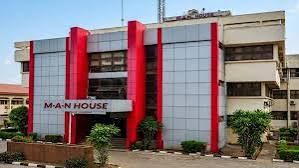
Despite government reforms and a gradual slowdown in inflation, Nigeria’s manufacturers are still struggling to stay afloat as high production costs, expensive credit, unstable electricity supply, foreign exchange pressures and weak consumer demand continue to undermine their operations.
While recent economic indicators suggest that some of the country’s macroeconomic challenges are easing, the benefits have yet to translate into meaningful relief for many businesses battling rising operating expenses and shrinking profit margins. For manufacturers, the challenge is no longer just surviving economic reforms but finding the breathing space to sustain production, protect jobs, remain competitive and invest in expansion.
Energy costs remain a major burden, as inadequate electricity supply has forced manufacturers to depend heavily on diesel and gas-powered generators. The Manufacturers Association of Nigeria (MAN) reported that manufacturers spent N1.35 trillion on alternative energy in 2025. High interest rates have further constrained businesses’ access to affordable credit, limiting their ability to acquire machinery, purchase raw materials and expand production.
Foreign exchange instability has also increased the cost of imported machinery, chemicals, spare parts and intermediate goods, making production planning difficult. At the same time, weak consumer purchasing power has reduced demand for manufactured products, leaving businesses caught between rising production costs and limited ability to increase prices.
On the other hand, multiple taxation, regulatory charges and levies imposed by different levels of government have added to the burden, while inadequate infrastructure, insecurity and inconsistent supplies of agricultural raw materials continue to weaken local sourcing and industrial supply chains.
The situation highlights the gap between macroeconomic reforms and actual improvements in factory-level performance. Although initiatives such as Executive Orders 003 and 005 and the Nigeria First Policy are designed to promote local content and prioritise Nigerian-made products in public procurement, concerns persist over their implementation and enforcement. For reforms to deliver meaningful benefits to manufacturers, the government must address energy costs, improve access to affordable financing, ensure foreign exchange stability, strengthen local supply chains and eliminate overlapping taxes and regulatory charges. Without these complementary measures, local manufacturers will continue to struggle despite the broader reform agenda.
The cumulative effect of these challenges is that macroeconomic reforms have yet to produce the desired improvement in factory-level performance.
This is reflected in MAN’s Q2 2026 Manufacturers CEO Confidence Index, which showed that aggregate business confidence improved to 52.1 points from 48.7 points in the preceding period. Despite the improvement, manufacturers continued to express concerns about financing, infrastructure, foreign exchange access and the overall operating environment.
Against this backdrop, stakeholders have called for a shift from macroeconomic stabilisation towards deliberate interventions that directly address the constraints confronting businesses and stimulate industrial recovery.
Speaking on the challenges, Project Implementation Team Lead, Calabar and Gulf of Guinea Municipal and Trade Centre Limited By Guarantee, David Etim, acknowledged the hardship and frustration Nigerians had experienced since the introduction of the economic reforms, but argued that the administration had concentrated on addressing deep-rooted macroeconomic distortions and was now better positioned to focus on delivering tangible benefits to citizens and businesses.
He identified Nigeria’s dependence on imported intermediate and processed raw materials, despite its considerable agricultural resources, as one of the major weaknesses undermining local manufacturing.
Using cassava as an example, Etim said the crop had about 480 potential derivatives, including sweeteners, ethanol and starch, which could serve the pharmaceutical, food, energy and other industries.
According to him, Nigeria largely exports cassava in minimally processed forms, leaving other countries to undertake further processing and capture much of the value addition.
He explained that cassava tubers, because of their short shelf life, are quickly dehydrated and exported as chips. The chips are subsequently rehydrated, processed into flour and converted into industrial derivatives in other countries.
Consequently, Nigerian pharmaceutical and manufacturing companies are forced to import these derivatives at significantly higher costs, exposing them to foreign exchange volatility, international shipping expenses and additional logistics charges.
“All that value chain is impacted by the local manufacturer who is importing his raw material,” he said.
Etim noted that countries benefiting from Nigeria’s exported raw materials had developed stable economic environments that allowed industries to operate with long-term investment horizons of between 25 and 30 years.
Etim called for greater investment in local processing and value addition, arguing that developing domestic industrial value chains would reduce import dependence, conserve foreign exchange and improve the competitiveness of Nigerian manufacturers.
Comparing macroeconomic reforms to land preparation, he said the government must first remove structural obstacles before laying the foundation for sustainable economic growth.
He argued that macroeconomic stabilisation and microeconomic interventions must follow an orderly process, noting that the administration had spent much of its first term addressing structural economic problems.
However, he identified weaknesses in fiscal implementation, public service delivery, insecurity and infrastructure sabotage as factors preventing the benefits of reforms from reaching ordinary Nigerians and businesses.
While acknowledging that citizens’ frustration was understandable, particularly given decades of unfulfilled government promises, Etim maintained that the reform process should not be abandoned midway.
He also called for a smaller and more efficient government, expressing concern over wastage and inefficiency in the public service.
“Because of our culture of profligacy in Nigeria, the assumption is you give $100 for a project, $85 goes into the bureaucracy. Only $15 gets applied on the project. So the project cannot be delivered,” he said.
He cited instances of government programmes continuing to receive funding despite poor implementation, including school feeding activities during holidays, describing such practices as evidence of institutional waste and corruption.
According to him, the government must improve institutional efficiency and ensure that public resources are directed towards projects and programmes capable of delivering measurable economic and social benefits.
Using the analogy of a vehicle undergoing repairs, Etim explained that while citizens expect immediate results, the government needs to address the underlying weaknesses in the system for the economy to function effectively.
“The President is the only man holding the steering. But like in every machine, the clutch, the brake, the carburettor, the engine, the pistons inside, all these things must work together for the car to run well,” he said.
On fiscal federalism, he urged Nigerians to recognise the respective responsibilities of the three tiers of government, noting that state and local governments also had significant responsibilities in providing essential services such as primary healthcare, education, municipal water supply, sanitation and community roads.
He argued that poor service delivery at these levels of government had contributed to the difficulties experienced by citizens.
Etim further called for greater citizen participation in governance, insisting that accountability should begin at the community level with councillors and local government chairmen before extending to state and federal representatives.
“We are too passive as citizens in this country. We need to be much more active in governance and take an interest in the governance that affects our lives,” he said.
He maintained that democracy did not begin in Abuja but in local communities, urging Nigerians to demand accountability and better service delivery from elected representatives at every level of government.
Stakeholders believe that beyond stabilising the macroeconomic environment, the government must address the structural constraints facing manufacturers through reliable energy supply, affordable financing, stronger local supply chains, improved infrastructure and effective implementation of local content policies.
Without these interventions, the gains expected from economic reforms may remain largely disconnected from the realities of businesses struggling to keep their factories running and products affordable.
Etim also stressed the need for the government to ensure policy consistency and sustain the trajectory of ongoing reforms, noting that this would significantly benefit local manufacturing and industrialisation.
He said consistent government policies would provide businesses with the stability and predictability required to plan investments, expand production and improve competitiveness.
According to him, professionalising the public service, improving governance efficiency and maintaining consistent economic policies are critical to creating an enabling environment for businesses to thrive.
He added that an efficient public service would not only improve citizens’ satisfaction with government but also strengthen the private sector, which depends on effective public institutions to operate and grow.
For Imokhai Ehimigbai, member of the Manufacturers Association of Nigeria Exports Group (MANEG), there are so many challenges the Nigerian manufacturers contend with.
“Chiefly among them is the issue of Power or Energy. Power has collapsed countless times and the government is not doing anything about it.
The CNG that was promised to be everywhere by October 1 is still not available.
“High cost of funds which is between 27 and 30 percent with a short gestation period of 12 months is also there.
“High exchange rate is another problem. A lot of Nigerian manufacturers depend on importation of raw materials. So the cost of the US Dollar at 1400 is also a problem.
Also the removal of the petrol subsidy in 2023 sharply increased the price of petrol which has also sharply increased the cost of transportation. However, one may ask “how has the government managed the several monies coming in as a result of the removal. And how about the several monies borrowed to cushion the subsidy removal, what have politicians done with it.”