Follow Us on Google
From Fred Ezeh, Abuja
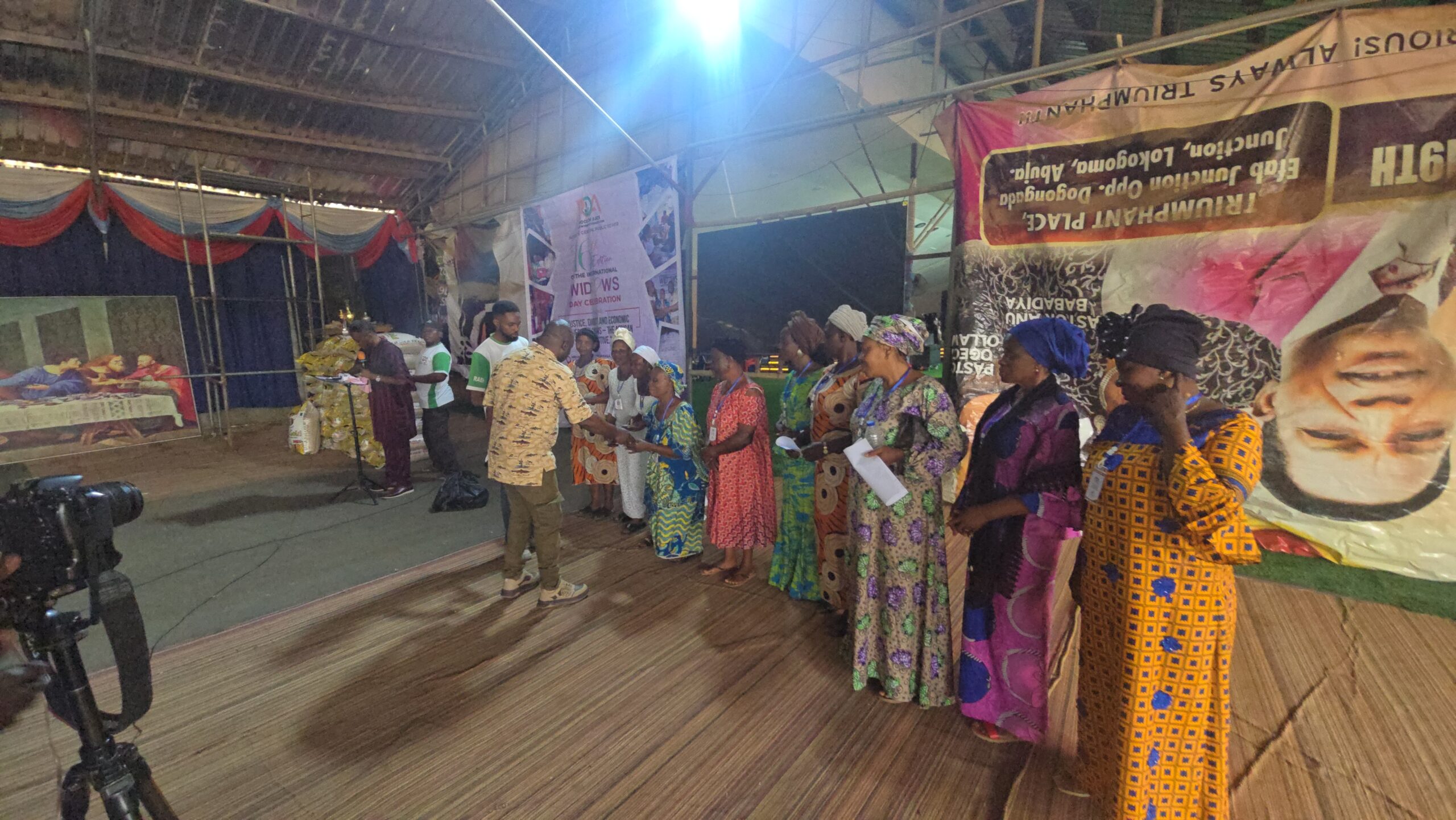
No fewer than 106 widows received cash grants of N30,000 each and food items in Abuja on Tuesday as part of efforts to ease their economic burden and support their livelihoods amid worsening economic conditions.
The intervention was organised by Rock of Ages Foundation, Abuja, to commemorate the 2026 International Widows Day, bringing together nearly 600 widows from different parts of the Federal Capital Territory (FCT).
Founder of the foundation, Rev. Ignatius Newman, said the initiative was designed to address the immediate needs of widows, many of whom struggle daily to feed their families, pay school fees and meet healthcare expenses following the loss of their husbands.
He explained that apart from the cash support, the beneficiaries also received food items to help sustain their households. “The situation in the country today is difficult. These women need food in their homes, they need to take care of their children and they need cash to support themselves. That is why we provide both financial assistance and food items,” he said.
Newman disclosed that he had sustained the intervention largely from personal and business resources despite unsuccessful attempts to secure partnerships with government agencies and development organisations.
According to him, the major challenge facing widows remains the responsibility of caring for their children in the absence of their spouses.
“Many of them go hungry just to ensure their children are fed. Some are struggling with school fees, rent and healthcare.
“We often encourage women to engage in one economic activity or another so they have something to fall back on during difficult times,” she said.
He added that the Foundation conducts regular medical screenings for widows after discovering that many suffer from untreated hypertension, diabetes and other stress-related ailments.
Newman also revealed that the organisation works closely with the International Federation of Women Lawyers (FIDA) to assist widows facing property disputes and inheritance-related challenges.
He cited several cases in which widows were unlawfully dispossessed of their homes and assets by relatives of their late husbands. “We have seen situations where widows lost their homes, lands and other properties. But through our partnership with FIDA, many of them have received legal support and justice,” he said.
Newman appealed to governments at all levels, religious bodies and members of the public to support widows and treat them with dignity and compassion.
He stressed that widowhood was not a crime or a curse but a reality that could affect any family, urging Nigerians to extend kindness and practical support to widows in their communities.
“Don’t look down on widows. Show them kindness. Even a small gesture can make a big difference in their lives,”he said.
Speaking at the event, guest speaker, Obi Kelvin Fredrick, lamented the widespread abuse, discrimination and economic hardship suffered by widows across Nigeria and other African countries.
Delivering a lecture titled, ‘Justice, Dignity and Economic Power for Widows: The African Perspective,’ Fredrick said widowhood often exposes women to poverty, isolation, harmful cultural practices and denial of inheritance rights.
“In many communities, a husband’s death triggers the loss of basic human rights. Widows face eviction, property grabbing and harmful traditional practices. Their grief should not be compounded by destitution and injustice,” he said.
He urged governments to strengthen legal protections for widows, enforce inheritance rights and invest in economic empowerment programmes that would enable widows to become financially independent.
According to him, economic empowerment through skills acquisition, access to credit facilities and employment opportunities remains critical to improving the welfare of widows and their children.
Fredrick also called for the abolition of harmful widowhood practices, including forced seclusion, compulsory mourning rites and other forms of degrading treatment.
One of the beneficiaries, Mrs. Dorothy Rilwan from Edo State, recounted how she lost virtually everything after the death of her husband.
She said her late husband’s relatives seized family property and offered little support, forcing her into menial jobs to survive and raise her children. “Everything was taken away from me when I lost my husband. I started selling akara and doing housework to take care of my children. It was very difficult,” she said.
Rilwan, however, expressed gratitude to the Foundation, noting that previous empowerment support received from the organisation helped her revive her tailoring business.
She said the assistance enabled her to purchase sewing materials and gradually rebuild her life. “I have never regretted being part of this ministry. God has been faithful to me and many other widows here,” she added.