Follow Us on Google
By Benson Michael
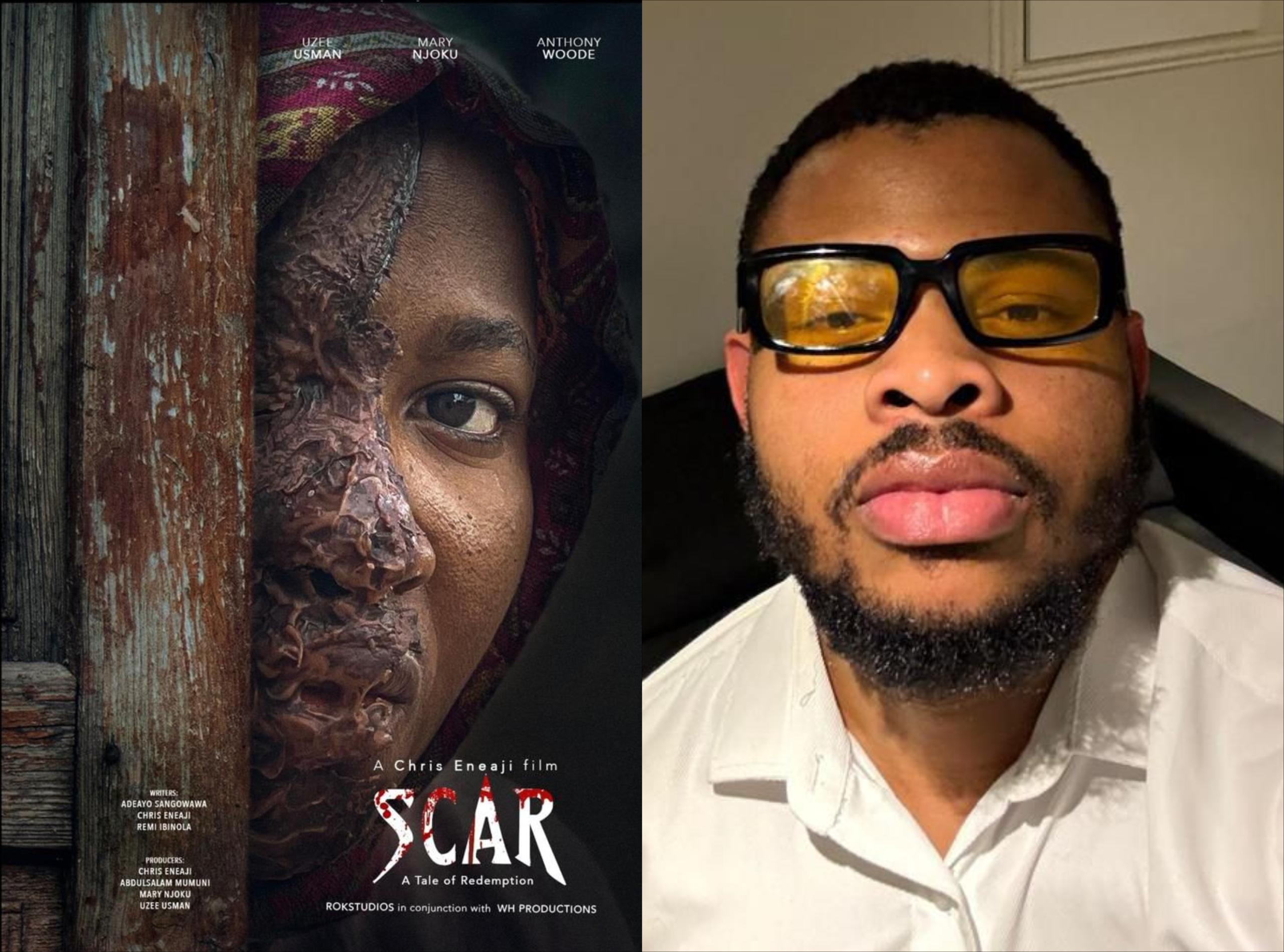
In African cinema today, few films confront pain, faith and forgiveness with the fearless intensity of Scar.
The 2023 drama—which made its first splash at the Africa International Film Festival (AFRIFF)—follows Chinwe, a missionary wife whose world is shattered after a brutal massacre takes the lives of her husband and child. Instead of fleeing, she chooses to remain in the same Ghanaian community, preaching forgiveness while living under the same roof as the man who killed her family.
But behind the layered emotions of Scar is a name not often in the spotlight—co-editor Ifeanyi Godwin Ogbonna—one of the creative minds responsible for shaping its powerful rhythm and emotional depth.
*A Film That Needed Careful Hands*
Scar is not a film that gives itself easily. Moving between timelines and shifting emotional terrains, it demanded precision in post-production. Ogbonna’s job was to refine that complexity without losing the raw humanity at its core.
“The footage was heavy. Every scene carried emotional weight,” he said. “Our task was to honour that reality without exaggeration—and without losing the truth of Chinwe’s transformation.”
Shot entirely in Ghana and completed in Nigeria, the film was produced by Mary Njoku, Uzee Usman, Salam Mumuni and Chris Eneaji, with Eneaji also directing.
*Editing Violence Without Exploiting Pain*
One of the most difficult responsibilities in the edit suite was sculpting the massacre sequence. The violence had to be believable—devastating even—but never gratuitous. Ogbonna’s instinct was to focus on aftermath and emotion rather than spectacle.
“Sometimes suggestion carries more power than full exposure,” he explained. “The audience needed to feel the wound without being pushed away by it.”
This same philosophy shaped the second wave of conflict later in the film, where the return of an ex-military missionary introduces the tension of revenge and justice. Finding the right pacing to balance suspense with moral reflection was a major part of Ogbonna’s editorial approach.
*Taking African Stories to Global Screens*
The world has taken notice. After its AFRIFF debut, Scar travelled to international festivals including the Pan African Film and Arts Festival (PAFF) and the Toronto Nollywood International Film Festival (TNIFF), earning nominations and stirring conversations.
The recognition reflects not just the film’s bold themes but the craftsmanship behind it—the silent decisions, the unseen hands, the edits that transform raw footage into a compelling narrative experience.
*A Cross-Border Production With a Shared Purpose*
Much like its storyline of community and reconciliation, the making of Scar was a cross-border effort. Ghanaian landscapes, Nigerian post-production, and a multinational team all merged into one cohesive vision. As co-editor, Ogbonna helped bridge the geographical and creative spaces, turning diverse pieces into one emotionally unified story.
*Where the Editor’s Voice Lives*
Editing is often invisible by design. The better the work, the less the audience consciously notices. But in Scar, Ogbonna’s influence is felt in every tension-filled pause, every restrained moment of violence, every emotional shift that guides viewers through Chinwe’s impossible journey.
At its heart, Scar asks questions that haunt long after the credits roll:
Can a person forgive the unforgivable?
Can faith survive tragedy?
What does healing require?
Through Ogbonna’s careful, intentional editing, these questions land with the weight they deserve.
As African cinema expands its reach, storytellers like Ifeanyi Godwin Ogbonna remind the world that great films are not just written or shot—they are also carved, polished and completed in the editing room.
And with Scar, every cut tells a story that lingers.