Follow Us on Google
By Uche Usim
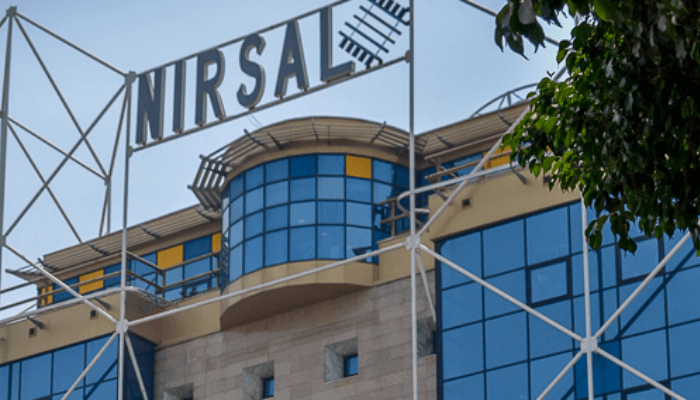
The Nigeria Incentive-Based Risk Sharing System for Agricultural Lending (NIRSAL) is recalibrating its strategies to power a new era in agricultural financing. It is reigniting hope among lenders and agribusinesses seeking easier access to sustainable credit.
This renewal is consistent with the incumbent administration’s move to make agriculture a strategic fulcrum in driving economic growth.
For decades, Africa has been struggling to raise its agriculture sector funding to 10 per cent of annual appropriation, believing it to be its pathway to global economic competitiveness. In Nigeria, budgetary funding for the sector has not crossed 5 per cent in over a decade, with overhead costs consuming the greater part of that, leaving little for production expansion.
With little hope of this record improving, fiscal authorities looked to the banking sector to drive the agriculture sector, albeit with a systematic removal of the barriers that have impeded commercial agricultural financing through the years. As it was, banks were extremely wary of agricultural lending, and not without cause.
Agricultural lending in Nigeria had been hampered by perceived high risks and high default rates, until the fiscal authorities intervened with the creation of NIRSAL, a mechanism for bridging the finance and agriculture sectors. Since then, according to NIRSAL, it has facilitated over N270 billion from banks and other sources for agriculture, with a failure rate of less than 1 per cent.
Meanwhile, given long-standing public expectations, many Nigerians have mistakenly viewed NIRSAL as a direct source of agricultural loans, or even government grants, whereas its true mandate is purely facilitative, with the figures it reports representing commercial bank funds, not its own disbursements.
Given its unique mandate, NIRSAL, which is now a little over a decade old, must continue to communicate, engage and clarify its role, in part to correct the false impression that it should be dolling out so called government money to farmers, and also to create the awareness necessary for greater uptake of its guarantees by lenders.
Now under new leadership, NIRSAL is changing false impressions and reshaping its value delivery through a mix of innovative conventional and alternative finance facilitation, a robust risk-sharing framework, business advisory, partnerships and effective stakeholder engagement.
“We are repositioning NIRSAL to become a more agile and impactful institution, one that truly serves as the bridge between finance and the farm.
“Our focus is on unlocking more capital for the agricultural value chain, which invariably empowers smallholder farmers, agritech start-ups, processors and exporters who form the backbone of Nigeria’s food economy”, a senior official told Daily Sun.
In its renewed vigour, NIRSAL is not only facilitating credit but also emphasising value chain development. Through its risk-sharing framework and technical assistance programmes, it is helping banks better understand the peculiarities of agricultural cycles while supporting producers to become creditworthy through training, effective aggregation, and market linkages.
Economists note that NIRSAL’s revival is timely. With food inflation still high mid government’s renewed focus on food security, the role of finance in driving productivity cannot be overstated. According to analysts, bridging the multi-trillion-naira financing gap in agriculture requires innovative institutions like NIRSAL to step up to the plate.
Already, the agency has rolled out new initiatives aimed at improving credit access. These include financing frameworks and targeted guarantees for mechanisation, input supply, modular irrigation, export-oriented agribusinesses, and more. Also, by working closely with non-interest banks and global partners, NIRSAL is creating new channels for affordable and sustainable agricultural finance.
Promise rekindled
Other News
If NIRSAL were an experiment, its mixed outcomes over the past decade would justify a full re-tooling and under the Olayemi Cardoso-led Central Bank of Nigeria, that appears to be well underway. A year after the inauguration of its new Board, NIRSAL’s founding vision is reawakening, aligning with renewed efforts to make agricultural financing both profitable and sustainable.
After years of uneven execution, the agency is reclaiming its place as a key driver of agribusiness funding. In the first three quarters of 2025 alone, NIRSAL facilitated more than N70 billion in commercial financing for the agriculture value chain, its strongest annual performance since inception. That figure represents nearly a quarter of the cumulative financing it has enabled in its history, a clear testament to the impact of ongoing renewal.
The revival comes at a crucial moment. Bank lending to agriculture, which had declined from 6.18 percent of total credit in 2022 to 4.82 percent in 2024, has rebounded to 5.33 percent by mid-2025. Newly licensed banks, too, are leveraging NIRSAL’s risk-management tools and handholding mechanisms as they deepen financial intermediation. Notably, two of these new entrants now account for a significant share of NIRSAL’s 2025 financing portfolio, a strong signal that confidence in agricultural lending is returning, this time anchored on structure rather than subsidies.
Rebuilding confidence, scaling strategically
NIRSAL’s renewed direction aligns seamlessly with President Bola Ahmed Tinubu’s market-driven economic vision. With the era of direct government interventions winding down, the Central Bank’s Development Finance Department has significantly trimmed its trillion-naira intervention portfolio, effectively allowing institutions like NIRSAL to carry on. In this new landscape, NIRSAL is emerging more prominently as a vital ecosystem enabler, linking banks, agribusinesses, and governments in long-term, commercially viable partnerships. Its blended-finance philosophy bridges the goals of impact-driven public policy and profit-oriented private enterprises.
At the core of NIRSAL’s resurgence is its integrated value chain model, which identifies opportunities, structures deals, offers technical support, and shares risk with partner banks. This holistic approach guides agribusinesses from loan origination to repayment, demonstrating that agriculture can, in fact, be bankable. By deploying data-driven risk management tools and delivering targeted capacity-building programs, NIRSAL has created a new cadre of confident lenders and borrowers.
In 2025 alone, more than 1,100 financial institution staff, mainly from deposit money banks, have been trained under NIRSAL’s agricultural lending framework, contributing to the N70 billion in financing facilitated so far this year. Beyond finance, the institution is also investing in production-side training, with over 450 value chain actors equipped in feedlot management, commodity export, and climate finance, laying the groundwork for lasting sector-wide transformation.
Digital and green frontiers
NIRSAL’s forward agenda is increasingly digital and climate-smart. The upcoming NIRSAL LandBank Portal aims to connect all actors across the agriculture and agribusiness ecosystem, from researchers to financiers, providing a data-driven platform for opportunity mapping, risk reduction, and investment planning. This digital infrastructure, alongside partnerships such as the recent MoU with the Rural Electrification Agency (REA) for the provision of off-grid power in agro-production and processing clusters, will strengthen climate resilience and improve productivity across Nigeria’s rural economy.
As global financing pivots toward sustainability, NIRSAL’s engagements around and pursuit of access to climate finance positions Nigeria to attract new streams of concessional capital into agricultural value chains. Add these to a sustained flow of commercial finance, and the Federal Government’s food security ambitions and its drive toward a $1 trillion economy become more realisable.
Journey ahead
2025 has emerged as a defining year for NIRSAL, a period not just of recovery, but of renewed purpose. The numbers tell a good story: its strongest performance on record reflects a key shift from fragmentation to focus, from scattered interventions to scalable partnerships and from perception gaps to proof of sustainable impact.
Still, more is possible. In Kano and Adamawa States, NIRSAL is deploying its convening power and field risk management expertise to coordinate dry-season production of sunflower and rice. It aims to connect seed, fertilizer, and agro-chemical suppliers with mechanization service providers and committed offtakers, creating value chains where smallholder farmers stand at the centre of shared prosperity.
To sustain this momentum, NIRSAL must entrench transparency, cultivate institutional patience, and strengthen ties with financial institutions—whose appetite for agricultural lending ultimately shapes its success. With strategic clarity and disciplined execution, NIRSAL can fully reclaim its core identity: the bridge between Nigeria’s vast agricultural potential and the financial sector capable of unlocking it.
If Nigeria truly aims to feed its people, expand exports, and build shared prosperity on the path to a $1 trillion economy, then NIRSAL’s renewed model, anchored on data, discipline, scale, and de-risking, is not merely relevant. It is indispensable.