Follow Us on Google

By Sunday Ani
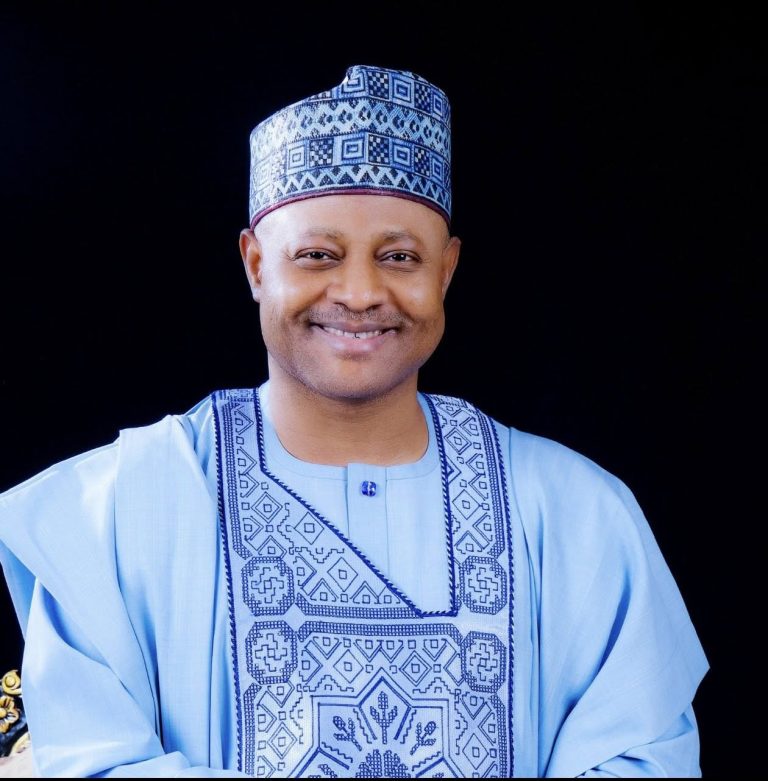
Lagos State Governor, Mr. Babajide Sanwo-Olu, in this interview on ‘Sunday Politics,’ a live television programme anchored by Channels Television’s Seun Okinbaloye, speaks on the two years of his administration. He speaks on his administration’s THEMES developmental agenda, COVID-19, state and community policing, among other issues.
It is interesting to let a lot of people know that you and some other governors would be ending a second year in office. For a lot of people who saw you campaigning, you are 50 per cent done in your four-year term. Based on your campaign promises, if you look at Lagosians in their eyes today, would you say you have performed what you promised?
With every sense of modesty, I can also look you in the eyes and say to you that if I am supposed to mark my own script, which I would rather want people to do, we have not gone short of strong deliverables. We have actually up the scale and we have delivered significantly. I will give you some of the statistics.
We promised Lagosians on THEMES agenda and if we go to the second pillar, which is health and environment, we are currently building the biggest child hospital. We had a whole year of pandemic; you know what COVID-19 did to us. We were able to rescue this nation out of issues that COVID-19 would have crashed us. Let’s say it; that is what it is. We remained the epicenter of everything regarding COVID-19 and we led from the front. We were able to hold it, arrest it and keep it at bay. We spent our resources; we were not waiting for resources. We were doing testing; free testing for every of our citizens for the first 10 months. Even till today, we are still doing free testing. We didn’t have the rate of fertility that is being recorded in other parts of the world. We have had opportunity to also scale up infrastructures in all of our hospitals. Right now, we are building an Infectious Disease Centre, so that with the learning and experience of COVID-19, we don’t need to run helter skelter to know how to design or look for scientists that can help us design our own vaccine. Those are some of the capabilities of what we are doing.
Education and Technology is the third pillar of our THEMES agenda. In technology, we are building the backbone for what we call a metropolitan fiber optics. We are building 3,000 kilometers of fibers around Lagos. We have done 1,800 kilometers as we speak now. By June 29, I would be commissioning direct fibers in 100 schools. We would have connectivity to all of our hospitals. We are building the backbone for the private sector to come in; MTN, 9Mobile, Airtel for them to be able to deploy their last mile in another one year from today. We have given them the capability. We have two sub-marines that are going to land in Lagos in the next three to four months. We are giving them the capacity to be able to do it. Data and fiber is the next hub. So, Lagos is getting ready for that. On top of that, we are building a security system. We have deployed over 150 cameras, which we are going to launch by June 29. We are going to 2,000 cameras.
In education, today we have delivered about 250,000 new benches and chairs to schools. We have added about 300 new classrooms to all our schools. For the first time in 15 years, we are building three new schools; three brand new schools from scratch. We have renovated 96 primary schools; we are not leaving it to State Universal Basic Education Board (SUBEB) and we are not saying because it is with Federal Government or Universal Basic Education Commission (UBEC). We are doing it directly with them. We have improved admission and bed spaces in our model schools; about 2,000 new bed spaces were built for our model schools so that they can have boarding facilities. We have recruited over 1,200 new teachers in less than two years.
Talking about what we are doing in housing, we have delivered over 4,000 new houses in less than two years. We have two, three other ones that we are going to commission before the end of June 2021.
So, these are not promises…
These are things that we are commissioning.
Talking in terms of funding for those who fear that you might be borrowing more than the states can chew. How would you react to that?
There is creativity everywhere. Part of my famous life is that I am an investment banker. So, I understand the value of money and how money moves; the circle of money. If you go and check the sustainability model of all the states in the country, Lagos is top in terms of sustainability; how resilient you are, how sustainable you are. You need to be able to take some audacious decision and be able to plan the infrastructure of your people for the future. If you don’t take it now, it gets worse further down the line for you. If you borrow and you are not borrowing to pay salaries or buy cars and you are not borrowing for consumption sake; if you borrow to do investments and infrastructure, you are actually building a tomorrow for the generations that is coming behind you. But the question you now ask yourself is how sustainable is my appetite in that.
So, you look at your opportunity metrics and you say that for every of these things, at what cost am I getting it? What is the opportunity cost of this borrowing? Yes, Lagos has a distinct borrowing portfolio but the truth is that we are less than one-third of even what we should be borrowing. So, I can assure you and your audience that we are not even near it at all. But we are also being very responsible to be able to create that tomorrow for the people that are coming behind us. All of the things that we need to do, let us create that platform; let us give that infrastructure that they require today because things are not going to get anything cheaper. Things you didn’t do 10 years ago, you know what the currency are doing now, so we need to take it and we need to be able to deal with it.
On the issue of COVID-19, you spoke to us on Channels Television saying that aside what the Federal Government is doing, Lagos State will also get into an initiative where vaccines would be procured or gotten by Lagos State Government as a state initiative. How far with that? When is Lagos State Government going to make that happen considering the fact that there is a very huge gap and Lagos has the burden of almost 40 per cent of the cases of COVID-19 that we have seen in the country.
You are very right. We have utilised all the vaccines given to us because they gave us 520,000 doses and we said we need to keep the second batch. We have vaccinated over 260,000. So, today we have done far more than everybody all put together, so we are right on track. Regarding the vaccine strategy, our strategy was in two folds. Who were the people that are eligible and we are following that eligibility criteria. But in terms of the actual physical vaccines, we need to be very careful. We need to be careful and to be sure that we are having conversations with the real manufacturers. We do not want a situation where middlemen are the once hijacking it. We have heard stories about fake vaccines in some parts of the world and so we do not want to run that foul. What has happened is that COVAX and all of them are dealing at sovereign level. They are actually taking the conversation country to country. We try to make an inroad into them, they said to us, slow down, you are sub-national, let us deal with AU countries. Those are the kinds of procurement orders that they are taking now but we are not relaxing.
We have gone to the private sector, telling them they could be a little bit more creative using their global contacts and try and see what number they can bring down. We are getting some positive responses to that and believing that in the next two months, we might have in conjunction with some members of the private sector, who do not want to be mentioned now, some direct information as to when we will be getting those kind of vaccines that we could give to our citizens. We are also trying to be careful around the cases that we are hearing about what is happening with Johnson and Johnson vaccines and Astrazeneca vaccines. We want to be sure that we are talking to the right set of people and we are getting the best quality for our citizens. So, we are not out of it yet. But COVAX that could have helped wanted to deal with only national.
Other News
You made a decision to ease the restrictions on social events and all of that. A lot of people will say this COVID-19 is still with us, what brought about that idea. Some other countries like Italy are already experiencing a third wave of this deadly virus…
You are right. It is science and science is prescription; number and data will never lie. In January, we are doing about 30 to 35 per cent positivity ratio, meaning at the peak of our second wave, if you test 100 people, about 30 to 35 of them are positive. Now that has come down to about one per cent. We are still testing the same numbers of people. We are still testing over 2,000 because everybody that wants him or her to be tested is still being tested. But the good news is that our positivity ratio had come down to one, two per cent. So from as higher as 30 to 35 per cent, we are now down at one per cent. So, we need to look at the economics of it. We are looking at health, science, sustainability and livelihood of people. So, if something is not going to kill you today, why do you know it will kill people’s businesses? So, why don’t you give them a protocol that is non-pharmaceutical that they can obey and work with?
So, what we have done is saying that industry that had been affected extensively in the last one year; should open but open responsibly. Open with less than 50 per cent of your capacity; no matter how big your event place is, you cannot have more than 500 people. Even if you have 2,000 to 3,000 capacities, you cannot have more than 500. Make sure that all of the none pharmaceutical protocols are still in place; hand washing, social distancing and how many number of people you need to have on a table; gradually start easing them and start unlocking them so that you don’t move from 1 to 100 at a time. But the economy part of it is why we don’t want to kill them. And by the way, we also have a fund that we posted for our Lagos Employment Trust Fund; N1billion to support businesses that had been so affected in the tourism space. So, we are not just leaving them to themselves, we are also providing support for them because we realised that the industry had been extremely affected. So, we need to balance science giving the percentage that I have told you that it has crashed and we also need to balance the economics.
On the issue of security, you recently launched body worn cameras to Lagos State funded security organisations and outfits like Lagos Neighborhood Safety Corps and others. They are supposed to go through training for three days in May. Why didn’t you extend it to the Police in Lagos?
Those are the kind of conversations that we need to make quick decision on in this country. We are supporting the Lagos State Police Command in all spheres and ramifications but as it is, it is still a federal controlled police force. There is a limit to which we can intervene in their modus operandi and their rules of engagement because we said we need to stay along the line of where we have comparative advantage. We want our own security operatives to be accountable; hold them accountable for their actions and inactions. So, they are expected to go through the protocols. We cannot force the Nigeria Police; we can only persuade them. We are trying to encourage them but it also has consequences; consequences is that they need to also be accountable for this and know that in the event of cases or issues, you will be held accountable. So, they are looking at their own protocols and internal issues with their own internal structures; maybe they will come back to us. So, let us not give excuses all around; let us start with the one that are within our own control; that is our own attitude. Let us start and let us deepen it.
Is this your administration’s way of saying Nigeria should make State Policing happen?
It is long overdue; we should make it happen. In fact, that is really one of the critical things that I believe will help us. It has been said over and over again.
Does it frustrate you like some of your colleagues who cannot take 100 per cent charge over security and the state of affairs in their states?
It does. It is a massive frustration. It is a very simple thing that we are trying to address here. We currently support the Lagos State Police Command in all spheres; vehicles, petrol, ration allowances and all sorts of encouragement. We recently gave them 1,250 Police constabularies and we are paying their salaries. We pay for everything, uniform, food and everything. So, we are actually incurring those expenses already. It is not going to have any bigger bold on our numbers because that is what we are doing. But it will help us once we know that there are State Police. What we will do is that somebody who grows up in an area will understand that area. You know where Okokomaiko is. You understand the issues around Ojokoro, you know what the problem is in Lagos Island once it is domesticated. But how do you explain when a DPO that is just settling down in Oke Arin Police Station or Lafiaji Police Station or Adeniji Adele Police Station and you change him and bring somebody that is 7,000 kilometers away from the place. It is a very simple thing. And if there is an emergency, the guy doesn’t even know how to navigate the streets and the corners. That is the whole concept around community policing.
You see a guy who is meant to go to school over the years of when you are conducting an exercise and you know this is a black spot; this place will give problem six months down the line; you will go there and address the young guys. You will go and give them the encouragement. That is what neighbourhood community policing is all about.
You already have Lagos Neighborhood Safety Corps, which looks like sophisticated kind of the vigilantes that we see in rural areas and some communities. There is Ebube Agu in the South-East and Amotekun in South-West. By the way, why is Amotekun not effective in Lagos?
I understand and appreciate everything that my colleagues are doing but they also commended and appreciated that we have Neighborhood Corps already. I have over 7,000 Neighbourhood watchmen who are doing exactly the same thing that we have Amotekun doing. And the whole idea around it is that they are meant to be border patrol and all sorts. The only border that I have in Lagos outside of the Atlantic Ocean is Ogun State, and so we are collaborating. All of my neighborhood watchers are there at the border posts, giving us intelligence and daily monitoring; monitoring what is happening in their localities and feeding it back to the central. They are the ones that are feeding the Police and DSS and also feeding us with information but they cannot carry arms and cannot prosecute people but they can give intelligence report.
Nigeria is at that point where we are searching for solutions to our security problems. What would be your own panacea or solution to resolving this security problem?
It is actually multifaceted like I said in a meeting a couple of days ago where this was discussed extensively. There are different modules of challenges that we have in different parts of the country. So, one typical solution cannot fix everywhere. The challenge that is facing Lagos in terms of security is quite different from what you have in the North-West or North-East. So, we need to also think global but act local in all of those perspectives; the one that are within our ambit. I am in a cosmopolitan state, what are the challenges of security that I need to address. I need to be able to account for people that are coming into my system. I need to have database and know the people that are coming in. I need to provide overnight surveillance for everybody that is moving in the city. I need to be able to ensure that my Police are well motivated in whatever name we call them. And I need to ensure that I have a strong technology. Technology is one of the things that we are trying to develop here in Lagos; CCTV cameras, body cameras and be able to process all of those things behind the scene.
The final one is that your citizens must trust you. They must also be able to give you information; where do they need to pass the information. There must be an avenue available for them. So, we are developing what we call a Citizens Gate network, where people can call us in and say to us these are the kind of things we are hearing. So, for us in Lagos, we need to be very methodological about how we resolve our own security issues. We face a lot of cult issues that we are trying to solve with community engagement; speaking to all of the leaders in those communities, engaging them and creating youth centers where the youths can come in to. We have a lot of drugs issues that we are trying to deal with which can lead to crime and security breakdown. We are building a brand new mental health facility in Ikorodu to be able to take about 3,000 to 4,000 people and rehabilitate them. These are some of the issues that you have in urban cities, which could lead to heavy security issue.