Follow Us on Google
From Taiwo Oluwadare, Ibadan
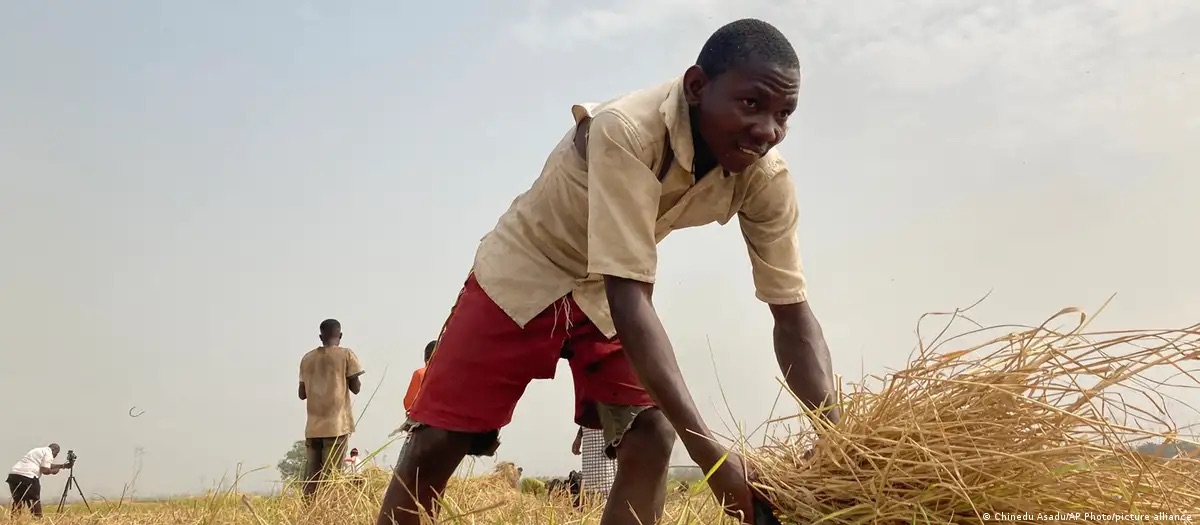
Rising insecurity across Nigeria is forcing farmers to abandon their farmlands, reducing agricultural output and deepening the country’s food security crisis, an agricultural expert has warned.
Isaac Aiyelaagbe, a professor at the Federal University of Agriculture, Abeokuta (FUNAAB), Ogun State raised the concern while delivering the Candida Adenike Afodu Annual Lecture in Agriculture/Horticulture at Augustine University, Ilara-Epe, Lagos State.
Speaking on the theme, “Food Security: Walking the Talk,” Aiyelaagbe said persistent attacks on farming communities and growing insecurity in many parts of the country have become major threats to food production.
According to him, thousands of farmers have been displaced from their farms, leaving vast hectares of cultivable land unattended and resulting in significant losses of crops, livestock and agricultural infrastructure.
He noted that the situation, coupled with the effects of climate change, has continued to undermine food production and contribute to rising food prices nationwide.
“When farmers can no longer access their land safely, food production declines. The consequences are reduced supply, higher prices and increased food insecurity for millions of Nigerians,” he said.
The professor warned that the destruction of farms and agricultural assets would take years to reverse, stressing that the country could not achieve food security without guaranteeing the safety of farmers and farming communities.
Beyond insecurity, Aiyelaagbe identified what he described as a widening youth agribusiness gap as another challenge confronting the sector. He observed that many young Nigerians view agriculture as labour-intensive and financially unrewarding, leading to declining interest in farming.
To reverse the trend, he called for long-term agricultural policies insulated from partisan politics and capable of surviving changes in government.
He urged authorities to implement targeted subsidies and fiscal measures aimed at lowering food prices, strengthening social safety programmes and stabilising production costs. The agricultural expert also advocated increased investment in agricultural research, mechanisation and improved seed development to boost productivity and reduce the nation’s dependence on food imports.
He cited innovations developed by research institutions, including improved crop varieties from the National Horticultural Research Institute (NIHORT) and mechanisation technologies from the National Centre for Agricultural Mechanisation (NCAM), as solutions that should be deployed on a larger scale.
Aiyelaagbe further called for stronger collaboration among government agencies, private investors and faith-based organisations to improve food production and distribution nationwide.
He maintained that Nigeria possesses the resources needed to attain food security but must move beyond policy pronouncements to practical action.
The lecture formed part of the annual Candida Adenike Afodu Agriculture/Horticulture Lecture hosted by Augustine University under the leadership of its Vice-Chancellor, Rev. Fr. Prof. Anthony Alaba Akinwale, OP.
Dignitaries at the event included the university’s pioneer Vice-Chancellor, members of the donor’s family and other stakeholders in the education and agricultural sectors.
As part of the programme, the Vice-Chancellor presented agricultural produce from the university to the guest lecturer and representatives of the donor’s family.