Follow Us on Google
From Fred Ezeh, Abuja
The Association of Professional Bodies of Nigeria (APBN) has linked the socioeconomic and political challenges in Nigeria to the non-recognition of the importance of professionals in different fields of the Nigerian economy.
The Association insisted that solutions to the challenges lie with the different professional bodies, and the earlier the government realises and recognises that, the faster the solutions to challenges would arrive.
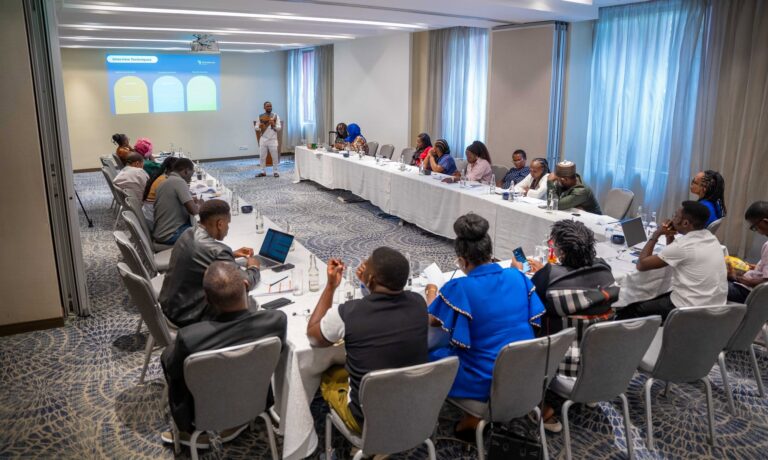
APBN President Manason Garkuwa Rubainu stated this in his address delivered at the 2024 Annual General Assembly of the Association in Abuja, on Tuesday.
Rubainu explained that APBN is an umbrella body of recognised professional Institutes, Institutions and Associations in Nigeria, that promote a new era of cooperation among professionals in Nigeria.
He added that the Association is a unified body of professionals that render professional advice to the government on national policy issues, notably, commerce, business, industry, economy, and labour, among others.
He said: “It is no secret that Nigeria is suffering from a governance crisis. For decades, we have been grappling with a political system riddled with inefficiency, corruption, and a lack of accountability. This has left our economy fragile, our security in peril, and our institutions weak. At the heart of this problem is a political class that has often placed personal ambition over national interest, and power over public service.
“Insecurity ravages our nation, from the Northeast to the South, stalling economic progress and development. Stealing and other forms of corruption drain the resources that should be used to uplift our people. Basic infrastructures remain underdeveloped, while millions of Nigerians lack access to essential services like healthcare, education, and clean water.
“The political leadership, unfortunately, continues to fail in its primary responsibility to govern with transparency, equity, and a sense of duty to the people. The people too have so far been unable to discipline the political leadership or bring them under any form of control.
“In fact, the people suffering and complaining are also the very people refusing to sanitise the political leadership. The civil service in Nigeria has also failed the people and is just a tool in the hands of the political class or, at best partners with the political class.
“Undoubtedly, there is hunger in the land. Poverty and all its consequences pervade the land. I believe President Bola Ahmed Tinubu knows and understands this very well. I do not believe he hates Nigerians and wants to inflict suffering in the land, but his policies seem to just do that. I wish he could tell us why we have to suffer more. Sometimes one gets some relief if one knows why he or she is passing through hard times.
“But I am not here to simply lay blame at the feet of the political class. As professionals, we too must look inward and critically assess our contributions, both positive and negative, to the governance of our nation.”
He highlighted the importance and the role of professionals in the governance system. “As professionals across various sectors, notably, medicine, law, engineering, accounting, education, and more, we have a unique role to play in the development of our country.
“We are not mere spectators; we are architects of society. Our knowledge and skills shape the policies that govern us, the structures that support our economy, and the systems that ensure justice and fairness. Yet, we must ask ourselves: have we lived up to our responsibility as nation-builders?
“Too often, we have seen professionals complicit in the very governance failures we decry. Engineers who certify substandard infrastructures; accountants who facilitate financial wrongdoings, lawyers who defend corruption, and doctors who abandon ethical standards, all these actions weaken the fabric of our society. When we, as professionals, become enablers of poor governance, we erode the trust placed in us by the public.”
He called for more ethical leadership among different professionals. “Our country needs more than just good governance; it needs ethical leadership across all levels of society.
“As professionals, we must commit ourselves to the highest standards of integrity and service. We cannot afford to stand by while our nation falters. We must rise to the occasion and contribute positively to national development by upholding the ethical standards that define our various professions.”
The former President of the Association, Akin Oyegbola, in his remarks that the economic hardship being experienced in Nigeria is inevitable because the economy can no longer sustain the fuel subsidy, which caused the economic hardship.
He said: “Nigeria ought to have effected the fuel subsidy removal long before now. We would have adjusted if the policy had been implemented long before now. However, it’s better late than never. Nigerians should endure and adjust to the new realities.
“Together, we can correct the course of governance in this country, ensuring that our children and future generations inherit a nation governed by principles of justice, fairness, and accountability.”