Follow Us on Google
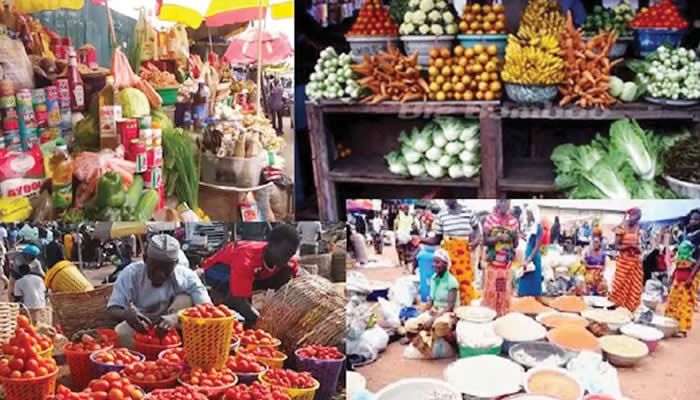
Nigeria’s inflation rate slowed to 20.12 per cent in August, down from 21.25 per cent in July, as easing food prices offered consumers a slight relief from months of relentless cost pressures, the National Bureau of Statistics (NBS) disclosed on Monday.
Food inflation dipped by 1.47 per cent in August compared to July (3.12 per cent).
In July 2025 headline inflation was 21.88 per cent. But looking at the movement, the August 2025 headline inflation rate showed a decrease of 1.76 per cent compared to the July 2025 headline inflation rate.
On a year-on-year basis, the headline inflation rate was 12.03 per cent lower than the rate recorded in August 2024 (32.15 per cent).
This, the NBS said, shows that the headline inflation rate (year-on-year basis) decreased in August 2025 compared to the same month in the preceding year (i.e., August 2024), though with a different base year November 2009 = 100.
Other News
On a month-on-month basis, the headline inflation rate in August 2025 was 0.74 per cent, which was 1.25 per cent lower than the rate recorded in July 2025 (1.99 per cent). This means that in August 2025, the rate of increase in the average price level was lower than the rate of increase in the average price level in July 2025.
Meanwhile, the drop in the food inflation rate in August 2025 was 21.87 per cent on a year-on-year basis.
“This was 15.65 per cent points lower compared to the rate recorded in August 2024 (37.52 per cent).
The significant decline in the annual food inflation figure is technically due to the change in the base year. On a month-on-month basis, the food inflation rate in August 2025 was 1.65 per cent, down by 1.47 per cent compared to July 2025 (3.12 per cent). The decrease can be attributed to the rate of decline in the average prices of rice (imported), rice (local), guinea corn flour, maize flour sold loose, guinea corn (sorghum), millet, semolina, soya milk etc.
“The average annual rate of food inflation for the twelve months ending August 2025 over the previous twelve-month average was 25.75 per cent, which was 11.24 per cent points lower compared with the average annual rate of change recorded in August 2024 (36.99 per cent)”, the NBS said.