Follow Us on Google
From Juliana Taiwo-Obalonye, Abuja
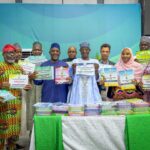
In a significant move to tackle infant mortality, the Office of the Senior Special Assistant to the President on Sustainable Development Goals (OSSAP-SDGs) has inaugurated a fully equipped Sickle Cell Care Centre at the Lagos State University Teaching Hospital (LASUTH).
The Sickle Cell Care Centre, commissioned by Lagos State Governor Babajide Sanwo-Olu on Friday, is designed to cater to the needs of numerous Sickle Cell patients who visit the hospital daily, providing comprehensive care, including early diagnosis, advanced treatment, and continued management.
The centre is expected to raise the capacity of the state’s medical services and contribute to improving the state’s infant and maternal mortality index.
The centre aims to provide comprehensive care for children suffering from the debilitating condition.
Sanwo-Olu stressed that the centre will serve as a hub for research and education, fostering greater awareness and understanding of sickle cell disease.
He noted that the centre will not only transform the healthcare landscape but also contribute to improving the state’s infant and maternal mortality index by providing an environment where children can receive holistic care tailored to their needs, from medical treatment to psychological support.
The Senior Special Assistant to the President on Sustainable Development Goals, Adejoke Orelope-Adefulire, described the project as part of the efforts to deliver on the Renewed Hope Agenda of President Bola Tinubu’s administration.
She highlighted the World Health Organization’s declaration of sickle cell disease as a global public health concern and encouraged countries with high disease burdens to establish newborn screening programs for early detection and evidence-based interventions.
Orelope-Adefulire noted that sickle cell disease contributes significantly to under-5 mortality, with approximately 376,000 deaths annually compared to 34,400 deaths from other causes.
She expressed confidence that the Sickle Cell Centre and other related interventions will contribute to achieving SDG-3.2 on “reducing under-five mortality to 25 per 1,000 live births or less by 2030” as well as other cross-cutting SDGs.
The Minister of State for Health and Social Welfare, Tunji Alausa, reiterated the Federal Government’s commitment to combating non-communicable diseases and improving healthcare outcomes for Nigerians. He noted that sickle cell disease, alongside malaria, cancer, hypertension, diabetes, and other non-communicable diseases, represents a substantial health burden for the country, worsening morbidity and mortality rates.
The Chief Medical Director of LASUTH, Adetokunbo Fabamwo, emphasised that Nigeria has one of the highest rates of sickle cell disease globally, with up to three million people living with the condition. He noted that the condition contributes significantly to childhood morbidity and mortality, making the establishment of the centre crucial for preventive and therapeutic care.