Follow Us on Google
From Romanus Ugwu, Abuja
The immediate past chairman of the Independent National Electoral Commission (INEC), Prof Mahmood Yakubu, last week, finally took a bow after serving a record-breaking two tenures of unbroken10 years.
Prof Yakubu, in retrospect, will go down in the books as the first and only chairman of the electoral body so far to have served in that capacity for that long period of time in the history of the commission.
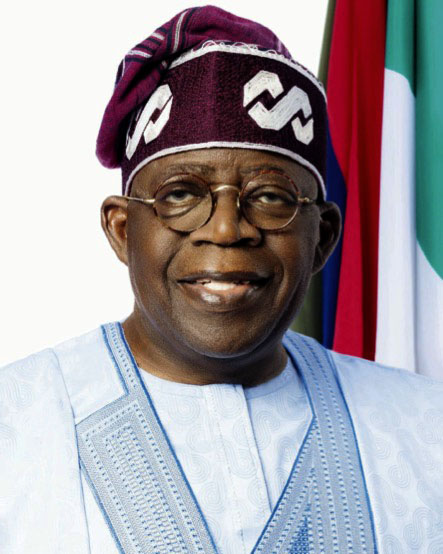
And perhaps as a reward for such meritorious service, President Bola Tinubu immediately crowned his efforts with a deserving national award of CON few hours after handing over to May Agbamuche-Mbu, the most senior National Commissioner at INEC.
To replace him, President Tinubu, with the approval of the National Council of State, announced the appointment of Prof. Joash Ojo Amupitan, SAN.
Amupitan, a 58-year-old Law Professor, from Kogi State, believed to have been handpicked by President Tinubu, is only waiting for clearance by the Red Chambers of the National Assembly to officially assume the position as the 13th chairman of the electoral body, since its inception in 1964.
Signing out at the end of his tenure, Prof Yakubu had revealed the high turnover in the management team he worked with, pegging it at 24 National Commissioners and 67 Resident Electoral Commissioners (RECs) throughout the period of his stay in office from 2015 till date.
Expectedly, the myriads of comments, praises, and harsh criticisms that have continued to pour in since Yakubu exited the stage could be likened to the proverbial blind men explaining the different parts of an elephant they touched.
For many of the assessors, Prof. Yakubu is the best thing to have happened to the commission. He is that courageous, cerebrally sound, and ingenious mind behind the multiple technological electoral reforms and digital innovations that have tremendously rebranded, improved, and increased the overall efficiency of the commission in the smooth conduct of elections in the country.
Yakubu, a History Professor, will also be remembered for scaling up stakeholders’ interactions and engagements through the quarterly forum’s meetings, which drastically increased inter-agency collaborations that have discouraged voter apathy and improved the conduct of polls across the country.
And blowing his trumpet to validate his unprecedented performances while handing over recently, Yakubu said: “Over the years, we achieved a lot in responding to challenges and introducing many innovations,” explaining, that “we have consolidated the biometric register of voters and replaced many of our manual processes with digital platforms and applications.
“These include the nomination of candidates, submission of polling and collation agents by political parties, accreditation of national and international observers and the media for elections, voter accreditation and result management,” he added.
On the flipside, other assessors, however, believed that Prof. Yakubu will go down in history as a man who started very well but ended badly through the handling of the 2023 presidential election by admitting to a technological glitch due to the malfunction of the INEC Results Viewing (IReV), which was considered the game changer with the live transmission of election results.
The fact that it worked almost perfectly in other previously conducted elections, especially the off-cycle governorship and by-elections, and in the legislative election held alongside the presidential election, heightened the suspicion.
Little wonder in his assessment of the outgone INEC Chairman, legal luminary, Frank Tietie, claimed that: “The general perception of a greater number of Nigerians is that Yakubu was disastrous. He disappointed many by ending up as a man who promised so much but delivered so little.
“He was very lethargic and weak, especially in his enforcement of sanctions against violators of election rules, particularly political campaigns. He committed an unforgivable blunder in his failure to implement the electronic transmission of results, especially the 2023 presidential election, despite getting all he requested through first line charge. In the eyes of many Nigerians, Yakubu is a huge disappointment. He did not just do well,” Tietie added.
On his part, national secretary of the Coalition of United Political Parties (CUPP), Chief Peter Ameh, said “Yakubu’s tenure will be remembered as a dark chapter in Nigeria’s democratic history. His leadership, marked by egregious corruption, staggering incompetence, and authoritarian overreach, has left an indelible stain on the nation’s electoral fabric.
“Rather than upholding the sacred responsibility of ensuring free, fair, and credible elections, Yakubu’s reign eroded public trust in democracy, undermined the integrity of INEC, and plunged Nigeria into a crisis of electoral legitimacy. His abysmal performance, coupled with a blatant disregard for accountability, has not only betrayed the Nigerian people but also jeopardised the very foundations of the country’s democratic aspirations,” Ameh noted.
Of course, the negative perceptions are clearly expected. Recall that ahead of the 2023 general elections, the former INEC boss had repeatedly promised and reassured Nigerians and the international community that e-transmission of election results has come to stay, and even reiterated that the results of those elections would be transmitted electronically.
Other News
He had equally claimed, in his promises, that in the future, the transmission of election results from the Polling Units (PUs) would be a permanent feature in the nation’s electoral processes.
According to him, “Yes, it is going to be permanent in all elections conducted by the commission going forward. It was actually in August 2020 that we deployed it for the Nasarawa Central State Constituency by-election, the first election conducted under COVID-19,” he noted.
However, in his reaction to the inability of INEC to keep to its, Prof. Yakubu, sighted Section 52(2) of the Electoral Act, which stipulates that: “Subject to Section 63 of the Act, voting at an election and transmission of results under the Act shall be in accordance with the procedure determined by the commission, which may include electronic voting.”
As Prof. Yakubu takes a bow, what is not debatable, however, is whether he left humongous tasks for his successor, Prof Amupitan, to inherit ahead of the forthcoming 2027 general elections, especially as a man with little or no experience in handling elections of such magnitude.
The new chairman will certainly face such daunting tasks as election logistics, prevailing security challenges, natural emergencies that displaced many voters, and the passage of new legislative reform bills currently before the National Assembly.
Other pressing challenges before him, according to his predecessor, Prof Yakubu, would be the preparations for the off-cycle Anambra, Ekiti, and Osun States governorship elections, the Federal Capital Territory (FCT) Area Council, and the 2027 general elections.
In addition to the challenges, Prof Amupitan will also tackle the problem of cleaning up the voters’ register, review the locations of some of the polling units, the allotment of voters to them, and the management of party primaries.
And enumerating the challenges in his handover remarks, Yakubu said: “There are several forthcoming elections. The preparations for some of them are either at advanced or concluding stages. The Anambra State governorship election is holding next month, followed by Area Council election in the FCT in February 2026, the Ekiti State governorship election in June 2026, and the Osun State governorship election in August 2026.
“In addition to these off-cycle elections, we have already commenced preparations for some of the major activities for the 2027 general election, while awaiting the enactment of a new Electoral Act. The Bill is currently before the National Assembly. It is expected that electoral reforms contained in the new Act will necessitate further review of our Regulations and Guidelines, as well as the Manuals for Elections.
“Beyond these reviews, the commission needs to further clean up the voters’ register, review the locations of some of the polling units, and the allotment of voters to them. The management of party primaries is another major area of activity. You may recall that for the last general election in 2023, the commission processed the nomination of 20,000 candidates.”
Apart from the obvious challenges, what could stand out for the new INEC helmsman, from the setbacks his predecessor experienced, would be to ensure a deliberate and efficient deployment of the Bimodal Voter Accreditation System (BVAS) and, more importantly, the glitch-free electronic transmission of election results from the PUs into the IReV portal.
Weighing in on his appointment, Human Rights Writers Association of Nigeria (HURIWA), said President Tinubu appointed his loyalist to oversee the nation’s electoral process ahead of 2027, claiming that it is part of his desperation to retain power “at all costs” through extension of control of the electoral umpire.
HURIWA, in a statement, further argued that considering the manner of his emergence, which failed the test of subjecting him to public scrutiny before screening by the National Assembly, Nigerians should not expect a free and fair election in 2027 unless the Electoral Act is urgently amended to make the use of BVAS and IReV compulsory and backed by law.
While calling on the National Assembly to expedite passage of Electoral Reform Bills to ensure that the use of BVAS and IReV for result transmission is clearly provided in the law, not INEC’s internal policy, it warned: “If this president continues to interfere with the independence of INEC, and the 2027 elections are manipulated, the country risks widespread instability.”
The group, however, urged Prof. Amupitan to demonstrate independence and transparency in his new role, warning that Nigerians and the international community are watching to see if he will rise above partisanship or reinforce fears that he is a political instrument in the hands of a desperate incumbent.
But in the perception of a northern group, Northern Ethnic Nationalities Forum (NENF), the distinguished legal scholar, constitutional expert, and accomplished SAN will bring with him a sterling record of service, integrity, and intellectual depth into handling the commission’s affairs.
“His ( Amupitan) appointment reflects a commitment to meritocracy and national inclusiveness. He will steer the commission with independence, transparency, and excellence at a time when our democracy requires bold, ethical, and visionary leadership.
“This decision demonstrates a clear commitment by the current administration to electoral reform, national unity, and competent leadership across all arms of governance. This appointment will inspire confidence among Nigerians, particularly the youths, the organised civil society, and catalyse a more credible, technologically advanced, and peaceful electoral process in the years to come. Amupitan stands as a shining example of the excellence that our region contributes to national development,” its chairman, Dominic Alancha, noted.