Follow Us on Google

Gabriel Dike and Gloria Ikegbule
The Academic Staff Union of Universities (ASUU) on Monday, March 23, 2020, shocked the nation when after its` National Executive Council (NEC) meeting, directed lecturers to embark on an indefinite strike to protest the failure of the Federal Government to address its unending numerous demands.
Stakeholders including government officials were taken aback when ASUU National President, Prof Biodun Ogunyemi announced the decision of NEC for the indefinite strike. Yes, the signs were there about the gathering storm in public universities but many because of the ravaging coronavirus disease did not expect the industrial action so soon.
The strike is coming exactly two weeks after the union embarked on a two-week warning strike to protest the non-payment of salaries of lecturers not enrolled in the Integrated Personnel and Payroll Information System (IPPIS), non-compliance with the Memorandum of Understanding (MoU) signed with the government and other outstanding demands.
Back to the trenches
The Education Report gathered that the strike is not all about IPPIS. A member of NEC said it became clear to the union that the Federal Government was not interested in addressing other demands including the signed 2009 MoU.
Ogunyemi explained that at the Enugu State University of Technology (ESUT) NEC meeting, the union reviewed the level of implementation of the 2009 agreement between the Federal Government and ASUU: ‘’The skeletal implementation and actual non-implementation of provisions of the 2009 agreement which include funding, conditions of service, university autonomy and academic freedom, gave rise to series of actions by ASUU to get the government to fully implement the agreement.
“Notable landmarks of those actions are the 2013 MoU, 2017 MoU and the 2019 Memorandum of Action (MoA). The point must be made that the various memoranda all have their roots in the 2009 government/ASUU agreement which was due for renegotiation way back in 2012. ASUU agreed to the MoUs and MoAs only as stopgap measures to track issues in the four key aspects of the 2009 agreement.’’
He said NEC observed that government ignored ASUU’s calls for full implementation of the agreements and memoranda signed with the union: “It is no news that successive governments have been treating matters of education, particularly university education, with levity. Operators of government relate to universities scornfully and dismiss university scholars as irritants.
“They send their children abroad and consign children of the poor to an education system bereft of all ingredients of quality. The Nigerian ruling class professes to be committed to using education as a tool for achieving national development.’’ He claimed that on daily basis, government officials kill the same education system through contractocracy and the spread of the intervention funds available at the Tertiary Education Trust Fund (TETFund), thus making the fund too thin for any meaningful impact.
Ogunyemi reminded Nigerians the efforts of ASUU to save public universities from total collapse, stating that each struggle of ASUU had yielded an agreement between the union and the government: ‘’It should be clear from the foregoing that what they call the IPPIS deployment in the university system is a strategic diversion especially from the many years of neglect and abandonment of the university system.’’
Issues leading to the indefinite strike
The ASUU president made bold to say government ignited the events that led to the two-week strike: ‘’Government ignored the outstanding issues in the FG/ASUU MoA of February 7th, 2019 and refused to take action on at least three letters written by the union. Government triggered the crisis not when it introduced the IPPIS and tried to sell it through dialogue, but when it resorted to using force.
“Government officials provoked lecturers into strike when it stopped the payment of salaries of our members in federal universities. ASUU will always respond positively to the force of logic, but the union resents and resist decent to the logic of force. The union met with President Muhammadu Buhari on January 7, 2020, and he promised to set up a high-powered enquiry to look into how much will be allowed in terms of management of resources and personnel by the universities. ASUU was expecting the fulfilment of the promise when it was confronted with the stoppage of salaries on the account of non-enrolment on the IPPIS platform.
“It is public knowledge that ASUU has consistently rejected IPPIS because of its technical and procedural deficiencies. With the payment of some categories of university staff through IPPIS platform, our fears about distortion in take-home pay, non-release of third-party deductions, an arbitrary award of sums on the payment, inability to link the personnel information with the payroll system have been confirmed.’’
ASUU president said an emergency NEC meeting was convoyed on Saturday, March 21, 2020, to review the warning strike and take decisions on government’s proposal to resolve the crisis, which is funding for revitalisation of public universities, payment of the outstanding balance of arrears of the earned academic allowance, salary shortfall at the Federal University of Technology, Akure, underfunding and proliferation of state universities, payment of earned academic allowance to loyal ASUU members in University of Ilorin, NUPEMCO, visitation panels to federal universities, renegotiation of the 2009 agreement and IPPIS.
Ogunyemi said it was difficult for NEC to take some painful decisions at its last meeting, stating: ‘’Government has failed to satisfactorily address the outstanding issues raised in the FGN-ASUU 2019 MoA and ignored the objections of ASUU against IPPIS. Consequently, NEC resolved to embark on a total, comprehensive and indefinite strike beginning Monday, March, 23, 2020 until the issues are resolved.
ASUU University of Lagos chapter chairman, Dr. Dele Ashiru, told The Education Report that the underdevelopment experienced in the education and health sectors would have been averted if the government was alive to her responsibility to the people, adding that they would have been more supportive and understanding if they didn’t send their children abroad for schooling and for medical attention.
He noted that previous strikes were products of government insensitivity and suggested that to avert the incessant strikes, the government must honour the agreement it signed with the union: “Our union had an agreement with the Federal Government since 2009, that agreement has only being implemented in bits. Strikes by ASUU are options to persuade the government to implement the agreement.’’
With the current health challenges of Covid-19, he said: “If the government had invested in critical sectors such as education and health, it would have been easier to confront this pandemic. The people who are to fight it are the medics, biochemist, biologist and the likes and we have them in ample supply in our universities and federal research centres in the country. But the condition under which they work is appalling. The same thing applies to the health sector.”
Vice-Chancellor of Christopher University, Mowe, Ogun State, Prof Friday Ndubuisi, opined that the strike by ASUU may have stemmed from its unsuccessful dialogue with the government and the National Assembly over its demands:
“We must learn to take education very seriously in this part of the world. Taking a hard position by government and ASUU does not help anybody. At the end of it, it is the entire nation that will suffer, especially the students. And this keeps on affecting our status and reckoning in academia.
“If our leaders have their children schooling here they will know what it takes and the impact of unending strikes in the universities. There is no reason the two parties cannot reach an agreement on a simple thing as IPPIS and funding of universities. A lot of things suffer under this situation: research, students welfare, intern and others. Can’t we learn how universities are run in the Western world which is why they are making enormous progress?
“We must cultivate the culture of dialogue and stop being militant and authoritarian always. It does not help at all. The entire system is being unfair to the students that suffer greatly as a result of these non-systemic ways of doing things. This culture of strike always is hurting our educational system. It does not show us as a country that takes learning and research seriously. You cannot separate development from research and learning. If we want to reap from the era of science and technology we must make our system to function effectively.”
He admonished the government to move fast to halt the re-occurring strikes and for ASUU leadership to read the mood of the nation and make a needful concession in the interest of the Nigerian students, the educational system and the entire nation.
A parent, Mrs. Omolara Akintoye, whose daughter, Faith Akintoye, is a 400 level Computer Engineering student, University of Lagos (UNILAG), said she was sent home alongside other students to contain the spread of Covid-19 is not worried about the declared strike. In the light of the global health challenge and social distancing, she believes the safety of her daughter and other students which she holds topmost is better guaranteed with them staying at home.
She maintained that the strike will not have much impact on the academic of the students as Covid-19 is a global phenomenon. However, she pleaded with the government to resolve the issues in contention with ASUU immediately without further delay: “I’m not worried about the strike because the students are at home presently not as a result of the ASUU strike. The government should try and dialogue with ASUU so as to resolve the issue.”
Another parent, Mr. Abimbola Oluwadare, is worried about the strike and that it will definitely have impact on the academic calendar and parents’ finances. He regretted that government has always been at loggerheads with ASUU over the same issues that have impacted negatively on the global ratings of Nigerian universities. He advised the Federal Government to be sincere and purposeful in its negotiation with ASUU and do the needful once and for all:
“As a parent, I am worried since these students are at home and parents are not always at home to look after them, especially during this Covid-19 outbreak.”
Rev Abby Amakiri advised the Federal Government to be more sincere and proactive with issues that concern ASUU: “It is an established fact that the development of any nation has to do with the quality of education it provides for its citizens. Therefore any sitting government who is sincere about growth and development should give high priority to education, which I have not seen.
“I suggest that before the Federal Government begins to implement the IPPIS, they should look at the agreements reached with ASUU for over 10 years, which they have reneged. Let the government do something about ASUU as quickly as possible as this strike is capable of dragging even after the issues of coronavirus if nothing is done about it.’’
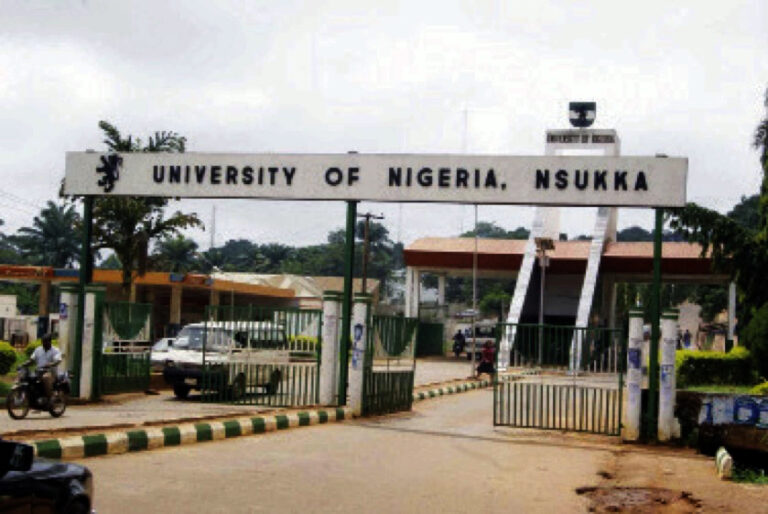
Reports from various universities indicated the campuses looked like a ghost town as lecture halls, students hostels and lecturers’ offices were deserted. The impact of the strike is not being felt due to the stay at home directive to check the spread of coronavirus.
Academic activities such as senate meetings, research conferences, inaugural lectures and marking of students answer scripts were affected by the industrial action of ASUU.