Follow Us on Google
By Gabriel Dike
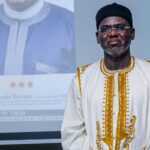
A Professor of Arabic Language and Education at the Department of Foreign Languages, Lagos State University of Education (LASUED), Oto/Ijanikin, Prof. Morufudeen Shittu, has called for the review of the Arabic Studies curriculum by the relevant agency to meet the current reality.
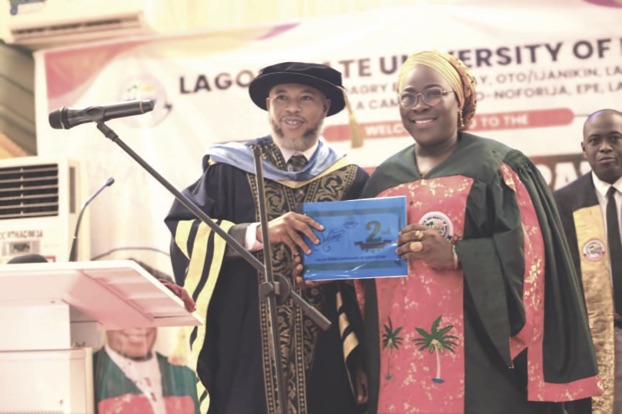
Prof. Shittu, who is the Deputy Vice Chancellor (Administration) of LASUED, advocated for the overhaul of the Arabic Studies curriculum while delivering the 2nd Inaugural Lecture, titled: “Synthesizing Convention and Modernity for a Prosperous Future: My Intellectual Footprint to Reinvigorate Arabic Studies in Nigeria.”
According to him, the inaugural lecture reflects 27 years of his academic journey in Arabic Language Education.
Shittu explained that the revitalization of Arabic Studies in Nigeria would extend beyond an academic reform initiative, adding, “it represents a strategic scholarly contribution to national and global development.’’
He listed the global significance of Arabic to include spoken by over 300 million native speakers across more than 26 countries, recognized as one of the six official of the United Nations, serves as the liturgical language of Islam and the language of the Qur’an and linguistic structure supports development in digital technologies.
The don observed that by 1914, over 30,000 Qur’anic schools were operating across the country, the language became integrated into northern Nigeria’s educational system, despite colonial marginalization, the language persisted through private and religious institutions and today, Arabic is the most widely studied foreign language in country.
The professor said the future of Arabic studies in the country depends on harmonizing traditional scholarship with modern educational frameworks and that reinvigorating Arabic study is crucial for intellectual continuity and national development.
On the legacy of post-Qur-anic institutions, Shittu said major centres of scholarship developed in Ilorin, Ibadan, and Epe, among other locations in Southwestern Nigeria, which functioned as a bridge between foundational Qur’ānic education and more formalized systems of learning and that over time, some traditional institutions evolved into structured Arabic colleges, contributing to the modernization of Arabic education in the country.
Shittu stated that the development of tertiary-level Arabic Studies began with certificate and diploma programmes at the University of Ibadan, the programmes later expanded into full B.A. and B.A. (Ed.) degree courses.
“Today, Arabic Studies are offered in federal, state, and private universities across Nigeria. This progression reflects growing institutional recognition and academic consolidation of the discipline.”
He said there is a nationwide institutional presence of Arabic Studies programmes across the six geo-political zones, the discipline is now firmly established in federal, state, and private universities across the country, the expansion reflects growing institutional recognition and academic consolidation of the discipline and Arabic is no longer confined to traditional madāris.
The DVC explained that six universities in the South West offer Arabic language, 10 in North Central, seven in North West, eight in North East and two in South South and South East, which are University of Nigeria and Nnamdi Azikiwe University.
Shittu added that Arabic Studies programmes operate under the regulatory guidance of the National Universities Commission (NUC) and that despite nationwide expansion; curriculum uniformity across universities remains limited.
The inaugural lecturer stressed the need for comprehensive curriculum overhaul and aligns content with labour market demands, which should emphasize skill acquisition and entrepreneurial orientation.
The LASUED don said the reform of Arabic Studies must address: course content, teaching methodologies and assessment practices to produce graduates who are globally competitive and locally impactful.
On enrollment challenges, he acknowledged the inconsistent in yearly enrolment across institutions, declining interest in Southwest, only 15% of secondary students express interest at tertiary level, career uncertainty limits enrolment and another 15% enroll primarily due to religious background.
He acknowledged a moderate improvement in enrolment across several institutions and observed noticeable growth in LASUED, Emmanuel Alayande University and University of Ibadan.
Among the leading institutions with high enrolment for 2024/2025 academic session include University of Ilorin, Kamal Al-Adaby University, Fountain University, Al-Hikmah University and LASUED.
“There is the need for Curriculum modernization, including Applied Linguistics, media Arabic, and digital humanities. I want to advocate for increased funding and the establishment of specialized research centres. We need policy elevation and strengthening of Arabic education at basic and senior secondary levels,’’ he added.
LASUED Vice Chancellor, Prof. Ibiyemi Lafiaji-Okuneye congratulated Prof. Shittu for inaugurating his chair and hoped other newly promoted professors would join the queue of those that have delivered their inaugural lecture.
She said LASUED keep improving with outstanding academic performance and promised that the inaugural lecture would be held frequently to showcase professors’ contribution to their field.
The VC said with the lecture, she expect Nigerians to have a change of attitude towards Arabic Studies and that the lecture have added to the image of the university.
She acknowledged that Shittu has contributed to education discourse and other issues in the country and enriched his field of study.