Follow Us on Google
From Sola Ojo, Abuja
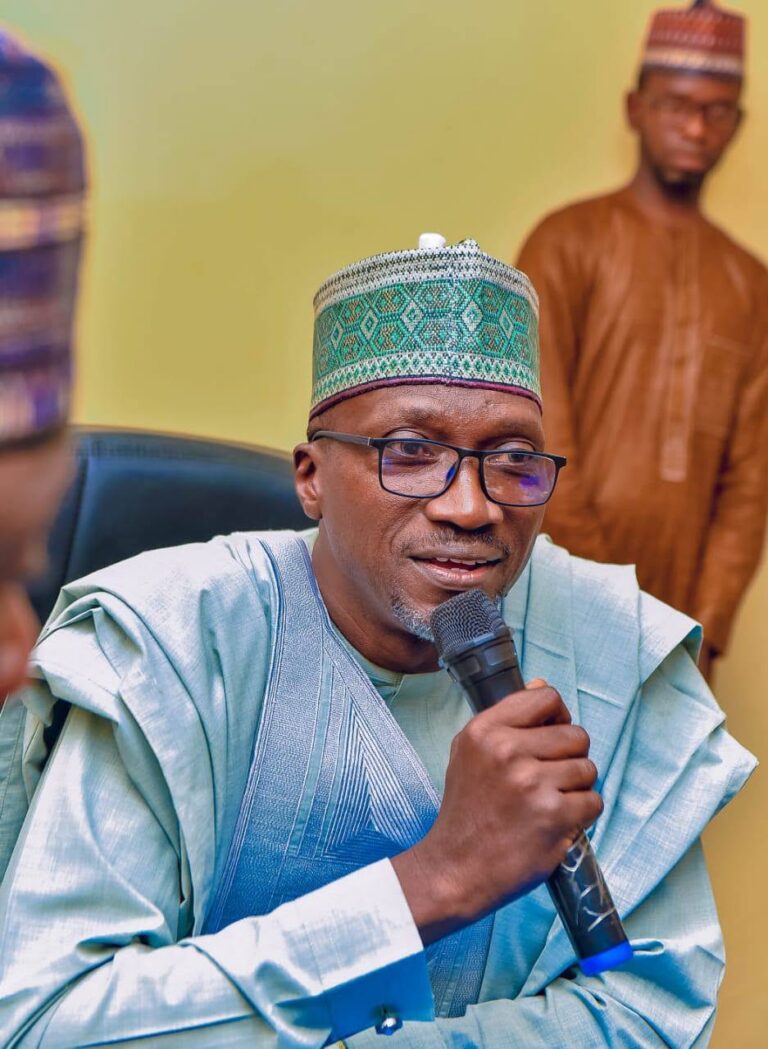
As Nigeria undergoes sweeping economic reforms under President Bola Ahmed Tinubu, farmers, particularly in the North-West, are bearing the brunt of rising input costs, volatile markets, insecurity, and shrinking access to credit. In this interview, Dr Idris Mikati, Board of Trustees (BOT) Member of the North West Agricultural Commodities Association of Nigeria, speaks candidly on the contradictions of reform, the collapse of farmer economies, fertiliser and mechanisation challenges among others.
Excerpts:
Grain prices like rice, maize and sorghum have dominated public discourse in recent times, while many are happy that prices have come down, local farmers are angry. Can you make sense of that?
It is a sorrowful time for Nigerian farmers. But, yes, we must approach this discussion with facts, not emotions. Before President Buhari became president, a bag of rice sold for about N15,000 to N17,000. During his tenure, despite domestic rice production due to his Agricultural reforms, which enabled us to produce what we would eat, prices climbed to as high as N30,000 to N50,000.
However, when you index those prices in dollar terms, you will realise that N50,000 today is actually cheaper than N17,000 then. That is why those of us who are statisticians, or at least comfortable with numbers, always ask: are we comparing apples with apples, or apples with oranges?
Context matters. Exchange rates, inflation, and macroeconomic conditions must be factored in before concluding.
To you, how should Nigerians judge President Bola Ahmed Tinubu’s performance in agriculture so far?
President Tinubu inherited a very fragile economy and an even more fragile agricultural sector. To be fair to him, the reforms he initiated were bold and aimed at correcting long-standing distortions.
However, agriculture is unique. While macroeconomic reforms may be necessary, the way they were sequenced has imposed enormous pain on farmers. The cushioning mechanisms were either weak or absent, and that is where the problem lies. As it is, a lot of farmers who took loans to farm will not be able to repay these loans. So, lenders too will feel it.
You sound deeply emotional about this, why?
Honestly, as I speak to you, I feel like breaking down in tears. I am shedding tears internally. When I see my colleagues, farmers who bought a bag of fertiliser, whether NPK or urea, at close to N100,000 per bag, and today are forced to sell a bag of maize at about N30,000 or even lower, it is heartbreaking. The pain is enormous, the pain is weighty, the pain is unbearable, the pains are grievous.
Can you explain the economics of this pain in simple terms because as far as the vast majority of Nigerians are concerned, food first?
Historically, a farmer could sell one bag of maize or rice and use that money to buy one bag of fertiliser. Today, a farmer must sell almost two and a half to three bags to buy just one bag of fertiliser.
Even if farmers are willing to endure this pain, where are the bags of produce to sell? Without fertiliser, seeds, pesticides, and other inputs, you cannot till the soil. Without tilling, there is no production. This is where the danger lies.
But supporters of President Tinubu said liberation like import waivers are necessary in the face of hunger in the land?
Yes, liberalisation itself is not wrong. President Tinubu’s economic thinking aligns with global best practices. But policy is like a simple equation. When you touch the left side of the equation, you must also touch the right side. Otherwise, the equation will never balance.
The government opened a window to allow agro-commodities to be imported at excessively competitive prices. This caused prices in the local market. But the government failed to introduce guaranteed minimum prices to protect farmers. At the same time, nothing was done to control the cost of inputs or imports. That imbalance is the real problem.Mechanisation is a key part of the administration’s agricultural vision.
How effective has that been, because a larger percentage of Nigerian farmers still hold on to old inherited farm practices?
Mechanised farming is necessary. Nigeria needs it considering our growing population and the fact that everyone must eat. But we must be realistic.
Some of the tractors being promoted are high-tech and fuel-intensive. A typical tractor, once you start the engine, before you say ‘Jack Robinson,’ three-quarters of a drum of diesel is gone. How many farmers can afford that?
Maintenance is another issue. The cost of operators is another. These interventions benefit only a few.
What alternatives should the government consider?
Good. Countries like India, China, Indonesia, Thailand, and Malaysia use simpler tractors, cheaper, easier to maintain, and practical. One or two farmers can share one.
Other News
So intervention should be designed to go wide, not deep. It should touch thousands of farmers, not a privileged few.
But the removal of subsidies has increased the money available to governors more than ever before.
Are these governors not supposed to use that to support the FG at the state level especially in the area of agriculture?
I agree with you that agriculture cannot be fixed by the federal government alone. Northern governors, particularly in the North-West, must collaborate more.
We see what South-West governors are doing, Lagos, Ogun, Oyo, and the rest of them, working together. Under the Northern Governors Forum, similar cooperation would greatly enhance President Tinubu’s reform efforts.
Even advice, shared experience, and policy coordination can make a huge difference.
Has insecurity not overwhelmed some of these governors and their local farmers?
No doubt, insecurity has devastated agriculture in the North-West and everyone knows this. Farmers face banditry, theft, displacement, and fear even to grow crops or rear animals.
Ironically, many farmers are not poor. A farmer may live in a mud house, but he grows maize, ginger, soya beans, and can buy vehicles or sponsor pilgrimages costing over N8 million. Beneath that simplicity is wealth. Unfortunately, that wealth is now being destroyed.
You’ve cited the United States as an example in terms of subsidies for farmers, why?
Let me repeat that, the United States, the headquarters of capitalism, subsidises farmers. There are guaranteed minimum prices for grains like wheat.
In some years, the U.S. government even mops up excess grain to prevent farmers from incurring losses. Recently, nearly $120 billion was approved in farm subsidies. If America does this, why can’t Nigeria protect its farmers?
What about market dominance by big grain buyers?
Nigeria has allowed a duopoly or triopoly in the grain market. Just two or three powerful buyers fix prices through collusion.
If the government enforces guaranteed minimum prices and restricts indiscriminate grain imports, these buyers will be forced to buy locally at fair prices. That aligns perfectly with Tinubu’s economic vision.
But, are there no legislative solutions to these problems?
Yes, there are. The National Trust Receipts Bill has been before the National Assembly for over ten years. It must be fast-tracked.
Once passed, warehouse receipts can serve as collateral, allowing farmers to access credit. What that means is that warehouses will spring up, insurance will grow, and rural economies will be stimulated because that will provide chain jobs.
What about access to finance under current reforms?
No farmer can borrow at a 36 per cent interest rate from commercial banks and survive. Blanket bans on agricultural finance because of past abuses are counterproductive.
Interventions should be routed through the Nigerian Agricultural and Cooperative Development Bank in Kaduna, which understands rural economies and agriculture.
What is your clear message to President Tinubu?
Mr President’s reforms are bold and necessary. But reforms without farmers will fail. The reason is simple. Agriculture is the backbone of Nigeria’s food security and economic stability. Our association is ever ready to work with this administration to fine-tune policies so that reforms uplift farmers rather than crush them. The earlier this recalibration happens, the better for the country.