Follow Us on Google
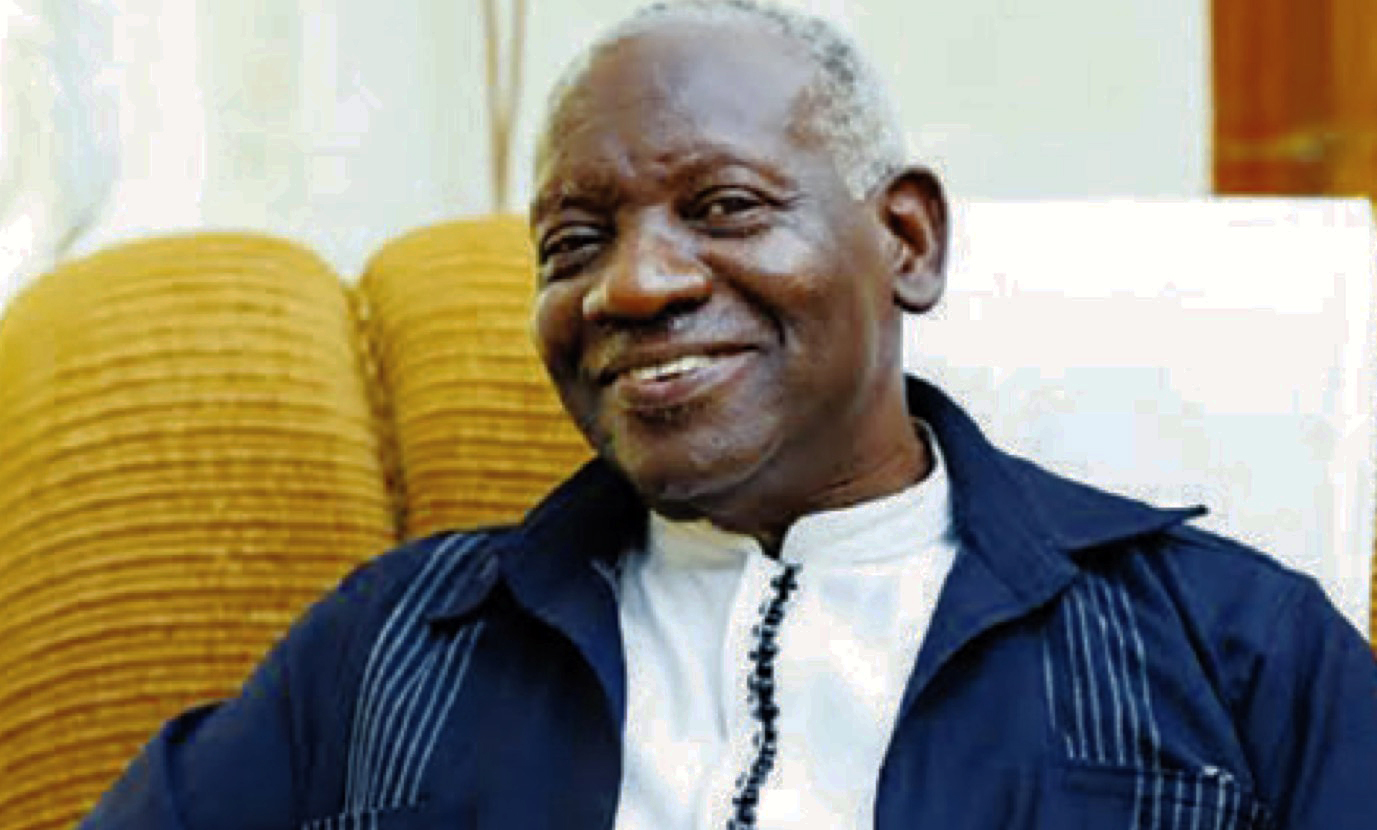
Elder statesman, Prof Yusuf Turaki has once again insisted that a monolithic North does not exist, as perceived by some Northern leaders who speak on whether the region rejecting or supporting any presidential candidate. In his words, contrary to what such people are saying, the geographical north is quite diverse.
The Middle Belt leader further stated that those making the generalisation of ‘the geographical north’ want to upscale the entrenchment of politics of master-servant domination, imposition and subordination in the region.
In an interview with VINCENT KALU, Turaki, a Professor of Theology and Social Ethic noted that the poor and the non-Muslims are the victims of the selective and high-handed applications of Sharia law in the North.
He also spoke on other issues of national interest.
How can you describe the state of the nation as it is today?
Let me not rehash what Nigerians are saying about the state of the nation. But there is one fundamental thing which Nigeria lacks, among many. Nigeria does not have a national ethic or a national ethical structure that has been developed and formulated from acceptable national values, standards, ideals, laws and a code of conduct that moderates the attitudes, behaviours and social practices of all Nigerians, regardless.
This national ethic should replace the current state of powerful and divisive negative sub-national values and interests, as generated by Nigeria’s primal social factors, such as ethnicity, religion, region, and many diverse cultural groupings in Nigeria.
Each of these groups generates its own values and interests that are at variance and are also not harmonised to create new national common-ground values and interests to guide and moderate the attitudes, behaviours and social practices of all Nigerians, regardless.
At present, Nigeria does not have developed and an acceptable national identity and values and institutions that all Nigerians can identify with and be patriotic and loyal to Nigeria, as a sovereign country. Nor does it have an emerged and harmonised national social unity of all Nigerian peoples. What is on ground are the divisive groups that seek to protect, promote, project, defend, or impose their sub-national values and interests upon the rest of Nigerians and Nigeria, either peacefully or violently. What is wrong is when these sub-national values go against the spirit of nationhood, citizenship and national harmony, unity and peaceful co-existence of all Nigeria’s ethnic, religious, regional and cultural groups. This should be the primary and foremost national task and assignment to all Nigerians and especially Nigeria’s traditional rulers, religious leaders, politicians and security agencies, and the elites.
Barely six months to the elections, what are your views of the polls?
Most Nigerians are not happy with the attitudes, behaviours and practices of some Nigerian politicians. They have abandoned the politics of national and uniform development and transformation of Nigeria for self and sub-national interests and goals, focusing only on ‘What Must I Do to Win Power?’ It is unfortunate that heading towards the 2027 polls, we do not have a credible opposition that Nigerians can rally around. Politics of personal criticisms do not sway the minds and choices of people, but that of a credible template and mandate for national development and transformation. Most opposition parties do not have credible and viable political structures to win elections. The poverty of sourcing for a good political alternative among the opposition parties looms very high.
Some Northern leaders say the region voted and made Bola Tinubu president, but he hasn’t done much for them, vowing that the North won’t support him in 2027. What is your stand on this as a Northerner?
The concept, ‘Northern Leaders’ is a generalisation and not a fact of reality on ground today, since ‘the geographical north’ is not monolithic, but diverse. Secondly, it is a naïve narrative statement for those in want of wisdom. Political elections are a process. Political candidates are voted for or against, and in the end, one candidate is declared a winner. It is an act of foolishness for one to say, so and so voted for me and the other did not. The winner stands on the platform that all who participated in the elections process that elected him/her.
By the way, ‘the geographical north’ has Hausaland, Kanuriland, and the Middle Belt/North Central. And that is how their votes will be distributed accordingly.
I, personally, do not believe in the ‘North’ as a concept that has a political value to ‘North-ism’. The concept has over the years metamorphosed into becoming an ideology and idolatry. I am within the historical territory of the British Colonial Northern Region of Nigeria.
The way the non-Muslim Hausa-Fulani-Kanuri have been treated in the ‘Political North’ will determine the voting pattern. Also, the way the Fulani have been treating the Hausa will also affect their voting pattern. The presence of Boko Haram, ISWAP, Fulani militias, Lakurawa, bandits and kidnappers and other smaller terrorist groups, as non-state actors which are terrorising the entire geographical north will also affect the pattern of voting.
The use of phrases like: ‘We northerners have…’, ‘The North has…’ are only for those who do not know how diverse the geographical north is. Furthermore, they are meant to entrench the politics of masters-servants (clientele), dominance, imposition, subordination, etc. People who are glued to the advantageous past or privileged institutions are like the ostrich that dips its head into the sand and says that no one sees me. Or those who are drunk with power would not accept change, even if it will bring the good.
What is your take on power rotation between North and South?
Nigeria is a multi-ethnic, multi-religious and multi-regional and multi-cultural country. As a plural society, the political principles of representation and participation are best for fostering cohesion, understanding, unity and peaceful co-existence.
One does not necessarily need legislation for creating political mutuality among diverse groups of people. The virtue of being fair or considerate often prevails over a certain form of personal ambition. The principles of give-and-take or self-renunciation of rights can also be applied in terms of a political divide, like North and South. This requires wisdom and not dogged deviance against the general consensus.
President Tinubu has retained Kashim Shettima as his running mate for the 2027 election, thereby continuing with the Muslim- Muslim ticket? What do you say to this?
I have already stated that Nigeria is a multi-ethnic, multi-religious and multi-regional and multi-cultural country. As a plural society, the political principles of representation and participation are best for fostering cohesion, unity and peaceful co-existence. As I have observed, this question borders more with the politics of mathematics and numbers, and may be little with religion and culture.
The deeper question is: What can I do to wrest political power from the hands of others who hold political power? Here comes mathematics and statistics. We should remember the historical examples of Abiola and Kingibe (both Muslims) and Buhari and Idiagbon (both soldiers and Muslims). In both of these examples, the religious factor was not the dominant issue. But in the case of Tinubu and Shettima, both are Muslims. The religious factor was more openly visible than the mathematical factor. The test case for this Muslim-Muslim ticket was the serious accusation of Christians and other Muslims on grounds of representation and participation. The Christian voice later died down, but the Muslim voice began rising against the ticket.
Some Muslims in the geographical north felt that the ticket was a ploy. Its goal and objectives were not met. The former Governor of Kaduna State, Nasir El Rufai, the chief proponent and architect of the ticket, and he even implemented it in his own state, and in consequence, even handed it over to his successor, the very same ticket and the very same deputy of his. With President Tinubu and the Vice-President Shettima going into the polls in 2027, let’s wait and see how Nigerians will react to this same ticket, whether the religious factor will hold sway or the mathematical and statistical factors will hold sway. The dice has been cast. One either takes it or leaves it. We are left with the options of ‘take it or leave it’; ‘protest or accept.’
A government institution is neutral, it depends upon what type of a person who manages it, whether a good person or a bad person. Certainly, the influence of the religious factor cannot be denied.
The Federal Government, as a way of tackling insecurity in the country, is set to introduce State Police. What is your take on it?
State Police is not a new thing in Nigeria. The federating units, that is, the regional governments were autonomous with their own Regional Police, while the Federal Government also had its own Federal Police, during colonial and post-colonial Nigeria. Therefore, the debate about it is unnecessary. It is a fact that the Federal Government police cannot successfully address the issues of insecurity.
The entire security apparatus of the Federal Government, the Army, Police, DSS and others, have been seriously compromised. The hidden cabals in the government and the security agencies, as stated by President Jonathan and some current high ranking security officers, have made Nigerians not to trust the federal security agencies. The issues of security in Nigeria have deep roots in both historical religious and ethnic factors that are as a result of the long-term social dynamic formations and consequences.
Let the states be given the mandate of addressing the security issues, which the Federal Government could not do so adequately and effectively. The fears of the abuse, as expressed by some, does not carry weight in the contemporary context of Nigeria. Some fears may be of a protection of some personal or group privileges that could be lost.
How should the State Police operate to avoid abuse?
Experienced persons from both the government and the private sector should be set up as the drafters of the state police policy.
Kidnapping for money has become a huge business, especially in the North. Why?
Kidnapping, banditry and jihadism are historical in Hausa land and Kanuri land, which are being exported from these two regions to the Middle Belt/Central Nigeria and the rest of Nigeria. These non-state actors are well rooted historically in these two regions. It could be a revival of a lost historical and political and religious advantage. Historically, the Hausa as long distant traders (Fatake) and Fulani (pastoralists) moved into the Middle Belt/Central Nigeria as traders and cattle rearers and settled among the indigenous peoples of the region. In 1804, Usman Dan Fodio staged a jihad against the Hausa and their Muslim rulers and overthrew the Hausa Sarauta and imposed Muslim Fulani rulers over the Hausa in Hausa Land as a question of Islamic interpretations between the Hausa and the Fulani.
The Muslim Hausa traders and the Fulani pastoralists, who had lived peacefully with the indigenous peoples of the Middle Belt, went to Sokoto and got the flags of Usman Dan Fodio and waged a jihad against their hosts. In addition to trading (fatauci) and cattle rearing, the jihadists did mainly three activities: The first was slave raiding, the second was slave trading, and the third was slavery (servitude).
The primary nature of the insecurity in the Middle Belt/Central Nigeria today is: There is a very strong historical and geographical correlation between the jihadists of the old Sokoto Caliphate and somewhat the Sultanate of Kanem-Bornu and their great grandchildren in Boko Haram, Fulani militias, Lakurawa and other jihadist groups, bandits, and kidnappers. What these terrorists, the non-state actors are doing today is largely rooted in the historical, religious and cultural memories of the succeeding generations in Hausa land and Kanuri land. Modern social factors have only added an outer layer to the historical and geographical fundamentals.
The older jihadists focused more on the economics and the religious politics of territorial conquests, imposition, subjugation, subordination and domination, rather than focusing on the Islamic religious value of the jihad in conversion and the sole purpose of making ‘pure’ Muslims.
Islam in Nigeria has created many warfronts against the non-Muslims: Boko Haram is a warfront; ISWAP is a warfront; Fulani militias are a warfront, Lakurawa is a warfront, bandits are a warfront, kidnappers are an economic warfront; rapists are a social warfront of humiliation and terrorism is warfront of generating and instilling fears into the people. While Sharia is an exclusive religious instrument that protects and guides Muslims, that same tool is currently being used by vindictive Muslims as a terror to the non-Muslims under a contrived hierarchical and segregated socio-political system in the Northern states. This is the social riddle that needs to be settled politically and not hide under the political and religious carpets.
Sheik Ahmad Gumi, last month, criticised the Federal Government’s classification of bandits as terrorists. What is your response to this?
Sheikh Ahmad Gummi and the Muslim leaders should apply the Hudud Sharia on Nigerian Muslims who engage in criminality and atrocities, as explained in the Sharia, as we read it and know it, regardless. It is a true fact that the Sharia states in the North are not practising the full tenets of Sharia on the criminal elements in the predominantly Muslim societies, but rather use some aspects of it generally, as against the poor and the non-Muslims, who are the victims of the selective and high-handed applications of the Islamic Hudud. The generality of Nigeria’s ignorance of the tenets of the Sharia have emboldened terrorism, and unrestrained acts of criminality and the non-qur’anic injunctions and the utterances of some Islamic clerics and scholars, especially as manifested in the ignorance of some government officials who handle the Sharia matters. As discussed much earlier, Nigeria is not an Islamic State in view of its multi-ethnic, multi-religious- multi-regional and multi-cultural composition, and even constitutionally. Therefore, this plurality of context is the real human context that cannot combine the liberal democracy and the Islamic theocracy under one roof, and at the same time, without also institutionalising the other theocracies like Christianity and traditional religion in the Nigerian Constitution. Otherwise, Nigerians would be foolish in institutionalising perpetual national conflicts, crises and violence.
In both pre-independent and post-independent Nigeria, Nigerians were much wiser and sensible by constitutionalising the Islamic Personal Law and deferring the Islamic Hudud laws to the institutionalised Criminal Laws as it is applicable to all claims of theocracies in the Nigerian major religions. Justice and fairness are the hallmark of highest human virtues. The claims and applications of any theocratic rights, as against the common-ground national religious ethics and practices of all religions, being inclusive, is an invitation to institutionalising perpetual instability, conflicts, crises and violence, as Nigeria is currently experiencing.
No Nigerian can claim personal or sub-national rights above the sovereignty and the collective common good of all Nigeria. It is a fact that some Nigerians manipulate religion only to serve the self-interest of a particular ethnicity, or region, or culture. We have observed how religion is being used to promote, defend, preserve and maintain the interests of particular ethnic groups.
So, the Nigerian concept of religion is not neutral, but parochial and the defender of ethnicity and region. This is where Nigeria needs true developmental and transforming political, traditional, religious and regional leaders. This is what we need to do as a country, to train, develop, groom, nurture and mentor developmental, transforming national leaders of all categories, and not producing the bigots, the parochial self-centred, greedy, proud, lustful and divisive leaders.
After 56 days in the captivity of their abductors, the 46 Oyo school children were rescued. On the same day they were kidnapped, about 38 students were also abducted in Askira Uba, Borno State. What should the Federal Government do to also set them free?
Can Nigerians stop the killings, abductions, kidnapping, occupation, raping, and all these things that stare us in the face? The blame game is easier to reach and not the solution? When human beings live as if they are in an animal zoo, what do you expect? About 56 days in captivity. Is this news in Nigeria? Can water ever rise above its source? Nigeria is in a state of having weak enforceable institutions. The non-state actors run and man the fields of Nigeria. The paralysis of government, traditional, religious and social institutions, demands a wake-up call.
Gov Seyi Makinde has called for an international probe of the abduction. What do you say about this?
This question may be referring to some hidden manipulations that can generate insinuations, postulations and other political and social theories. Personally, I do not read peoples’ minds or probe their intentions abstractly. At its face-value, the request demands an action. Whether this request would be granted or not, which is indeed an ethical question.