Follow Us on Google
•Says naira undervalued, should be N1,142/$
By Chinwendu Obienyi
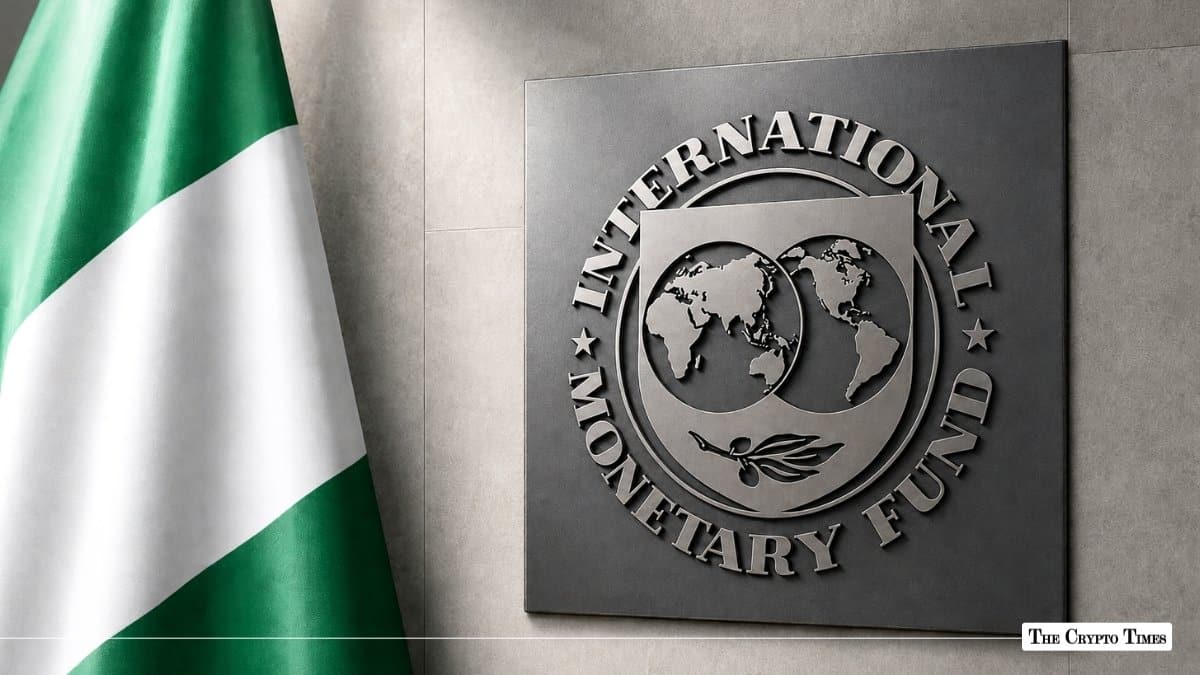
The International Monetary Fund (IMF) on Tuesday, warned that Nigeria’s fast-growing crypto market, especially the use of stablecoins, could weaken the Central Bank of Nigeria (CBN)’s grip on the naira and complicate monetary policy management.
In a new assessment, the Fund said Nigerians are increasingly using dollar-pegged digital tokens to move money across borders, save value and settle payments outside the formal banking system.
That shift, it said, is creating a form of digital dollarisation that could reduce demand for the naira and limit the effectiveness of monetary policy transmission.
The warning comes at a time when Nigeria is already dealing with persistent inflation, currency volatility and pressure on foreign exchange reserves. On Monday, the National Bureau of Statistics (NBS) revealed that Nigeria’s headline inflation rose by 24bps to 15.93 per cent year-on-year(y/y) in May as against 15.69 per cent recorded in April.
Hence in a blog post published by the IMF, households and small businesses saw that stablecoins and other crypto assets have become attractive because they can be faster and cheaper than traditional payment channels. But for policymakers, the same convenience raises concern that more transactions are taking place beyond the reach of regulators.
The IMF said crypto activity on the scale now seen in Nigeria makes it harder to track capital flows, monitor liquidity and enforce exchange-rate controls. “When payments move through digital wallets and offshore platforms, central bankers can lose visibility over how much money is entering or leaving the country. That makes it more difficult to manage the currency and respond quickly to shocks”, it said.
Nigeria has emerged as one of Africa’s biggest crypto markets. The IMF said the country received about $59 billion in crypto inflows between July 2023 and June 2024, with stablecoins accounting for a large share of cross-border transfers.
While noting that this trend is no longer a niche development, the fund said this is a growing payments channel with macroeconomic implications.
The concern is not only about monetary policy. The IMF also warned that weak oversight of crypto assets could create openings for money laundering, terrorism financing, fraud and unrecorded capital outflows.
It said platforms that operate outside the regulatory perimeter can be used to bypass capital flow restrictions and weaken financial safeguards.
To address the risks, the IMF urged Nigerian authorities to strengthen oversight of stablecoins and digital asset exchanges, improve surveillance tools and tighten enforcement against unlicensed operators. It also called for clearer rules on licensing, taxation and anti-money laundering compliance.
Digital assets are clearly filling a gap in payments and remittances, especially in an economy where trust in the local currency remains fragile.
But unless regulation keeps pace with adoption, the country could see more pressure on the naira and less control over its monetary system.
Meanwhile, the International Monetary Fund (IMF) has said the naira remains significantly undervalued despite recent gains following Nigeria’s foreign exchange reforms, estimating the currency’s fair value at about N1,142 to the US dollar.
Other News
In its latest Article IV consultation report on Nigeria, the Washington-based lender said its Real Effective Exchange Rate (REER) model showed that the naira is still about 25.6 percent below levels justified by economic fundamentals.
An undervalued currency means it is trading weaker than what underlying economic indicators would normally support.
The IMF explained that the REER—which measures a currency’s value against major trading partners after adjusting for inflation—showed notable movement in Nigeria’s exchange rate position in 2025. It said the REER appreciated by 32 percent during the year, even though the nominal effective exchange rate (NEER) depreciated by 5.2 percent over the same period.
“Despite the REER appreciation that has already taken place in 2025, the EBA-lite REER model indicates a REER gap of -25.6 percent,” the fund said.
According to the report, Nigeria’s official exchange rate strengthened from N1,535/$ at the end of 2024 to N1,435/$ by the end of 2025, representing an appreciation of about 6.5 percent.
However, on an annual average basis, the naira still weakened, moving from N1,479/$ in 2024 to N1,520/$ in 2025, a depreciation of 2.8 percent.
Based on its assessment, the IMF said the naira should trade at around N1,142.04/$ at the end of 2025 or N1,130.88/$ on an average basis for the year. In contrast, the official exchange rate stood at N1,356.27/$ as of Monday, indicating a persistent gap between market value and fundamentals.
The findings come nearly three years after the administration of President Bola Tinubu introduced sweeping foreign exchange reforms in June 2023, which allowed the naira to float more freely and effectively collapsed Nigeria’s multiple exchange-rate windows.
The reforms initially triggered a sharp depreciation of the currency but were aimed at improving transparency, attracting foreign investment and boosting liquidity in the foreign exchange market.
While acknowledging the progress made under the reforms, the IMF said further adjustments were still needed to fully correct the misalignment in the currency’s value.
The Fund also advised the Central Bank of Nigeria (CBN) to slow the pace of foreign reserve accumulation, warning that aggressive reserve build-up could limit exchange rate flexibility.
“Given the assessed REER undervaluation, slowing the pace of reserve accumulation and continuing to allow 2-way movement of the naira exchange rate combined with strengthening FX market functioning and advancing and supporting fiscal and structural reforms, particularly those that can improve non-oil/gas imports, would help close the gap,” the fund said.
The IMF stressed that continued policy reforms aimed at improving FX market efficiency, strengthening fiscal discipline and boosting non-oil exports would be key to narrowing the exchange rate gap over time.
It added that such measures would also help strengthen Nigeria’s external position and improve investor confidence in the economy.
The report highlights the continuing debate over Nigeria’s exchange rate adjustments, as policymakers balance currency stability with the need to attract investment and maintain macroeconomic stability in Africa’s largest economy.