Follow Us on Google
• Foresees complete breakdown of law and order
By Agatha Emeadi
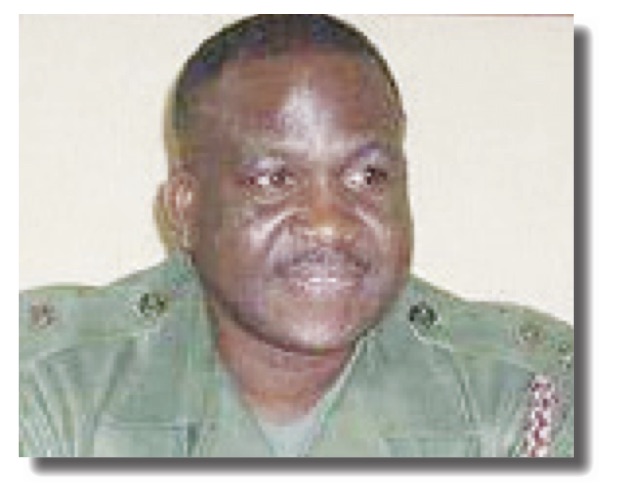
Col. Hassan Stan-Labo (rtd) is the managing director and chief executive officer of Hakes and Partners Limited. He is a security consultant to government establishments, as we’ll as a counter-terrorist expert with huge operational experience from serving as member of the Nigerian military contingent to Liberia, Sierra-Leone, Darfur and Bakassi Peninsula.
A native of Kagoro in Southern Kaduna, Kaduna State, Stan-Labo was also the head, Training Division, Army Peacekeeping Centre and Brigade Chief of Staff, where he served as the hub for cord and implementation. He is a recipient of the Rockefeller Foundation award.
In this interview with Sunday Sun, Stan-Labo agreed that the country is getting overwhelmed with insecurity, advising that something should be done urgently.
With the state of insecurity in the country, do you think Nigerians are overwhelmed?
Yes, I seriously think we are fast getting overwhelmed due to our inability or refusal to take the required proactive steps in averting some of the unfolding sad situations we find ourselves in. I have the feeling that our big men are not getting the heat yet, so they are still sitting comfortably in the kitchen. However, with the terrorists now shifting attention to Abuja, I guess our approach and strategy would change for the better.
What do you think security agencies are not doing right?
Security agencies can only act within the confines of operational latitude availed them by the political strategic level of decision making. If the political will is to deal with what terrorism is lacking; would it be right to hold security agencies liable? Are they responsible for the deficit we suffer in manpower, cutting across the entire national security defence sector? Or could the refusal to commit air assets on bombing sorties of terrorist camps scattered all over our numerous forests be blamed on them? Are they responsible for the bringing out of terrorists from the forest as ‘repentant terrorists’ rather than eliminating them there as terrorists ascribed to them? Are they also responsible for their eventual re-absorption into the military as information has it? I could go on and on. The security agencies are answerable to the political strategic level where policy formulations and directives fall from. Their freedom of action or operational independence may not be as wide as you think.
What is your take on allowing repentant Boko Haram members and other former militants back into the society? Don’t you think it is dangerous?
Any attempt at re-insertion of “repentant terrorists” be they bandits or Boko Haram into the society must be done with great caution. Some had in the past gone back to their communities with the intent of metting out vengeance on perceived persons that exposed them. My concept of execution in an attrition war of this nature is to eliminate the belligerent force there in the battle field without having the additional problems of Prisoners of War (PW) in your hands to contend with. This, however, must be done quickly before he drops his weapon and surrenders to you. This is where our soldiers often miss it. We must execute this war with a sense of deliberate elimination of the enemy otherwise we would just be mobilising a reserve force that would confront us in the near future. They pledge loyalty and profess repentance only when confronted and boxed to a corner by own troops. Why were attempts not made to reach out to own troops for a truce if your repentance is genuine? Presently, we have a few thousands of repentant ex-militants undergoing routine processing, rehabilitation and the DDR programme prior to reinsertion. They are fed, clothed, sheltered and availed good medical care at state expense. While their victims are in IDP camps not sure of the next meal, begging for food, clothing and shelter. How justiciable is that?
Many states are establishing security outfits otherwise known as vigilantes, do you see anything right or wrong in that?
The entire national security defence sector is under-manned. This deficit is finding expression in the establishment of the numerous security outfits today known as vigilantes. There is nothing wrong with their emergence because they are filling gaps within the sub-national security sector that call for urgent and immediate attention. However, they should operate in accordance with the Nigeria Police framework and guidelines. Let us also note that state governors should not also abuse the initiative by converting them to private armies and engaging them in task outside their primary statutory functions.
What does the setting up of vigilante, hunters’ unions suggest to the nation now?
It is suggesting that we are gradually and deliberately building up ethnic and tribal armed groups for the rainy day. Outwardly, yes, the intent could be very clear and straight forward which means to serve as a platform against imminent terrorist threat. However, deeply sited is the intent to protect own ethnic or regional interest from any attempt to dislodge it from its ancestral land or inheritance under whatever guise or veiled official pronouncements. To the ordinary Nigerian with some foresight out there, the emergence of such vigilante groups suggest that we are already at the brink and war is imminent. Again, are you still surprise that even the Fulani invaders also emerged with a well registered vigilante group and had the effrontery to launch it publicly with government security agencies in attendance. So, the average Nigeria out there believes tie is complicit. Nigerians feel the government does not seem ready or capable to protect them from the Fulani war mongers who are on a Jihad. Therefore, they also feel highly vulnerable and abandoned, compelled to seek self-help over their protection and ancestral patrimony.
Are what the states doing likely to have challenges in days to come?
Personally, I don’t really think such states would face some form of sever challenges if things are rightly handled ab initio. For instance, engage men who at the end of the day could easily be absorbed into your state police structure. As for the local hunters and other sundry groups, they should metamorphose into information gathering groups, working closely with the intelligence community at the sub-national level.
All that is happening now, is it a pointer to the reality that state policing is a thing whose time has come?
Definitely. We can only delay the establishment of state policing to our disadvantage. Along side state policing is the inevitability of community policing. A concept that facilitates seamless partnership with the community, having the people take full ownership of the police in their community as theirs.
If nothing serious is done about insecurity now, where can we possibly see the country some months from now?
Frankly speaking, I foresee a complete breakdown of law and order in which nearly every Nigerian community is armed to the teeth in anticipation of any Fulani jihad-induced attack. Not only that, I, again foresee outright clashes that would be beyond the control of government security agencies. I foresee the display of lethal weapons of higher calibre and handling expertise that leaves one wondering when and where such combat training took place. The general feeling of the public today is that ‘enough is enough.’ If we can no longer be together then let’s split up peacefully with mutual respect for each other. After all, what ever the amalgamation agreement keeping us together expired 2014. So, why the continuous distasteful marriage when we can each survive and do well as a sovereign nation.
With all these, what then do you suggest is the way forward?
The way forward on insecurity would be an eclectic mixed grill of suggestions. First, the use of manpower. Let there be massive engagement in recruitment into all sectors of our national security defence sector to meet manpower deficit on ground. In the same vein, existing training facilities should be expanded to accommodate more recruits and new ones established. The Nigerian Army presently recruits about 5,000 men through its only training depot in Zaria. If you juxtapose that with natural exits through retirements and casualties coming from operational areas spread over the 36 states of the country, we may only boast of 2,500 fresh entrants per annum. So, as a country at war, what is preventing us from recruiting into the Armed Forces and security agencies? What stops us from establishing five more training depots one each in the six geo-political zones of the country.
This would give us no less than 30,000 men per annum. Then, with this annual strength inflow we could successfully occupy and hold the ground at all troubled spots be it on the Plateau, Benue, Southern Kaduna, Taraba, Sambisa and our numerous forests nationwide. Interestingly, the use of Geotagging Techniques is a means by which technology could be applied in tracking down communication by terrorists, bandits and kidnappers. Each time a kidnapper uses a phone to communicate, the device connects to nearby cell towers, which leaves a digital footprint. Modern smartphones, often used by kidnappers, have built-in GPS capabilities, which further enhances the accuracy of location tracking. Geotagging utilizes this data to pinpoint the location of the phone. Many countries have used this method to locate, apprehend, and eliminate kidnapping rings. For example, in Colombia, a country known for notorious kidnappings, geotagging was the secret which security agencies successfully employed to beat them down. In one notable case, Colombian authorities tracked the mobile phone of a kidnapper using geotagging, leading them directly to the hideout and facilitating a successful rescue operation. Mexico’s adoption of advanced geotagging techniques in collaboration with the United States has led to several high-profile successes.
The technology was pivotal in dismantling a notorious kidnapping ring in Mexico City and this shows the potential of cross-border technological cooperation, and Nigeria can replicate this with its neighbours. Now, the greatest advantage we have over the enemy in this ongoing war on terrorism is our airpower. Air parity does not exist between us because the enemy has no air assets. Unfortunately, we are not exploiting this advantage to the fullest over the belligerent force. I expected that all terrorist strongholds would by now have been spit locked to the highest grid level and several daily bombardment sorties allotted to keep the enemy off balance and its headquarters in complete disarray. But to my disbelief what I see is the direct opposite. Terrorists sending warning notifications of impending visits to own Nigerian communities while we look helplessly. Something is seriously not adding up here.
This is not the same Nigeria Armed Forces I fought with in Sierra-Leone, Liberia, Bakassi Peninsula and the Darfur where I had the privilege to have commanded men. Again, the Nigerian Army is known for its bravery, resilience, boldness, doggedness and fighting spirit. What has gone wrong all of a sudden? I ask innocently, haven left service over a decade plus now. In addition, nothing should be ruled out under the present circumstance. Terrorists would always go for your Centre of Gravity (C of G). Remember they are also well-trained tacticians and strategists. On knowing that all attention is concentrated on Abuja, they could pull a fast one by diverting to our national business hubs like Kano, Lagos, Port Harcourt, Kaduna etc. And knowing that these are locations which if attacked, could be injurious to our national economic interest. So, what is required of us is a state of general alertness to be in place. Serious security beef up and Citizen consciousness should be heightened immediately, all should take bold steps to halt the proliferation of small arms weapon. Enhance non-kinetic approach in our operations. Be more aggressive and dreadful dealing with bandits and terrorists.
While taking these precautions, beware of your governors. Do not take a hook, line and sinker of what they say because some of them are neck deep involved and complicit. Then, enhance on your response time for emergencies calls. Finally, for long term plan the Service Chiefs should articulate a national security sector reforms document which would avail far reaching solutions to the multi-faceted challenges of funding, manpower, logistics, equipment, training, intelligence, welfare and motivation.