Follow Us on Google

The International Labour Organisation (ILO) has called for a global action to reduce poverty and social injustice in the world. The organisation also stated that over 200 million workers live in abject poverty and called for urgent plans to reverse the trend. The Director-General of ILO, Gilbert Houngbo, made the disclosure at the agency’s latest report to commemorate the World Day for Social Justice. In the report entitled, ‘The world needs a strong and sustained dose of social justice,’ the ILO blamed the rising poverty on the impact of COVID-19 combined with geopolitical tensions, economic crisis, and natural disasters.
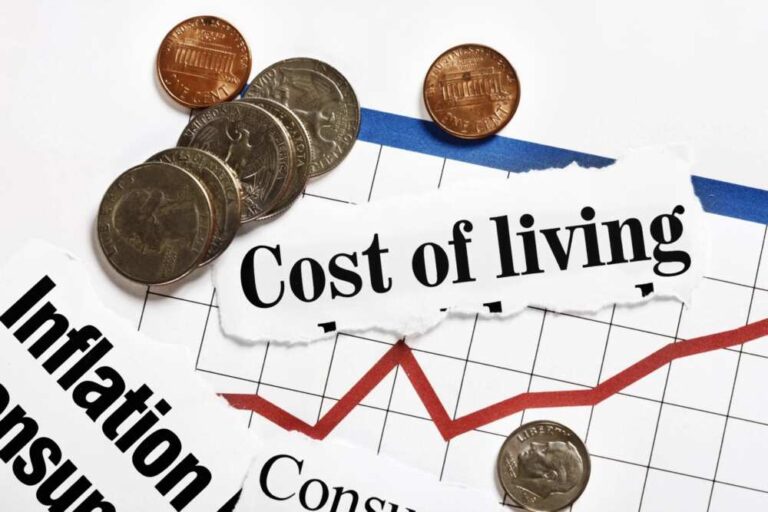
It identified high cost of living, rising prices of consumables beyond national income, as factors capable of pushing more people into poverty. “As a result, we see a rise in inequality in many parts of the globe, raising the spectre of increasing social tensions,” the ILO said.
Houngbo painted a grim picture of labour market trends and global employment growth, which he said would be only 1.0 per cent in 2023, less than half the level of 2022. As a way out, he recommended a strong and sustained dose of social justice as key to fair and peaceful societies, adding that at institutional level, ILO aims to launch in 2023 a Global Coalition for Social Justice, to promote decent work.
The ILO projections and recommendations are in order. We welcome the initiative. Governments should key into the agenda, especially in developing countries, where the poverty level is rising.
Nigeria is among the countries battling with pervasive poverty. According to the new poverty index by National Bureau of Statistics (NBS), over 133 million Nigerians, representing 63 per cent of the nation’s population, are multi-dimensionally poor. Not less than 65 per cent of the figure or 86 million people live in the North, while 35 per cent or nearly 47 million live in the South. The situation is higher in rural areas, where 72 per cent of the people are poor, compared to 42 per cent of the people in urban areas.
The poverty rate from, as given by the ILO and NBS, is quite disturbing. Poverty driven by youth unemployment, high cost of living and dwindling standard of living can trigger unrest and insecurity. The Nigerian Economic Summit Group (NESG) has projected that unemployment rate will increase to 37 per cent in 2023, about four percentage points higher than the NBS data of 33.3 per cent as of 2020. The group based its prediction on weak performance in the job-elastic sectors, low labour absorption of sectors that will drive growth, and population growth estimated at 3.2 per cent, which will lead to a decline in real per capita income.
The growing poverty is scary and should give concern to the government. With the rise in terrorism, banditry and insurgency, leaving millions of youths without decent jobs, is a threat to the security of the country. With good governance, the government can really plan to reduce poverty and social injustice. Government at federal and state levels should enunciate and implement policies that will create more jobs, reduce poverty and enhance the quality of life of the the people.
It is time for President Muhammadu Buhari’s pledge of lifting 100 million Nigerians out of poverty in 10 years to be taken seriously and pursued with vigour. Let the incoming administration key into the initiative and give it the needed attention. The various social intervention programmes of the government should also be pushed beyond the level of mere populism and be made to have positive impacts on the people. Nigeria’s current social welfare legislation and social welfare policies are not encouraging.
The national minimum wage law should be implemented to ensure that workers enjoy a commensurate pay for their work and are accorded social justice in such matters as pension and gratuity payments. Reducing poverty and entrenching sustainable growth also requires a boost in education. Poverty is a threat to world peace and security. We commend the ILO plan to globally tackle poverty and social injustice and urge developing nations to key into it. We also enjoin developed countries to partner the developing countries in tackling poverty.