Follow Us on Google

By Ndubuisi Orji and Chinelo Obogo
If a man survives a tragedy and thereafter dies from a humiliating disease, what has he achieved? Would it have been better the tragedy claimed him, so that at least he would have the sympathy of his people than dying an opprobrious death?
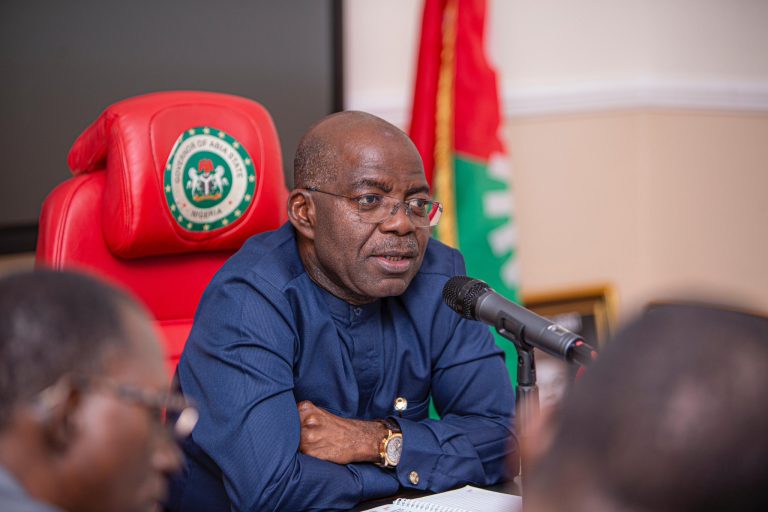
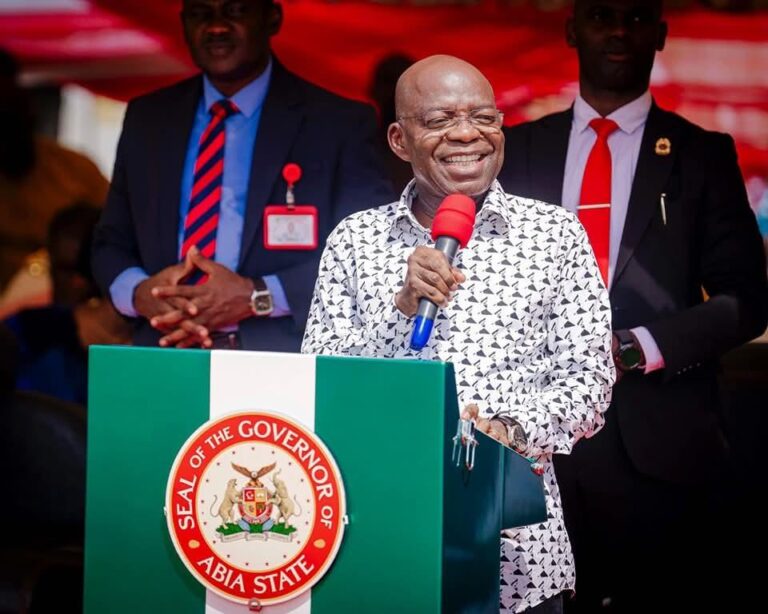
The above scenario typifies the dilemma of the Abia State governor, Dr Okezie Ikpeazu, who was sacked from office as governor of the state yesterday by a Federal High Court, Abuja for alleged falsification of tax papers. His latest travails came after he had survived an onslaught against him by the 2015 governorship candidate of the All Progressives Grand Alliance,(APGA) Dr Alex Otti.
Delivering judgment in a suit filed by Uche Ogah, who came second in the 2014 Peoples Democratic Party (PDP) Abia governorship primaries, Justice Okon Abang ordered Ikpeazu, to vacate office immediately for contesting the governorship primaries based on false information.
Abang also ordered the Independent National Electoral Commission (INEC) to immediately issue a certificate of return to Ogah.
Ogah in the suit had contended that based on Article 14(a) of Part IV of the PDP Electoral Guidelines for Primary Elections and Section 87(4) (B) of the Electoral Act, 2010, the Abia governor was not qualified to contest the December 8, 2014, governorship primary poll in the state because he presented a fake tax clearance certificate in his nomination form.
However, another PDP governorship aspirant, Mr Friday Nwosu also has a pending case in court challenging the nomination of Ikpeazu as PDP governorship candidtae in the 2015 poll, on same ground of alleged falsification of tax documents.
But in his own case, he wants the court to declare him the duly nominated candidate of the PDP even though he came third in the primaries. He even joined Ogah in the case, saying he left the venue of the primaries and did not sign the result.
In the latest case by Ogah, although the Ikpeazu has the right of appeal even up to the Supreme Court, yesterday’s judgment is no doubt a devastating blow to him as a person and his political career.
Ikpeazu’s current troubles started immediately he was declared winner of the PDP governorship primaries in Abia. Ogah and other aspirants were aggrieved by the outcome of the exercise.
In suit no FHC/ABJ/CS/1086/2014, the aggrieved aspirants challenged his eligibility to contest the primaries, alleging that he did not pay his taxes for years 2011, 2012 and 2013 as at when due, alleging that his taxes for the three years were paid on same day. But Ikpeazu challenged the jurisdiction of the court, insisting that the matter ought to have been filed in Abia State. The court over-ruled his objection.
However, the Appeal Court agreed with him that the suit ought to have been filed at an Abia State High Court. The matter proceeded to the Supreme Court, where five justices of the apex court led by Justice Mohammed Muntaka-Coomassie affirmed the jurisdiction of the Federal High Court to hear the matter. Consequently, the justices returned the case to the Federal High Court for expedited hearing.
Ikpeazu, who says he is unfazed by the decision of the Federal High Court has urged Abians to remain calm even with the challenge in the case of alleged falsification of tax receipts against him.
Governor Ikpeazu, who said that he has faith in the judiciary and rule of law, added that he will appeal the ruling as he has instructed his lawyers to file an appeal immediately against the said judgment.
In a statement by his Chief Press Secretary, Enyinnaya Appolos, the governor said he was an appointee of the Abia State Government from 2011 to 2014, where he served as the General Manager, Abia State Passengers Integrated Manifest and Safety Scheme (ASPIMSS), and first Deputy General Manager, Abia State Environmental Protection Agency (ASEPA), Aba and Environs respectively, before his resignation in October 2014 to contest the governorship election in the state. He also said that within the period in question, his taxes were deducted at source, and when he had need of his tax clearance in 2014, he applied to the Abia State Board of Internal Revenue, and was duly issued with his tax receipts for the period in question.
He maintained that he remained the governor of the state according to law and will await the final determination of the matter by the appellate courts.
But besides the headache from members of his own party, Ikpeazu had faced a lengthy legal tussle from Alex Otti, the All Progressives Grand Alliance (APGA) governorship candidate in the 2015 elections. After he was declared winner of the election, Otti dragged Ikpeazu to the Abia State Governorship Election Petition Tribunal sitting in Umuahia, urging it to annul his election, alleging that the election was marred by irregularities and substantial non-compliance with the Electoral Act. He then urged the tribunal to declare him (Otti) the winner on account of the lawful votes cast during the election. But Otti’s prayer was not granted, as the tribunal upheld Ikpeazu’s election instead.
Not done, Otti dragged Ikpeazu to the Court of Appeal, and seemed to get some reprieve when the Court, sitting in Owerri, had on December 31, 2015, nullified Ikpeazu’s election and declared Otti the winner of the April 11 and April 25 supplementary elections in the state. Delivering judgment, the five-member panel, headed by Justice Oyebisi Omoleye, said the APGA candidate scored 164, 444 valid votes to defeat Ikpeazu who scored 114, 444 votes.
But at the Supreme Court, which is the final stop of governorship election petitions, Ikpeazu was declared the validly elected governor of the state, while Otti’s case was dismissed. The court reversed the decision of the Court of Appeal, which nullified Ikpeazu’s election, and ruled that he (Ikpeazu) won the lawfully cast votes in the April 11, 2015 election.
The implication of the Federal High Court’s ruling
But in the present case, the ruling given by the Federal High Court declared that Ikpeazu was not qualified to stand for elections in the first place on the grounds that he submitted fake tax clearance forms. The Court subsequently directed that Uche Ogah, who came second at the PDP primary election be declared the winner.
In examining the legal implication of the Federal High Court ruling, the recent case of Uche Ekwunife (PDP) vs Victor Umeh (APGA) comes to bear. The Court of Appeal sitting in Enugu had nullified Ekwunife’s senatorial election, stating that she was not qualified to stand for the primary election in the first place as she did not meet the provision of the Electoral Act, and ordered a fresh election within 90 days. The implication of this ruling by the higher court indicates that if an election is nullified on the grounds of disqualification of a candidate, as in the case of Ikpeazu, a fresh election should be conducted.
Another issue which usually causes controversy is whether it is constitutional for a party to field a fresh candidate in a rerun or conduct a fresh primary. In 2009, the Supreme Court laid this controversy to rest. In a case between the Labour Party (LP) and the INEC, the Supreme Court ruled that no party is required to either present a new candidate for a rerun or conduct a fresh primary.
A Nnewi based lawyer, Obinna Nnaka said that the Court based its judgment on the provisions of Section 182 (1)(j) of the 1999 Constitution (as amended) and Section 31 (5) and (6) of the Electoral Act, 2010 (as amended).The Constitution at the said Section provides:
“182. (1) No person shall be qualified for election to the office of Governor of a State if- (d) he has presented a forged certificate to the Independent National Electoral Commission.”
On the other hand, the Electoral Act provides: “31. (5) A person who has reasonable grounds to believe that any information given by a candidate in the affidavit or any document submitted by a candidate is false may file a suit at the High Court of a State or Federal High Court against such person seeking a declaration that the information contained in the affidavit is false.”
(6) If the Court determines that any of the information contained in the affidavit or any document submitted by that candidate is false, the Court shall issue an order disqualifying the candidate from contesting the elections.”
“So based on the above, being disqualified, it means that the governor of Abia State was not qualified to contest ab initio and that PDP did not have valid candidate for the gubernatorial election. In law, PDP is also disqualified together with its candidate. In my view, it is not right for the Court to order INEC to issue certificate of Return to the runner up (Uche Ogah), he is still of the PDP which is disqualified.
“To show how serious the issue is, the Electoral Act made it a crime for a political party to present a candidate that does not meet the qualifications.
“Section 31 (8) of the Electoral Act provides:-A political party which presents to the commission the name of a candidate who does not meet the qualifications stipulated in this section commits an offence and is liable on conviction to a maximum fine of N500,000.”