Follow Us on Google
By Agatha Emeadi
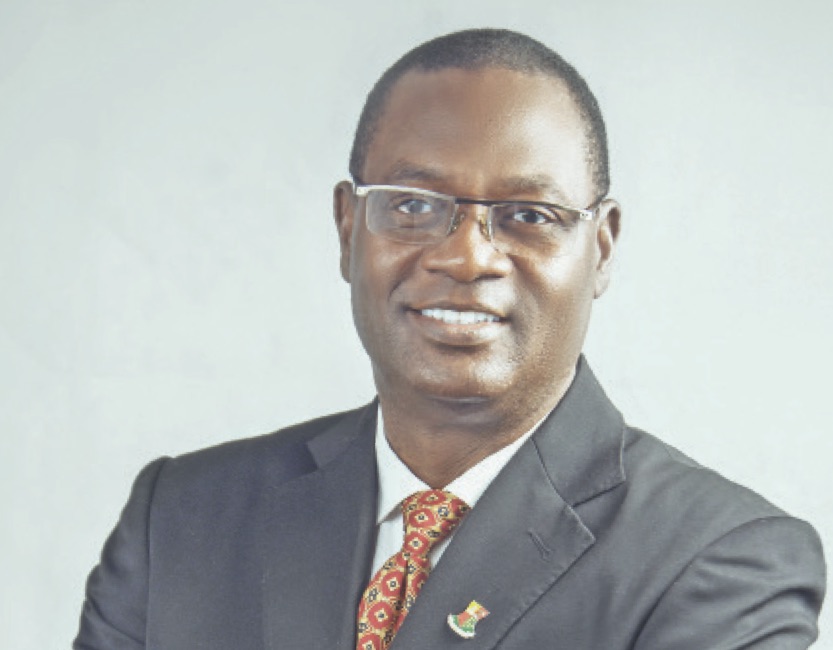
Professor Adesola Ajayi is the Vice Chancellor of Abiola Ajimobi Technical University, Ibadan, Oyo State. Ajayi made a First Class (Honours) and had the best overall result at the Faculty of Agriculture, Obafemi Awolowo University, Ile Ife in 1991. He has been a scholar of many firsts. In his kitty are several scholarships, fellowships, honours and awards.
In an interview with Saturday Sun, Prof Ajayi spoke on a number of issues, including the technical university that he currently runs, education in Nigeria, his private life, and what government can do to stem the tide of perennial industrial actions in the university system.
Tell us about this university
The University is Abiola Ajimobi Technical University. That was the name we got between June 2024 and now. From 2018 to 2025, it was known as First Technical University. From 2012 when it was established to 2018, it was known as Technical University. The idea of the university came to the Oyo State governor then, the late Abiola Ajimobi, after which the present governor, Seyi Makinde has renamed the university. The idea then, till now, is that there is this gap between knowledge and skills of competence of Nigeria graduates. The reality of the world of work in Nigeria and many other places is the fact that companies always complain that they have to retrain our graduates. So, this idea came for us to have a university that marries both. A university that places the emphasis on knowledge, like years ago when handcrafts were included in the curriculum. So, our motto is to develop the brain and train the hands. We want to make sure that every graduate in this university can find relevance for the knowledge they have acquired in their daily dealings. That is why we say we produce market-ready graduates. We produce graduates who are creating tomorrow for today, job creators, not jobseekers. That is the idea behind a technical university. That is also why there is restricted focus on the Science, Technology, Engineering and Mathematics. (STEM) We are operating the STEM system.
Which means that courses like Law, Social Sciences and Arts are not yet accredited?
At the initial stage, no. But now, with the emergence of world of work, all those things have become technical also. Just last session, senate granted approval that we should commence programmes on social and management sciences. Well, Law maybe part of the future. The university started with two faculties namely Natural and Applied Sciences, then Technology and Engineering. Later we added Environmental Sciences and just a few months ago, we added Faculty of Allied Medical Sciences and senate has given approval for the Department of Management Sciences.
How long have you been the Vice Chancellor of this University?
I became the Vice chancellor on May 9th, 2022. I am in my fourth year now.
You said the institution produce market-ready graduates. What do you mean by that?
It means that right from their entry into the university, we have the endeavour to make sure that our students are exposed to the industry standards. We have a very strong collaboration with industry partners, such that each of our graduates are meant to know the industry. There are a lot of things they would have learnt before they graduate. It is not a question of mere mention. Our graduates have knowledge about engineering or sciences, but they are also aware through strong partnership we invite industry partners. There are several of our courses where we have people from the industry. The university is also unique in its system because we have what we call professors on practice. They are not the traditional academic professors that we have, it is not a tenure neither is it a pensionable office, but created to have space for those who have distinguished themselves in practice and who could add value to the training of our students. They are not members of the senate but are recognised for their own experience and the mark they have made in the world of practice. We bring them in to teach our students. We also have facilities to take in lectures from people outside the immediate environment of the university, so we have facility for online delivery of lecture for those who are not here whether within or outside the country. In addition to that, every graduate here earns three certificates. We have a Bachelor degree certificate, Diploma in Entrepreneurship and vocational training and French. That expands the scope of their relevance and because they also went through entrepreneurship, business introduction and venture capital trainings. We have made some good progress in that regard.
From your many years’ experience in the university system before you became a vice chancellor, how healthy do you think the Nigerian university system is?
First, what we call the Nigerian university system is very robust and very dynamic. Its health status is a question of geometrics and if there are any undeniable facts of its weakness, it is about funding. The system is grossly underfunded. Far less appreciated by those who are the helms of affairs across the spectrum of our government structure in Nigeria because the place of education is irreplaceable. So, when we look at the value, the significance and relevance of the sector compared to the resources being made available is very poor. But one of the very obvious strengths of the system is the know-how and the skills of its staff. You are not likely to find the level of commitment that we have, especially in the younger generation because if there is a sector where people are far more mobile, it is education. With your PhD or professorship from Nigeria, you are accepted and hired anywhere in the world. Everywhere Nigerians are found as staff or students, they have distinguished themselves. Secondly, there has been an increasing number for higher education in general in Nigeria and the population is over two million as we have in the country.
So, another feature that is quite interesting that we have noticed is since 2019 till date across all the South-West and many South-East states, a proportion of female has increased far more than that experience. We also have a significant diversity of a system that runs. In terms of a system that runs, especially for us Vice chancellors, we have three blocks in different categories. The Federal and states forms the public, then the private university. So, across board we have a very strong system. Then our selection processes, if allowed to operate the way it was designed, is very rigorous.
Strike has been a problem to Nigerian universities. Do you have an idea how strikes could be averted in Nigerian university system?
First and foremost, strikes do not spring out of nothing. Strike is always a consequence of breaches and agreements. Critically, I am a member of the Academic Staff Union of Nigerian Universities (ASUU), and I have a fair idea of the process. First is to know that the process of declaring a strike is not an easy one. It is a much rigorous process that people might imagine. But the bottom line is the fact that strike is always an attempt to draw the attention of those who are in government or those who are supposed to fund education, the need to provide the resources, and when agreements are signed and not honoured, strike appears to be the only language that compels people to honour agreement. So, if government is proactive, attentive and responsive, there will be no strike. Nobody enjoys it. Those of us who have taken the academic calling, even as I am seated here as vice chancellor, I miss classes. I miss interacting with my students. We are not called to be administrators. Being vice chancellor of Head of Department is part of it; primarily we are teachers. There is nothing that gives one joy and delight than touching the lives and moulding the young ones. You and I are a product of yesteryears teachers. The salaries of academic staff are so poor. As at today, no Nigerian professor earns N850,000.00 per month. The gross total package is N9.6m in a year. I have been a professor for 15 years and in the university system for over 30 years. By next year, I would have put in 32 years into academic service, yet I cannot earn N1m per month. Meanwhile, this is pre-tax before any deduction. That is why I talked about the level of commitment. People have sacrificed a lot but cannot have the basic tools to work with. What are these basic tools to work with? We are talking of facilities as low as photocopy machines, no access to internet, furniture etc. You will provide them yourself.
Sir, schools make money, students pay schools fees and there are government allocations to the education sector.
The issue of school fees, no one in Nigeria pays for the cost of education. There is a lot of restrictions. Today if you go by Nigerian University Commission’s (NUC) assessment of how much it takes to train a student, no one would pay anything less than N2.5m per semester, if you want to put us at par with what is obtained elsewhere. So, there is a situation where the problem restricts access to education. It is subsidised. Do not go beyond this; yet they are not providing the counterparts and that is the challenge we have. In public, the commitment is more to the salary than facilities and infrastructure. Till I became a professor, I did not receive a dime from the government either by way of research funding. I sat and wrote research proposals, attracted funding, so that I will be able to run my experiment. Yet government expects me to do research because if I do not publish, I will not be promoted. I have to take loans to travel for conferences, otherwise when promotion comes, you will be termed as a local champion and will not be promoted. Yet, there are no funds, facilities and support system to be able to undertake all that.
As at today, with the new minimum wage, the salary of a professor is N9,476,689.00 till retirement. This is for a professor who has spent ten years. For a newly promoted professor, it is N7,328,876.00. These are till your retirement.
What about the gratuity?
Other News
How much is the gratuity?
Will it not be the same scale as the salary for a professor?
We have signed that, but government is not looking at that because whatever that has been deducted from the salary by way of contributory pension, government is supposed to be making up whatever the deficiency. This is because some people will be professor for 5, 10, 15, 20 or 30 years before they retire. So the amount individuals would have accumulated in their pension account will not be the same. Someone starts work as an academic staff at 23 or 24 years, another starts at 40, so they will not have accumulated the same pension. We have this condition that once one is a professor and retires as a professor in a public or federal institution, that your pension will be equivalent to your salary as at the date of retirement. But there is a deficit, or a shortfall that government up till this day has not been able to implement. Retirement age for professors is 70 years.
Paying electricity bills has been a major challenge for many institutions. Are you working towards alternative power supply for the school?
We are now exploring renewable sources of energy. We are seeking to partner with private sector/solar energy farm. Our discussion has reached an advanced stage where we have private investors come and build and what we should have been paying as bill will be paid to them overtime, and eventually liquidate the money. Like I said earlier, research is a function of funding. So even if we have the research result done, unless we also have resources to be able to translate them into products, it is going to be a challenge and that is where the challenge comes in. So as a technical university, we still need to provide solution despite societal challenges.
What makes First Technical University tick?
First, we bridge the gap between knowledge and skills. We need vocational activity to add to the degree programmes that they have, while offering them a French language competence, knowing that Nigeria is surrounded by French speaking countries. French is also an international language in addition to English. We found out that majority of Francophone citizens are able to communicate in English, whereas the reverse is not always the case.
From your experience as a vice-chancellor, do you think Nigeria needs to establish more technical universities?
Yes, we need more of this kind of model. We need many institutions to also convert to this kind of model. The Nigerian Universities Commission (NUC) has made it mandatory. They started from the issue of entrepreneurship. The idea behind it is ‘Do not teach theory alone.’ Link theory on knowledge acquisition with reality of the world of work. Partner with those who are recruiting so that before they leave the university, we have given theme skills. Our curriculum should not be stagnant; it should be dynamic, responding to the reality on ground. When one looks at the issue of technology, the rate at which it is evolving is very fast. So, for people who are in the computing world, the computer language or the software language one learnt in the second year, by the time of graduation, it is almost obsolete and updated. So, we need to expand. Academic institutions are not responding to that. We are teaching them languages that are not being used by those in the world of works. Every institution needs to help to train their students in such a way that they can face the hustle. I studied Agriculture and when one looks at the curriculum of Nigeria Agricultural degree programme, it does not provide for much opportunity for an agricultural graduate to practise. I wrote a paper on that, that an average Nigerian agricultural graduate cannot practise agriculture because there is a very high emphasis on the science of agriculture more than the business. That is why there is a lot of disconnect in the Agric sector. Those who are investing, who are into business in Agriculture sector are not as knowledgeable in the technical area of the Agricultural stage. Then, those who are knowledgeable in the technical area of Agriculture are not business savvy, that is where the disconnect is. Agriculture students do not want to practise agriculture. Those who are practising it are not making headway.
As a VC, with 100 per cent internet-generation students, do you sleep with your two eyes closed?
To some extent.
Why?
The reality is that students are young people, full of energy and very daring. Until the day breaks, that is when I will wake up. I read about the crash in Ekpoma, Edo State. More importantly, this university is also in a very security-sensitive area. It is on the road. But to the glory and praise to God, He has been our shield and guide.
It is a big challenge raising young adults in an internet age. Have you encountered any mayhem thrown at you by the students?
Our students as young people want to have more freedom. They feel they are being restricted and therefore want to be let loose to face the world. Some few weeks ago, they were agitating for freedom, accusing us of treating them as little children. They want to have parties all night on campus, do what they want, lack restriction. But we have continued to insist that the rules and regulations must be enforced. Other than that, we are fine. The students are already aware of most of the vices from young adults in different schools; but we as an institution are creating awareness as a deterrent trying to make a campaign and help them to see why it is not good for them to do it. From primary and secondary schools to the streets they live on daily basis, students are aware of substances and drugs. The social media did not help matters because there are no censors, restrictions, so even what we hide from them, they will see it. So, because of their nature and age, they are inquisitive and experimental. In fact, by the time they are getting to university, they have known more than they ought to know. They have been exposed more than they ought to be and it becomes a challenge for us to work on it because no parent wants to admit that their children came from homes with a baggage of negatives. If anything happens, what they will say is that it happened in school. Some parents will ask, why did you allow our children to do this?
What kind of university did you inherit when you assumed office as a vice chancellor?
I inherited a functional and growing university. My predecessor happened to be the pioneer vice-chancellor. I am the second vice chancellor. I had the privilege of working with him as a deputy vice chancellor. So, invariably, I was not given something that I struggled with what I am not familiar with. It was a natural process of ascension. To the credit of the former VC, all the statutory bodies of the university have been established. We have the Faculties and Departments, Governing Council, Management, Congregation, Senate and a strong foundation have been laid. It is a responsibility for me to build on that and I also was deeply involved in the management and administration of the university. So, it was not a new thing for me. I have the experience of many vice chancellors. For me, it was a natural graduation, moving from deputy vice chancellor to vice chancellor to continue along the trajectory of the strategic plan we had done for the university.
Where Professor Ajayi from?
I am Oyo State and grew up from the Oyo North Senatorial district where I had my elementary and secondary education. Thereafter I went to Oyo State College of Arts and Sciences (OSCAS). I had my first year of basics before gaining admission to the Obafemi Awolowo university, Ile-Ife, where I had a Bachelor of Agriculture degree. I had the privilege of being recruited as a graduate assistant after the completion of my NYSC. Since then, I have grown in the system to become a professor in the year 2010.