Follow Us on Google
From Fred Ezeh, Abuja
Five states, namely, Kaduna, Kano, Katsina, Kebbi, and Sokoto, have renewed commitment to domestic resource mobilization for improved investment on child and maternal health care in the states.
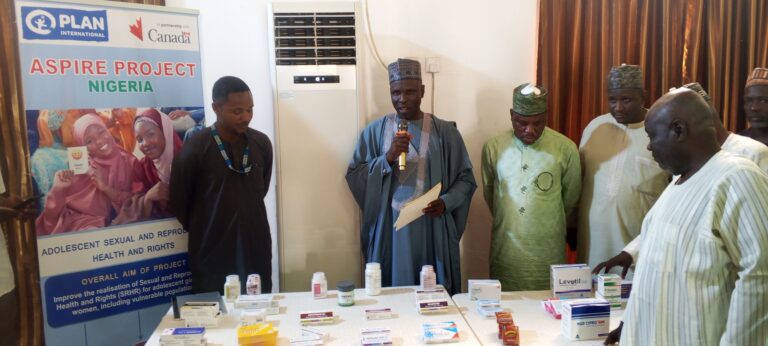
Commissioners of Health in the states made the pledge at the Integrated Child Survival Advocacy (ICSA) strategic alignment with state leadership and partners in Abuja, on the theme “strengthening PHC financing, integration, and community accountability for improved child survival outcomes.”
Over 60 participants including the six Commissioners for Health (Kaduna Kano, Katsina, Kebbi, Sokoto and Osun), three Commissioners for Local Government (Kaduna, Kano and Katsina) and six Executive Secretaries of State Primary Health Care Development Boards/Agencies, participated in the meeting.
Other participants in attendance were representatives of the ICSA consortium comprising the Centre for Well-Being and Integrated Nutrition Solutions (C-WINS), Civil Society in Malaria Control, Immunization and Nutrition (ACOMIN), and NANA Girls & Women Empowerment Initiative, alongside the project steering committee (PSC) which comprises the Federal Ministry of Health and Social Welfare, SWAp, National Primary Health Care Development Agency (NPHCDA), Association of Local Government of Nigeria (ALGON), and UNICEF. Civil society organizations were represented by the Health Sector Reform Coalition (HSRC).
The state officials also made a pledge to commit, at least, 1USD per under five child to push for a better health care service for the vulnerable groups particularly the mothers and children.
They also agreed that the ICSA Project is in line with the state priorities, and committed to execution of the plan which includes advocacy to improve human resources for health, and also agreed to drive and sustain data ownership; create an enabling environment for the activities and engagement of the citizen led advocacy and accountability initiative.
ICSA Project Lead, Dr. Nihinlola Mabogunje, explained that the objectives of the project is to ensure that every child has good quality of life and development, and this can only be achieved through proper immunization and other child care services.
She said: “achieving this requires adequate investment, financial, logistics and human capital. This is why we have on board people are needed to make it work. We have set up accountability measures at the community level to ensure we achieve the needed results.”
She confirmed that some states government have made several other pledge that would help consolidate the gains recorded so far in the implementation of the ICSA Project.
She said: “Kaduna state pledged to close the gaps in PHC staffing. 1, 800 health workers would be empowered annually for 5 years. Kano State pledged to expand free maternal services to 50 per cent of all health facilities from the current 50 PHC facilities in the programme, among other programmes.
“Katsina promised that an additional 600-plus skilled birth attendants would be employed in 2026, and also ensure efficient management of human resources for health, and also establish 60 OTPs and 9 stabilization centers.
“Kebbi State said that in 2026, 115 health facilities are scheduled for renovation with full solar power system to deliver 24-hour lighting, and fully equipped for improved service delivery. Additionally, 21 facilities would be upgraded to youth-friendly health facilities with support from the Canadian government.
“Sokoto State pledged increment of the state’s budget on health from 15 per cent to 16 per cent. It will also double up all health-related commitments from 2025, which includes efforts like the deployment of more than 300 midwives to PHCs.”
Dr. Fatima Adamu, Executive Director, NANA Girls and Women Empowerment Initiative, in her remarks, said the partners have done massive awareness on the project.
She highlighted the importance of improved funding from local sources to argument the shrinking foreign financial support.
The partners also said the meeting was designed to formally present the ICSA Project vision, scope, and advocacy approach to state political and PHC leadership; to secure high-level state commitments (policy, financing, coordination, and LGA engagement) that are required for effective ICSA implementation; and to align ICSA implementation with state health and local government priorities, structures, and reform initiatives; and to agree on immediate next steps for coordinated advocacy, engagement with LGAs, and early implementation actions in 2026.