Follow Us on Google

From Isaac Anumihe, Abuja
The Federal Ministry of Housing and Urban Development, in partnership with the Independent Corrupt Practices and Other Related Offences Commission (ICPC), has launched a nationwide verification and tracking exercise to assess constituency and zonal intervention projects executed by the ministry across Nigeria.
According to a statement, the initiative is designed to ensure that projects are delivered in line with approved specifications, uphold transparency and accountability, and deliver value for money to Nigerians. The joint effort reflects a renewed push by the Federal Government to strengthen oversight of publicly funded projects and curb waste, abandonment, and substandard execution.
The ministry’s Special Projects Unit is responsible for supervising Federal Government constituency and zonal intervention projects, while the ICPC plays its statutory role of enforcing compliance, due diligence, and integrity in budget implementation and public spending.
The verification exercise was officially flagged off in Kano, with simultaneous inspections underway in other states where intervention projects were carried out. Joint teams drawn from both institutions have been deployed nationwide to conduct on-the-spot inspections, project verification, and quality assessments, examining both the status and standard of completed and ongoing projects.
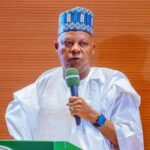
Speaking at the flag-off ceremony, the Permanent Secretary of the Ministry, Dr. Shuaib Belgore, represented by the Director of the Special Projects Unit, Olatunde Ajayi, said the initiative aims to evaluate the real-world impact of constituency projects and ensure Nigerians benefit from them.
“This joint verification and tracking with the ICPC is aimed at evaluating the impact of these projects and ensuring that they are executed to standard for the benefit of the people,” Belgore said.
He stressed that the exercise demonstrates the ministry’s firm commitment to accountability, transparency, and responsible management of public resources, while sending a clear warning to contractors.
Other News
“The ministry, in collaboration with relevant oversight agencies, will not hesitate to invite contractors for corrective action where deficiencies are identified, or demand refunds to government coffers where projects have clearly failed to meet contractual obligations,” he added.
Belgore further noted that reports from the exercise will support evidence-based decision-making, help assess the relevance and implementation level of projects, and identify gaps that could shape future planning and intervention strategies.
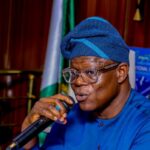
Also speaking, the ICPC Head of Constituency Projects Tracking, Bello Idris Bakori, said the commission’s involvement aligns with its mandate to prevent corruption through proactive monitoring of public projects.
He explained that the joint tracking effort is designed to deter sharp practices, promote greater transparency in project execution, and ensure that funds allocated to constituency projects result in tangible development outcomes for citizens.
Bakori assured that all findings would be properly documented and followed up in accordance with existing laws and procedures to safeguard the public interest.
“Our goal is to ensure that public funds translate into real development and measurable impact for communities,” he said.
During the Kano flag-off, the joint inspection team visited several projects, including the provision and installation of solar streetlights, lighting installations at Government Girls Secondary School (GGSS) Kwa, and projects in Bichi and Rimingado Local Government Areas. Other inspected projects include the construction of a sporting facility, indoor complex, football pitch, and pavilion in Gwarzo town, as well as the Badume–Kyauta Road project in Dawakin Tofa and Bichi local governments.
The tracking and verification exercise in Kano State is ongoing, with similar inspections continuing nationwide, marking a significant step toward strengthening project accountability and improving the delivery of government-funded infrastructure across Nigeria.