Follow Us on Google
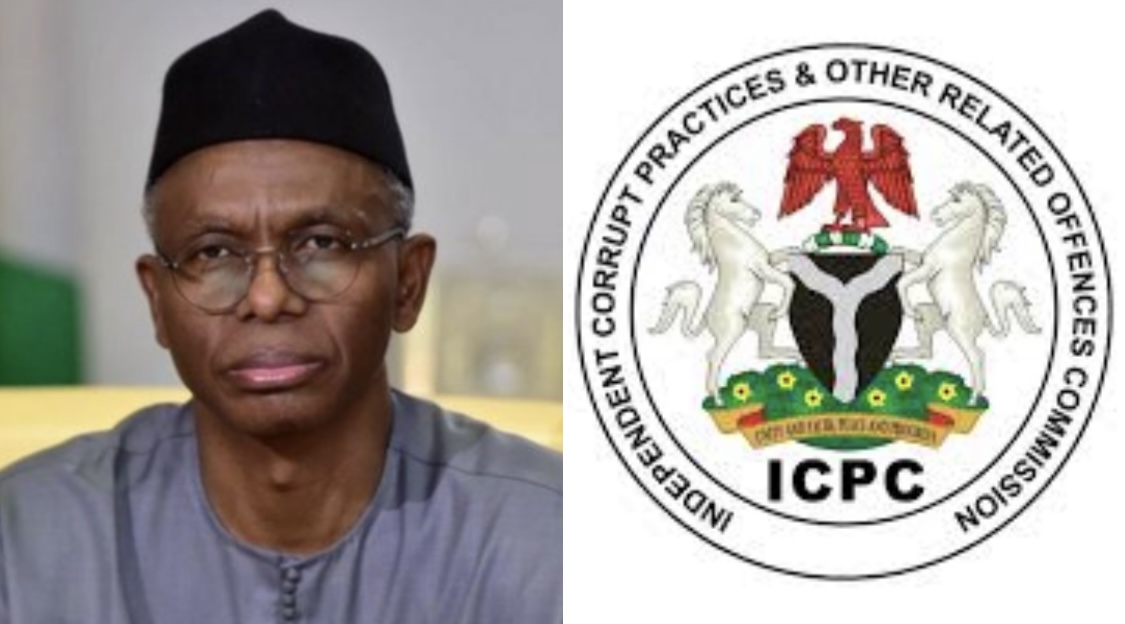
From Adanna Nnamani, Abuja
The Independent Corrupt Practices and Other Related Offences Commission (ICPC) has dismissed allegations that it denied former Kaduna State Governor, Nasir el-Rufai, access to food while in its custody, insisting that his wife arrived outside the agency’s approved visiting hours.
The Commission, in a statement yesterday by its spokesperson, Okor Odey, described the claims circulating on social media as false and misleading.
The controversy followed the circulation of a Hausa-language video interview in which a woman, who identified herself as el-Rufai’s wife, alleged that ICPC operatives denied her entry into the Commission’s premises around 7pm to deliver food to her husband. She also claimed the agency violated a court order permitting family access to the detained former governor.
Responding to the allegations, the ICPC said its access control protocol, which permits visitors between 9am and 6:30pm is a long-standing institutional policy applicable to all detainees and visitors.
According to the Commission, el-Rufai’s family had been duly informed of the protocol and had complied with it before the incident in question.
The ICPC further stated that one of the former governor’s wives and a housemaid were allowed to bring food to him on at least three occasions between 10:30am and 5:30pm on the same day.
“The woman in the video herself acknowledged that she arrived at 7pm, which was 30 minutes after the close of the official access window,” the Commission said.
Other News
It added that the same woman admitted in the video that she had delivered both breakfast and lunch to her husband earlier that day, contradicting claims that he was denied food.
The anti-graft agency also explained that authorised visitors, including family members, lawyers and medical personnel, are allowed access to persons in custody within approved hours, but no entry is permitted after 6:30pm.
On allegations that medical personnel were denied access to el-Rufai, the Commission said it merely requested proper identification and confirmation from the detainee before allowing supervised access, describing the measure as standard security procedure.
The ICPC disclosed that el-Rufai had recently been granted permission to visit his dentist and eye doctor on separate occasions, with Commission officials accompanying him.
The Commission noted that el-Rufai’s status as a high-profile and politically exposed person necessitated heightened security measures for his protection and that of others within the facility.
It also expressed concern that the late visit was conducted in the company of media personnel, alleging that the incident appeared designed to create a dramatic narrative capable of undermining institutional procedures.
The Commission maintained that it would not compromise its security protocols under any circumstances, stressing that its rules exist to protect the rights, safety and dignity of all persons in custody.
The ICPC reaffirmed its commitment to the rule of law and equal application of its regulations regardless of status or affiliation under the leadership of its Chairman, Musa Adamu Aliyu.