Follow Us on Google
• How we spent four days on the road without reaching destination
By Oluseye Ojo
As a seasoned journalist and National Trustee of the Nigeria Union of Journalists (NUJ), I have had the privilege of traversing the length and breadth of our great nation. I have chronicled the triumphs and tribulations of our people on many occasions.
However, my recent journey to attend a National Media Summit, organised by the NUJ in conjunction with the Taraba State Government in Jalingo, was nothing but evidence of the resilience of the human spirit in the face of daunting challenges.
The summit was scheduled for Tuesday November 18, 2025. Monday November 17th was for arrival, while Wednesday November 19th was for departure.
The summit would bring together journalists from across the country to discuss issues affecting the media industry. I was eager to attend the summit and engage with fellow journalists.
But little did I know that our journey would turn out to be a harrowing experience that would leave an indelible mark on my psyche.
The NUJ bus, belonging to Ogun NUJ Council, set off from Abeokuta, on Sunday, November 16, 2025, because the journey would take two days.
The Vice President of NUJ, Zone B, comprising the six states in the South West, Mrs Ronke Afebioye-Samo, who had attended a function in Lagos on Saturday November 15th in Lagos, had retired to Abeokuta the same night for the journey to begin in Abeokuta on Sunday November 16th. The delegate for Lagos also spent a night in Abeokuta.
So, the trip to Jalingo began by 6am on Sunday in Abeokuta with delegates from Lagos and Ogun States, as well as the Zone Vice President.
I waited for the bus in front of the new ultra-modern terminal at the popular Iwo Road in Ibadan, Oyo State. The bus picked me up and set off immediately. Those that I met in the bus said they would have been in Ibadan earlier but for the deplorable state of the Abeokuta-Odeda-Ibadan single lane road.
There was a discussion about the road in the bus. We concluded that Ogun State and Oyo State should seek permission from the Federal Government to fix their own end of the road. The possibility of dualising the road was also discussed. The matter was suspended for official discussion during the next zonal meeting of South West leaders of NUJ.
The Lagos to Jalingo federal road, which is approximately 1, 200 kilometres, is a nightmare. The road is riddled with potholes, and the scenery is marred by insecurity.
The road network within Ibadan is relatively smooth. Also, the road from Iwo Road Interchange to Adegbayi on both sides of the dual carriageway is in a very good state. But from Adegbayi to Asejire, the boundary between Oyo and Osun States, both sides of the highway are appalling.
As we navigated through the undulating terrain from Asejire to Jalingo, it was observed that the road is in a pathetic state from Asejire to Ife Junction and motorists would leave their own lane and cross to the other lane of the dual carriageway, especially from Gbongan to Ife Junction.
The same is the situation between Ife Junction and Iwaraja, where the dual carriageway merged into one. But it was observed that fixing the road with concrete has started from Iwaraja end towards Ife on the Ife-Ilesha axis of the highway.
The road from Iwaraja to Akure is good, except for some places with potholes and sharp bends. Akure to Owo also has many failed portions. But there are some good roads in Owo town.
In Akoko, the road in Ikare town is good, while many portions of the road in Arigidi, Ikare, Ibaram and other places have failed. But the last town towards the boundary of Ondo and Kogi State can also be said to be a bit okay.
As we proceeded on the journey, I couldn’t help but reflect on the state of our nation’s infrastructure. The road, which is a critical artery of commerce and connectivity, has been neglected for far too long.
The consequences are evident in frequent road crashes, gridlocks, and increased travel times have become the norm. The impact on the economy is palpable, with businesses struggling to survive in the face of exorbitant transportation costs and delays.
Our journey on the first day ended at Ayigba, with the hope that we would continue the journey the following day, which was Monday November 17th, which was for arrival.
Getting where to sleep in Ayigba became an issue. The first hotel we were taken to, we had to move out because the hotel looks as if it used to be a hospital, which was converted to a hospitality business. The second place we were taken was a motel. We did not wait.
As we drove out of the place, commercial sex workers made frantic efforts to lure us to sleep in the motel. But none of us gave the motel a consideration.
We later got a commercial motorcyclist, who led us to another hotel. We got to the hotel when Super Eagles of Nigeria were playing their last match in the World Cup playoff with Congo. Nigeria lost the match. We spent a night in the hotel.
But before we got to Ayigba on Sunday, the gear of the bus conveying us had showed some signs of an impending challenge. That same night, we got an auto mechanic, who also came to watch the playoff match. He examined the bus and gave us an assurance that the bus would get to Jalingo and would also get back to Lagos. He said fixing the fault would take about six hours.
By 6am on Monday, we took off from the hotel for Jalingo via Otukpo and Makurdi. When we drove for about 10.kilometres, the gear failed completely. We got the mechanic again, and he came to attend to the bus. He eventually completed fixing the gear around 4pm.
We asked the mechanic what could have caused the sudden gear issue. He responded by saying the issue was caused by frequent changing of gear in motion..
Myself and the co-travellers concluded that the appalling state of the road caused the frequent changing of gear in motion. If the roads were in a good state, the bus would not need to slow down frequently, and switched the gear from one to two, three, and four throughout the stretch of Ajaokuta and Ayigba Road.
The bus broke down at Egume, an agrarian community, after Ayigba, leaving us stranded in the middle of nowhere. Motorcycles are the major mode of transportation in the village. Many young boys and men, as well as women, were seen riding motorcycles. We tried to stop some of them to convey two of our people to Ayigba to get a mechanic. All they said was no, because they were going to work on the farm. After about 30 minutes, one of them agreed to help us.
When mechanics were working on the vehicle, we alighted from it and in about 1000 metres away, we saw a place that looks like a recreation centre for villagers in Egume. It was under some trees. We saw some benches there, we greeted some of them that we met and asked for permission to stay with them, pending the completion of the fixing of our bus.
The villagers received us with open arms. We saw a woman frying akara under one of the trees. We bought the akara. She gave us powdered sauce like the one for roasted meat (suya). We ate the akara with it. Later, we also bought cooked rice with local stew from a rice seller under another tree.
At another corner, we saw a place carved out for palm wine business. Some of us that wanted the palm wine went to sit at the corner and drank moderately.
In the afternoon, two of us went to Ayigba town and bought swallow for us with soft drinks. But we paid for them, individually.
We eventually left Egume around 4pm and it was already getting late when we got to Ajobe. We saw a very deep gully at Ajobe junction, which cut off one side of the road completely. Ajobe is in Ankpa Local Government Area of Kogi’ State. But on the return journey the following day, we stopped at the spot, and took pictures. But we could only reach Adoka in Benue State that night.
The bad state of the road probably turned the place into a haven for bandits and kidnappers, who prey on unsuspecting travellers. Unlike the way we encountered numerous security checkpoints before we got to Ajobe, security operatives were not seen on the road from Ajobe till the time we got to the suburb of Adoka.
As we traversed the highly appalling stretch of the road that has failed for about 99.5 per cent, we were afraid if the gear we just fixed would not have fault in the middle of nowhere. We might not get help from anywhere. If anything happened, what would be our fate? Sleep in the forest? But luck was on our side. It eventually got dark totally.
We suddenly saw a white car coming behind us. Some of my people in the bus told our driver that he should not allow the car to overtake us for security reasons. But we could not stop the car from overtaking us. One person in our bus said the car could barricade the road in front with a view to robbing us or making us a prey for abduction.
The security operatives we met at Adoka, advised us against moving to Otukpo that night because there was a higher probability that we would be robbed there. So, we spent the night again in Adoka on Monday, which ended our journey on the second day.
But the National President of NUJ, Alhassan Yahya, and Deputy National President, Dr. Abimbola Oyetunde, and other leaders, who monitored our movement up to Adoka said they could not sleep because the security information that they have that Adoka too is not safe. They monitored us till we left Adoka and got back to the South West.
The following day, Tuesday, was our media summit. If we left Adoka, we would probably get to Namnai River in Taraba State in the evening, when the summit must have ended.
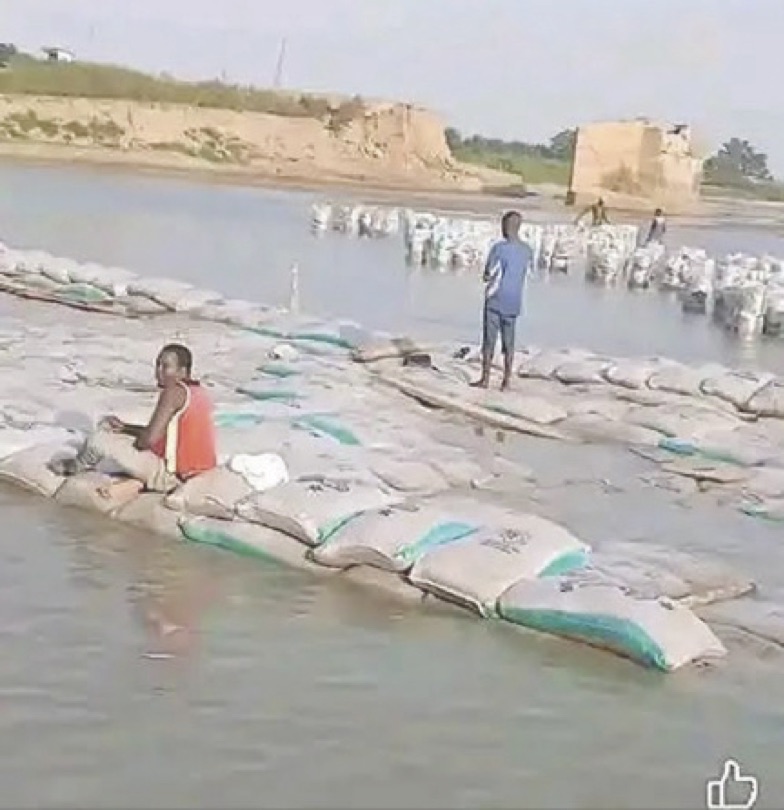
The report we got from delegates that went to Jalingo from Makurdi on Monday was that the bridge on Namnai River had collapsed and the bus would have to be ferried with wooden canoes to the other side after some fee might have been paid. But there was also a long queue of vehicles that wanted to cross to the other side. The delegates from Makurdi that left for Jalingo by 10am on Monday eventually reached their destination by 1am on Tuesday. If we decided to go, it meant we would get to Jalingo probably on Wednesday morning, which was meant for departure.
Despite our best efforts, we could not reach Jalingo and had to abort our journey midway. We spent two days on the road, only to return home without attending the summit. The journey back home also took another two days, making four days on the Nigerian roads.
But on our way back from Adoka, one of us called a senior military officer in Makurdi, and informed him that we just left Adoka, going towards Ankpa and Ayigba.
The military officer screamed immediately. ‘What are you doing in Adoka? That place is not safe for you people. You came to Adoka and you did not deem it fit to inform me. Well, God will protect you. But don’t do that again.”