Follow Us on Google
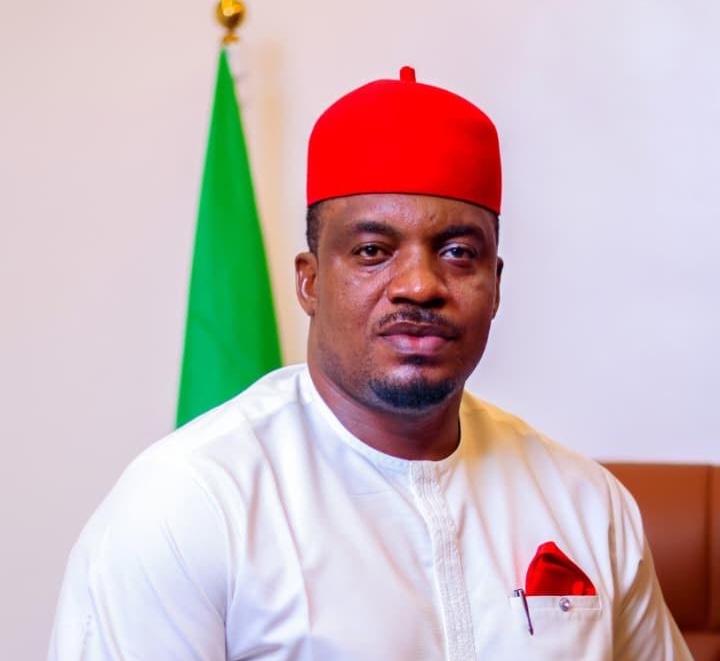
Dr Chibuzor Okereke, the Labour Party (LP) presidential candidate in the 2027 election, has kicked against bogus expenditure in running government in Nigeria. He said such expenditure is wasteful and will be changed within 100 days of his leadership. In this interview, he promised to make the Local Government System work within the same timeframe to empower the people.
Okereke highlighted that he will also prioritise sectors including transportation and the digital economy, and strengthen the Economic Council as recommended by Orasanya’s reports.
Let’s hear from you and clarify whether you are a placeholder for another potential LP presidential candidate?
If I may ask, what do you mean by “placeholder”? I can tell you that the word does not exist in the Labour Party constitution, and I don’t know of any Nigerian law that prescribes it; it does not exist in the Electoral Act. As you are aware, INEC has processed and published my name, and I also attended the peace accord where all the presidential candidates signed to maintain peace during the election campaign and stop any kind of hate speech and electoral violence.
The interesting thing is that primaries were done in all parties on the same day for all positions across the country, and every state made returns, and declarations were made, and that same day I was declared, and on the 11th of May, the NEC sat, and ratifications were made according to Article 28 of the party constitution. Thereafter, the names were transmitted to INEC; thereafter, the names were processed and uploaded online with the requirements of INEC through Forms BC9 and 13 of candidates’ particulars and their nomination forms. Further to that, we even nominated the vice-presidential candidate, and it was ratified. A certificate of return was issued to her, and INEC published both the presidential candidate and the vice-presidential candidate on the 1st of August 2026. Why I had to take you through this route is because, before INEC publication, there was a false report that the LP party did not upload a presidential candidate, and this is the kind of media practice we shouldn’t encourage in the country. I can tell you for free that the LP is the party of workers, in essence and by implication. If you look at the institutional membership of the party, we are actually the largest political party in Africa because we are the party of the working people. The people who are responsible for the productive aspects of our economy. So anybody working so hard to lay false accusations on the party that we didn’t put a presidential candidate, and I think you have read about me, my qualifications, and what I have done. Come to think of it, is there any presidential candidate in this election who is more qualified than me? They don’t want the LP to participate; that is why they are speculating.
INEC has opened the window for campaigns, and may we know some of your campaign programmes and mobilisation?
As I said, the LP is an institutional membership party. A party of the Nigerian workers, and we have the best strategy to win elections, and we have shown this capability in the past. Remember, in 2023, people looked down on the party when they said that we were going nowhere, and we ended up surprising the nation, putting up the greatest performance in the history of the LP, recording over thirty-something House of Representatives members, about seven Senators, and several states have House of Assembly members. Ultimately winning a governorship seat, which was the second time the LP would ever produce a governor after former Ondo State Governor Olusegun Mimiko and now Governor Alex Otti of Abia State.
So part of the nitty-gritty and details of our campaign for now should not be put out there because that is our strategy. Such should be unleashed when the time is ripe. But in terms of preparation, we have been prepared. And don’t forget this party has gone through a lot in the past three years over leadership crises and what have you. We just emerged from it and held the first-ever conversation on the 28th of April 2026 to produce the current leadership led by Senator Nenadi Usman. So we are on the trajectory to do everything. We are not new; this is a party that is over two decades old in terms of when it was registered as a political party.
So we have been involved, and there is no election year when the LP failed to field candidates, and we are not among the parties that are still learning the ropes. We got our structures down to the grassroots, and don’t forget that the labour movement arm of the party is known as the political commission and the political committee, and they have structures down to the grassroots. The LP, as an independent political organisation, also has structures from the grassroots, and we are the only party identified with critical civil society and organised workforce across the country, and in the constitution we made provision that these people are our automatic members. So it is just a question of identification, and we are preparing, and we are ready; our campaign council unveiling is in the process, and nobody can compel the party to unveil the presidential council at a specified time of their choice.
No, it is part of our strategy, and we wouldn’t like to unveil and receive the kind of agitation and complaints as we see in other parties. This process involves huge engagement with stakeholders and deep consultation. Like I told you just recently, the campaign selection committee was set up to engage with stakeholders and look at the framework for our national campaign council. So everything is in process, and we are a party and well known. Soon we are going to unveil all the plans and how to roll out all the plans for our campaign, both at the national and state levels in due course. As our partner, you will wait and get all the information required. I think from February 10th, when we put a structure in place to receive reports of e-registration, we will remain a party that briefs the media the most about the steps we are about to take on anything. So, being media-friendly is not just because of the media, but because we know that this is through which we, the Nigerian people, get information about what we are doing and why we do what we do.
Tell us more about this ideology of ‘NigerFirst’, which seems to be a Western practice?
I want to start by explaining that it is not a Western governance philosophy. It is actually the ideology of the Labour Party. People, Nigerians first. Nigeria, as in the first, manifested in our ethnicity, in our religion, and in our geopolitical beliefs and interests, as in the states. But Nigerians as the people are also in line with the expression and prescription of Chapter 2 of the Nigerian Constitution, that the primary purpose of government, Section 14 particularly for the protection of lives and property and the welfare of the Nigerian people. It is the same section that expresses that sovereignty belongs to the people; in other words, government belongs to the people. So the governance philosophy that I brought is a departure from what we have always known. The best we have heard is Nigeria first, which is a geographical expression of the Nigerian state. The people have always been left out as the primary focus and purpose of government, and even bringing back the purpose with which our nationalists fought for independence. It is for the Nigerian people to be able to express themselves, find themselves in governance and politics, and be able to achieve both socio-economic and political independence; in other words, making their voice count because, at pre-independence, none of us were there apart from the few representatives we had. So this is bringing us to why we fought for independence and also taking us to the purpose of establishment of government. I remember that I mentioned during that nomination acceptance that, among the factors of production in the mix, labour is the greatest factor because it directs other factors. And it aligns with the statement of our sage, the late Prof Chinua Achebe, that leadership is the problem of Nigeria. This is because labour is the human factor that directs other factors, and if you get labour wrong in terms of human capital development, in the context of labour as the human element in the factors of production, then you will not get the best of the land or capital. So this is a very simple philosophy: put people first in governance; let the interests of Nigerians come first. What we are saying is, let the interest of the people come first in every decision of government.
Today we are talking about subsidy, and we chose to subsidise a few of the elite and enrich importers of fuel, while the majority of Nigerians wallow in abject poverty, facing the challenges of ineptitude. So my policy is not Westernised; it is actually Nigerian. Remember, the disillusionment is the disconnect between the government and the people. And if you ask why the distrust and disconnect, and if you take a random opinion of the people, it appears the government selected a superstructure to govern their affairs for their common good. And those whom the people handed the affairs of government now serve themselves and not the people. So what I am saying is that we are returning to the principle that the government should serve the people, and that is where we got the “Nigerians first” and that is putting people first in governance. The second leg is “believe again”, which means that governance is about responsibility and obligation. That, as a Nigerian, you have an obligation to improve Nigeria; that this place offers a promise for you to flourish, rise, and get ahead; and that I am the presidential candidate who is talking about focusing on the people, focusing on vision and not just projects and programmes, because the problem with projects and programmes is that it is not sustainable. But if you anchor on vision, it now drives the kind of projects and programmes that you will unveil to the people.
That is why I believe that we will internationalise and anchor it on the leadership philosophy that will now drive other programmes that we are going to do so that we can have a destination. For instance, if you are asked, “Where is the destination of Nigeria? Do you have any records anywhere that say that Nigeria has five kilometres of roads that are divided into ABCD, that we plan to do 50 per cent of A road in the next five years or ten years, or doing B? These things don’t exist here because even our budget is not anchored on any development plan, and I’m this candidate that is offering the alternative to say, no, we can do this not by discretion but by planning and visioning that people can wake up in the country and know that they have a future and that government
Can you assess the performance of Tinubu’s economic team, who said the economy is bouncing back after subsidy removal?
If we can cast our minds to where we are coming from, when we printed 27 trillion with the Ways and Means of the CBN, and where government expenses were about 95 per cent; in other words, we are using about 95 per cent of our revenue generation to service our debts. And then our macroeconomic parameters completely collapsed, and the CBN was operating against the threshold prescribed by both the Fiscal Responsibility Act and even the CBN Act, so the National Assembly had to hurriedly amend the Act to expand the window. One would say maybe there is a kind of improvement in the monetary policy aspect of what the government is doing because those two instruments or elements control the larger part of the economy. On the fiscal side, reforms are done in terms of tax reform and what have you. But let me tell you one thing: the interest of Nigerians is not about how healthy our macroeconomic parameters are. It is about the welfare of the people, whether the people have access to jobs, social justice, whether we are running a merit-based society, whether he feels they can get ahead if they are qualified for something. And it appears we are abandoning federalism for a central and unitary system. And I can give you this instance: macroeconomic performance cannot trickle down unless there is integrated governance that involves local government, states, and the federal government, whereby the development of the local government and the state will develop because it is the total of the local government, and we seem to be urban bias. These are human capital challenges about leadership. Any leadership that concentrates on developing the townships, focusing on urban development, what we call urban bias as the driver to showcase development, and that is why we are inviting everybody that this LP is not in obscurity. We are the light. We are showing examples in Abia State where we have taken the happiness level of the people from zero to 95 per cent. Where development no longer happens based on the senatorial district where the governor comes from, but across all the senatorial districts of the state, both urban and rural.
Other News
When this subsidy was raised, as part of a strategic plan to reduce transport costs with the CNG policy and electric vehicles for transport, only Abia State and a few other states are implementing that, and today Abia has in excess of 40 electric vehicles deployed across states to cushion the effects. The point I’m making is that any economic prosperity that you need to explain to the people in figures needs to be rethought. Because we are not going to prosper economically based on World Bank or IMF reports or other metropolitan financial agencies. It’s good for global geopolitics based on international standing and diplomacy. Though your foreign reserves are now at fifty-something billion dollars, fantastic; it can give guarantees, but they may praise themselves for obvious reasons that our FX collapsed. Our financial system became a nullity, and nobody can do transactions abroad, and people on their own platforms are predicting our own naira rate to the dollar, that they got into a fight with the CBN. So where we are coming from, they can say, in the monetary policy aspect, we have had relative stability and credibility because the volatility has reduced. And they are still struggling with the fiscal side because tax is the heartbeat of our fiscal, and the people are telling you that we are not feeling the impact of government. At the same time, this government is saying, Give us time, it is going to trickle down. But I say that I have quicker and speedy decisions that can even translate the gains of whatever I have achieved, and that is to say that the National Economic Council must work.
I can tell you that the framers of the constitution are not stupid that form economic council that brings Governors together. If you go to states today, the governors don’t have anything that brings them together with the local government, and if you check the schedule of the constitution on the job or duties of the government, you see that the economic development of states and LGAs is part of their priority job. So what I’m saying is that the framework that has been there must not be in theory, but needs to be in practice. We are saying that the President must pay attention to the Economic Council. So you hear that after the Economic Council has met, this is the plan they have. You can see the issue: when the transportation subsidy funding came up, the President could lay the APC governors, but all of the governors are the ones benefiting from the removal of the subsidy fund.
So what I’m saying is that we will run a government from the bottom to the top, and you can be clear that everyone is aligned with the federal government’s policies. At one stage, even the President himself got angry to say that state governors should stop building flyovers that lead to nowhere. Don’t forget that all of them are still under the same APC. But what you are going to see under LP leadership is that whatever we agreed on nationally will be implemented to benefit the people from the national, state, and grassroots levels within one hundred days in office; local government will work.
What critical sector will you prioritise to drive the economy under your watch, and how will your administration deal with the cost of governance?
There are two questions here, and if I were to take the issue of governance first, I will tell you that our government is bogus for nothing, and I’m the kind of person who said that I’m going to review the laws establishing the MDAs. For instance, we have boards under each agency of government. Those boards are supposed to be carrying out oversight duties, and they are appointed all over the country, and we pay them with no oversight carried out by them. Again, we also have a situation where any solutions we seek in Nigeria amount to the establishment of an agency. What about the Orasanya reports, what happened to it? We are also going to look at whether Nigeria should continue to use the civil service as a poverty alleviation programme, or should we make a professionally run, competitive, merit-based civil service system. A situation where we employ what we need, and promotion and reward will be based on productivity, not longevity of service. So that their capacity is built and they are paid well, so that the argument about minimum wage will completely disappear. Because you are in a system where people in a parastatal will travel abroad a hundred times a year. They are paid well under the enabling Act; they have been told that their board is in charge of fixing their salaries, wages, and allowances, whereas for another group of people, their salary structure is handled by the Salaries and Wages Commission; RMAFC is also having the same function. In such a manner, there are overlapping and conflicting agencies. Take a look at FERMA and the Federal Ministry of Works. FERMA has offices across the Federation, and the Ministry of Works has the same. What are we talking about? It is either we want to do governance, or we want to play governance. And why should Nigeria not create clear benefits for civil and public servants? Why should a Minister or DG hold office as an escape from poverty, having the title to the latest car, as if it is a yardstick of productivity? It shouldn’t be so, and I think our arrangement hasn’t been rigged against the people, and it appears it is difficult for anybody to fix the system. I make bold to tell people to go to Abia State to witness how we are fixing the system, and it is an LP-controlled state. There, we are doing a merit-based system, and teachers and other workers have been employed all on merit.
So we can’t reduce the cost of governance if we don’t pay attention to our system. I am the only candidate who has said and is ready to do away with the incremental system of budgeting and the envelope system we use today in Nigeria. I am ready to go to zero-based budgeting, which simply means that items that go into our national budget must merit being there. It must be a cost-based budget, not an allocation-based budget. How can we run a budget just with the affinity of the Minister to the President? I can tell you that all our agencies today have become procurement centres owing to the affinity of the DGs to the President.
That is what I am going to change: make it viable and competitive, and that allocation of funds must be accounted for, and that is one of the fiscal responsibilities. I have a lot of policy documentation of these things. I said I’m going to be the Chief Commander Reformer of the Federal Republic. No forces, armed forces, and that is one of the names we have given our government.
Then, talking about the sectors that will drive the economy, it is digital innovation, Agriculture and the transportation sector. These are critical sectors of the economy that we are going to intentionally invest in. And we are going to classify people in sectors in terms of primary, secondary and tertiary. Those aiming for industrialised status will be the tertiary, and those in the middle are the medium scale, are part of the system because the medium and small-scale enterprises drive the economy of any country. We will run a government based on data, and we will not pay for data figures. We will know small-scale business people, where they are and what they do, and the kind of support they require. We won’t run a government where people see an opportunity for government funding and create emergency organisations to collect the funds, and nothing happens, no. We will create a government care centre that will actually visit businesses to find out what they go through. It is unfair to the government that businesses that have been paying government mental tax went into extinction or wound up, and the same government seems not to be aware. No, it shouldn’t be so. Our young people are good in the digital economy, and we are going to make sure that it goes down to the local government level. Our government should not be just Abuja, Lagos State, or cities. If you visit other developed countries, it is always a system where people flourish at any level they are. In Agriculture, we are going to invest massively in the buying and distribution of tractors. Our government should have a list of those in Agriculture and also know what they require for us to partner with them, and also how our investment can grant us food security. So you know that today Agriculture, Transportation and Digital economy are at the centre of the geopolitical world. Where the USA and China are fighting over G5 digitalisation. Nigeria can’t continue to be a no-man’s-land; no ping-pong ground, no; we have to rise, and I am the person to do that. And in other create wealth, we should revitalise our research institutions and should be taken to the universities for practice and research. It is only now that the government has established a research agency, and people are somewhere awarding certificates, and the universities are there producing graduates who are not employable. We should be able to ensure that the university output fits into the labour market and economic system, so that we don’t look for expatriates invading our country and taking what belongs to the citizens.
Look, I have been around; I know these issues, and I know these problems and how to fix them. And through our policies and executive orders and legislation, we will fix them and get them working. We will run a government that knows that people exist, that cares about the people. For the first time, we are going to leverage these regional agencies the President has created. These regional development agencies were created, but they appear not to know what to do with them. Before, I was not aware that there is an economic comparative of every zone. In the North, we focus on agriculture; in the South East, technology and business; in the West, we invest in financial institutions; in the South South, we focus on maritime and the Blue Economy. I’m young, vibrant, and ready to go; it won’t be something that I will wait in the office and be taken to different places, no.
What is your take on the appointment of INEC National Chairman by Mr President?
The appointment is not under any presidential control. The Electoral Act and the constitutional provision are that we will live above board. Let me tell you that even when people proposed that the INEC chairman should be appointed by the NJC, I can still tell you that the expression of the appointment of an officer is not the issue. It is not even the President who appoints; it is the Nigerian people, the nation’s representatives. The President simply makes recommendations to the National Assembly on whom he wants to serve as the INEC Chairman, and the National Assembly is supposed to be a congregation of the interests of the Nigerian people from all sides. In other words, the process gives the people oversight and scrutiny on who becomes the INEC chairman. So what is going on is our style of trying to superimpose our individual interests on institutions and not allowing institutional mechanisms to work, and here nobody can change that irrespective of whom you try to put there; they will still influence them. A practical example was the recent election of Nigeria Bar Association (NBA); people are challenging it. A professional non-political Association. So the problem is not how we appoint the people, but a general issue of how we allow institutions to work. And I think the debate about the appointment of the INEC chairman is parochial. For me, it is a deep-rooted solution to a quite cosmetic issue. Because if the people elected in the National Assembly say no to certain nominations, that solves it, but when it respects party lines and the personality of the president above national interest, then it means the institutions of government are not working. When we talk about cultural democracy, it is the Democracy that respects the people, that promotes the rule of law, that honours the dignity of the human person. It is not Democracy of penalty and respect, and how do we end that? The people must police leadership, recruitment gauge for the National Assembly. It is embarrassing to see a lawmaker say that doing the right thing will embarrass Mr President; it is not the practice elsewhere in the world. Even when we practise the same bicameral legislation as they do in America, their system is still different and perfectly run. So the same thing was felt under Umaru Ya’Adua, Goodluck Jonathan, Muhammadu Buhari, and we are seeing it under Tinubu right now. So it is something that has to do with our own understanding of how leadership should work; we must change that. Otherwise, we want a monarchical system where the President is the King, and the constitution does not envisage a monarchical system. I don’t have an issue with the appointment of the INEC Chairman by the National Assembly. I like experimentation that is based on fact and empiricism. If today we try to make the NJC appoint INEC Chairman, it will still be the same thing because we don’t respect government institutions. The Emir of Kano, Sanusi, once told me that what he has seen in Nigeria was that if you remove all the members of the National Assembly and decide to go on the street, lawmakers, lawmakers, you will not have anything significantly different from the behaviour of those there now. But I believe in Nigeria, I believe in the principle that we can make progress, that we can have people of mind to take leadership opportunities. I can say that our political economy system is not there yet, and that is why I am an advocate of independent candidacy, where I know that a person can win on the strength of his or her own popularity for a legislative position. And we shouldn’t say that such people have not succeeded, have won the presidential election, but that is not the issue. With the way Nigeria is, people state assemblies, the House of Representatives, and elections as independent candidates. I am a legislative governance expert. I have studied the National Assembly to PhD level. I have practised there, I have provided technical support there. I can tell you if we have quality people who can focus on a legislative agenda that is development-centric and not caucuses about region or party. We need caucuses in the National Assembly that believe in a better budget for health, for women, for the ministerial level; they will check the trajectory of such persons in the designated area. That is the kind of legislature we are talking about; then we will see results.
Funding is a serious matter as far as a political campaign is concerned. Tell us how you go about it?
I’m the People’s candidate. In the last two decades of my life, I have spent it investing in young people. Through my foundation, sponsoring people in education, creating children’s parliament academies, training people, and policy advocacy, I have been involved in training children and teenagers who may never be able to say thank you to me across different schools in the FCT and beyond. I have been involved in designing other campaign strategies that have emerged victorious in the past in this country. So my capital is not quantified in money in this campaign. My capital is my idea. The governance and governance philosophy is that it is a complete departure from the traditional projects and programmes of raw welfare wallet that you have. I am coming to build a merit-based society where Nigerians can get ahead not by the way they dress, or the way they worship, or the name or the answer, or which part of the country they come from, but what they can do. And people believe that because they want a Nigeria that can work for a merit-based society where jobs will be competitively bid, and the people will get them without knowing anybody. Who will not invest in such a campaign? A new chapter for the country. So I’m confident that beyond the millions of membership we have in the party, we are out there to do their own thing to support us, and the institutional membership we have. We are very much ready, and we are confident. When one has a leadership philosophy and a campaign strategy that is people-centric, they see themselves in it and that thing they collect money for and today that makes costly for other people becomes several groups that have come up within and outside the country to say we need a new chapter and we know this guy as former students’ union President at University of Nigeria Nsukka (UNN) he has championed not too long to run. A platform to give young people an opportunity to run for the leadership of this country. Thanks to the late President Buhari for listening to us. We have a country where an 18-year-old can join the military, die for Nigeria, but is not qualified to run in an election, and now we bring it to 25 years only for the House of Representatives, and in my government, within 100 days in office, we will bring it to 18 years. So when people are eager to be part of this from their own resource ecosystem, without even wanting to be given money, it means we are on course. So we are in it, and you will see how it works out.