Follow Us on Google
In the world of fashion today, where African craftsmanship meets modern tailoring, I.N official is stepping into this space not just as a clothing line, but as a brand that builds outfits like architecture.
I.N official label blends African heritage with sharp, structured tailoring. They’ve become known for sculptural outfits that hold the figure and tell a story while being practical enough for people to buy and wear.
The brand operates on the belief that fashion should evolve alongside our culture and technology. In other words, they want their designs to reflect how we live right now. But does this year’s F/W24/25 collection actually live up to these high standards they’ve set based on their motto?
There’ll be a breakdown of every piece in this collection to see if the impact and cultural vibe truly meet the massive expectations people have for them. Starting this collection is a piece that immediately captures the public’s expectations of utilitarian wear.
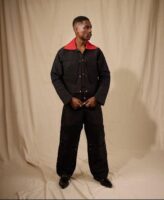
At first glance, it appears to be a nod to the classic of the chore jacket, but under the lens of I.N Official, it is transformed into a regal uniform.
The body of the jacket is styled from a deep, midnight black that absorbs light, creating a balance for the blood red structured collar.
This colour doesn’t just pop, it is also a structural statement that complements the overall piece.
The collar is also engineered with a rigid interlining that allows it to flare outside with a wing-like precision. This frames the face and neck with intentionality that is almost cinematic.
The highlight of this piece is undoubtedly the asymmetrical button placement and the tiered pocketing. By making the use of brass-toned, heavy buttons against the black textile, the designers create a visual flow that leads the eye downward toward the cinched, structured waist.
This piece also appears to be inspired by a fusion of West African military aesthetics and high-street avant-garde. It blends the ruggedness of workwear with the sophistication of bespoke tailoring.
However, to move this outfit from a striking concept to a flawless luxury piece, a few details require attention. The most significant area that can be spotted with just one glance is the sleeve-to-shoulder transition.
Because this is a high-density fabric, there is a visible breaking point where the fabric collapses slightly. To solve this, the designers can implement a tailored horsehair shoulder wrap internally.
Doing this would ensure that the sleeve maintains a continuous smooth arc from the shoulder point to the cuff, preventing the utilitarian fabric from looking overly stiff.
Also, while the gold-tone buttons may look beautiful, they seem to be pulling slightly on the placket, which is the opening of the shirt.
Having a grosgrain ribbon stitched behind the buttonholes would provide the stability to keep the front line perfectly vertical, even when the wearer is moving.
Despite these minor technical issues, the styling is handled with sophisticated restraint. And the decision to pair this with plain black trousers allows the jacket or shirt to do the talking.
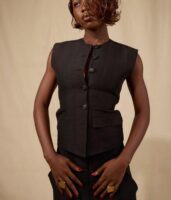
Moving on, is a look that diverts the narrative toward more femininity.
This piece consists of a high-neck, sleeveless structured vest paired with a deconstructed maxi skirt that features a dramatic lace inlay. The design here is one with calculated exposure.
It is easy to notice how the panels on the vest are angled to create an exaggerated hourglass shape without the need for traditional corsetry. The choice of a heavy crepe allows the garment to hold its sculptural integrity, particularly at the hip, where the faux-pocket flaps add a necessary horizontal break to the verticality of the look.
The true MVP of this outfit is the hemline. The skirt features an inverted ‘V’ cut-out that reveals heavyweight black lace.
This creates a fascinating dialogue between the armoured feel of the vest and the vulnerable or ornamental nature of the lace.
It’s a piece of wearable architecture that feels like it belongs in a gallery. However, to elevate this look into perfection, we must look at the closure of the vest.
The buttons on the vest are placed in a way that causes a slight gape at the chest area. This means the vest styling is working against the button fastening. A fix for this would be to include a hidden snap fastener between the buttons to maintain a seamless, flat profile across the chest.
Also, the lace portion of the skirt appears to be caught under the weight of the heavier exterior fabric.
To ensure the lace flows with the same architectural precision as the rest of the outfit, the designer could finish the lace hem with a weighted horsehair braid.
This would give the lace the body it needs to stand up to the heavy crepe, preventing it from looking limp.
The third piece in this collection introduces a radical diversion in colour and pattern. This outfit moves away from the monochromatic structure of the first two outfits into a fluid graphic design.
Here, there’s the green-toned, tie-dye-inspired blouse featuring a large scale white design that is characterised by its extreme bell sleeves and multiple front ties.
The design is rooted in kinetic volume, and unlike the previous pieces, this outfit relies on the movement of the fabric to tell its story.
The position of the printed torso against the solid, heavy black sleeves creates a shield effect, making the sleeve the focal point. It turns the arm into architectural pillars. This styling choice seems to be inspired by the Japanese maximalist design but filtered through a West African lens.
Now, down to the part that needs improvement.
Perfection doesn’t come easy. Despite these praises, there are areas in which the styling of the outfit could have been done better.
One area to consider is the tension of the front ties.
Because the blouse is open at the centre, the fabric tends to wing out at the bottom, disrupting the intended silhouette. A better fix would be to include a concealed internal small piece of fabric that buttons across the chest to hold the two sides securely. This would allow the ties to hang decoratively rather than being the only structural element holding the shirt together.
Additionally, the transition between the printed cotton and the black sleeve fabric shows some visible seam puckering. Since these are two different weights of fabric, the heavier black material is eating the lighter printed fabric. Implementing a stay-tape at the shoulder seam would provide the necessary reinforcement to keep that line crisp.
Moving to the fourth piece is a stunning display of heritage textile manipulation.
This look features a cropped, high-neck shirt constructed from what appears to be a multi-tonal woven fabric, inspired by the Aso-Oke, but modernised. It is also paired with a wide-leg flap shorts that complements the overall look.
The highlight here seemed to be the 3D sleeve construction.
The top features a sleeve-on-sleeve effect where a secondary, stiffer panel is layered over the arm, creating a silhouette that looks like modern-day armour.
The green and gold pinstriped weave provides a rich, tactile surface that catches the light with turn.
However, the waist-to-hem ratio on the shirt requires a slight adjustment.
Other News
Currently, the top ends at the point that visually cut to the torso in half when paired with the high-waisted shorts. A solution to this would be to crop the top two inches higher. The shorts themselves are a masterclass in conceptual tailoring, featuring rows of metallic studs and wing panels at the side.
To further elevate this look, the wing panel could be lined with a contrasting colour. Perhaps a colour from the top, to provide a flash of hidden details when the wearer walks.
This could add a layer of storytelling to the garment’s movement.
Moving on to a monolithic emerald green cape-coat adorned with oversized gold-cast buttons.
This is the ultimate expression of I.N official’s design philosophy. The design is one of unapologetic presence. The cape is constructed with shoulder-to-floor vertical panels that create a sense of immense height and stability.
The fringe detailing at the hem and collar adds a human touch to an otherwise imposing structure, providing a soft tactile finish to the sharp emerald expanse.
The choice of gold-cast buttons, which appear to be sculpted in the likeness of traditional African masks or figures, is a stroke of genius. It moves the garment from being just fashion to also being a cultural artefact. However, the stability of the cape’s front opening is a point of concern.
This is because the fabric is so heavy. The top button is under significant stress. What the stylist can do is to reinforce the entire front placket with industrial-grade interfacing.
This would ensure that the sculptural buttons remain perfectly aligned and don’t sag forward under their own weight. Also, the interior of the cape could feature structured arm slits rather than just an open front, allowing for more architectural precision in how the garment is carried.
Overall, the artistic direction is flawless.
This set comes as a pair, consisting of a blouse and a skirt made from denim and crepe fabrics, respectively. The top features a bralette halter, a design inspired by traditional bralettes that cover the bust area in a tube-like form. Unlike the usual style, however, I.N Official took a distinctive approach by crafting the bralette into a cross. This cross-shaped halter includes curved side fringes, creating a shedding effect along the edges.
A standout detail is the coin-like buttons placed at various points of the cross, adding cultural history and a layer of uniqueness. The bralette is secured with two sets of strings, one forming the halter neck and the other positioned at the bust line to ensure a firm grip on the body.
The second piece in the set is a mini tennis skirt, marked by several distinctive features. Its waistline is reinforced with a thick elastic band that provides both grip and firmness. Below this, a slight flare created by minimal gathering stitches gives the skirt its classic tennis silhouette. The most striking detail is the addition of red stripes along the bottom front edges, reminiscent of Adidas’ signature branding. This touch enhances the skirt’s visual appeal, making it both stylish and eye-catching.
Overall, the set represents high-end new age fashion. Some could even argue that it fits perfectly into Alte dress culture, a style philosophy that encourages self-expression, unorthodox fashion, and deliberate breaks from conventional norms. This makes the design a statement of individuality and pushing boundaries while still maintaining class.
From an industry perspective, pieces like this sit at the intersection of avant-garde streetwear and Radical luxury ready-to-wear. The denim and crepe pairing, the cross-shaped bralette halter with coin-like buttons, and the tennis skirt with red stripe place this piece in a Niche Market for growing segments like fashion-forward youth, creative professionals, and consumers who see clothing as art rather than utility. This makes the piece better positioned in market placements such as concept stores or limited edition collections, rather than mass retail.
The downside of the dress, however, is that it reveals too much. This limits its appeal to a niche audience, such as the new-age market, rather than making it accessible to a wider public. To broaden its reach while preserving its uniqueness, the designer could consider reworking one element of the outfit. For instance, replacing the skirt with trousers or wide-leg pants. This adjustment would reduce the level of exposure and make the piece more appealing to a broader market.
This attire is a fashionable two-piece set, consisting of a shirt and shorts created from blue and black denim fabrics. The shirt, popularly known as a box-cut tee, is a male version of the cropped top, stopping just above the waistline. It is styled with short standing sleeves, a side pocket, and a central partition. This partition is lined with wide black fabric, different from the blue denim of the main piece. What makes this feature particularly striking is that one side of the lined partition extends beyond the shirt’s length, giving the impression of a long tie.
The lower half of the set is the Drift Flap shorts, characterised by several details. A waistband sits firmly at the waistline, while the extended side panels add an extra layer of distinction and creativity to the shorts. On the dart line at the front centre of both sides, crystal rhinestones decorate the shorts, lending a touch of beauty to the otherwise rugged denim.
This set can best be described as fashion-forward, comparable with the creative menswear produced by progressive fashion houses such as Comme des Garçons or Maison Margiela, known for their experimental cuts and conceptual reinterpretations of classic pieces. The philosophy behind this attire is in the fusion of streetwear styles with high-fashion features.
The features on the outfit challenge traditional menswear with its additions of utilitarian denim paired with ornamental elements and exaggerated cuts.
From an industry standpoint, this piece reflects the growing trend of hybrid fashion, where casual wear collaborates with couture. This alignment makes it appealing to audiences who value individuality and self-expression. Judging by that, the best market for this attire would be in the high-fashion streetwear area, also targeting young, style-conscious consumers in urban centres.
However, while the outfit is undeniably unique, it could do without the side flaps. Removing them would reduce unnecessary distraction and allow the spotlight to remain on the main pieces.
This outfit is primarily a cargo-coat made from blue denim fabric. The coat features a wide-spread collar and several distinctive details. One of the most striking features is the arrangement of cargo pockets across the front view of the coat, two on the upper bodice and two on the lower bodice. Another unique detail is the cap sleeves, which hang slightly below the shoulder line.
Unlike conventional sleeves, their hems are left unfinished, creating a shredded appearance. At the waistline, a denim belt ties around the coat, adding definition and fitting to the look.
Perhaps the most appealing feature of the piece is the hand-drawn statement symbols, such as eyes, crosses, and other motifs, combined with faint brown brush strokes across specific areas. These touches highlight the creativity and skill set infused in the design. To make the look more male-friendly, the coat is styled with slightly wide-legged pants worn underneath, balancing the look of the garment with a base.
This piece brings to mind the experimental spirit of fashion brands such as IAMISIGO, a Nigerian brand known for creating wearable art and artistic detailing. The denim cargo coat, with its raw sleeve edges and hand-drawn symbols, sits comfortably within street-luxury menswear outfits. This makes the philosophy behind the attire an effort towards fusing contemporary street styles with traditional symbolism while celebrating the imperfection of beauty.
The industry relevance, by implication, satisfies the growing appetite for trendy garments that double as wearable art, appealing to consumers who value individuality and cultural storytelling in fashion. Therefore, the ideal market for this attire lies in the luxurious fashion menswear section. It would speak strongly to fashion-forward audiences in urban areas, particularly those who lean toward collectable garment editions.
Overall, the outfit is a classy piece that speaks a lot about individuality. However, to ensure it appeals beyond sectioned audiences, the designer could consider creating a shorter jacket option that leans to a general customer base while maintaining the distinctive character of the original design.
On the upper part of this outfit is an asymmetrical jacket with uneven sides. The jacket entails several intriguing details, including a flat collar, slightly wide sleeves, a faux pocket, and, most striking of all, the wings. This wing detail is achieved by sewing shaped cuts into the underarm of the sleeves and the sides of the jacket, creating the illusion of butterfly wings fused into the overall design.
The lower part has fashionable wide-legged pants, beginning with a rope-like belt that drapes across the front. The pants include a vertical slit pocket at the upper section, while the lower front showcases two cargo pockets. On the right side is an open mouth pocket, its four edges lined with decorative pins. On the left side hangs another cargo pocket, also lined with pins, adding a creative touch to the piece.
If compared with other giants of fashion, this outfit is a close call to what you will find in the archive of the likes of Adebayo Oke-Lawal, a popular designer known for his dramatic reinterpretations of garments. The butterfly-wing illusion particularly places the piece firmly within the realm of conceptual fashion. On this ground, the philosophy here speaks of transformation. This is because one moment it looks like a normal matching set and the next, it’s a unique piece with a wing motif that symbolises freedom and, of course, individuality.
When it comes to industry relevance, the attire can be classified as a hybrid fashion garment that blur the line between art and wearability in women’s garments. It speaks to the movement toward expressive menswear, where bold silhouettes and symbolic detailing are embraced as part of personal identity. This automatically positions the attire in the art-fashion market, targeting consumers who value storytelling in their clothing. It would also be fitting for a gallery exhibition and high-fashion boutiques.
This outfit is a close call to the previous one. It is made almost entirely out of black fabric. The top part of the wear is a black jacket that appears to be designed to be a slightly boxy fit with long sleeves. What stands out immediately are the metallic clasp details across the front of the jacket. These gold-toned hooks create a harness or bondage-like feature that runs horizontally, giving the piece a slightly industrial but modern feel. This addition also breaks the monotony of the plain black fabric and adds to the visual of the piece.
Underneath, the jacket is paired with black trousers that follow the same minimalist style, allowing the jacket to remain the focal point of the outfit. Like the previous attire, it is a pair of wide-legged pants, beginning with a rope-like belt that drapes across the front. It also has two in-seamed pockets and a pair of cargo pockets at the side, complemented by a faux flap pocket.
Another interesting feature is the bucket-style hat. The hat has a soft but wide brim with rough, frayed edges that create a rugged but fashionable finish. This slightly rugged edge fits nicely with the clean makeup of the jacket. Small metallic eyelet pins are also visible on the hat, adding subtle distinction to the overall piece.
When compared with the fashion concept, this set suits the gothic style, and this is because of the all-black look it takes. Conversely, it also carries some essence of utility fashion, where clothing borrows visual language from tools, machinery, and workwear. This shows in the metallic clip added to the look. Even when traced back, such attributes can be seen to be related to historical appearances like military armoury and corsetry.
From the industry outlook, this outfit is very relevant to current fashion movements, particularly Gender-Neutral Fashion, because of how subtle and fashionable its features are, and such work crosses both gender styling approaches. This makes it better positioned for the general youth market but also very suitable for editorial fashion and celebrity styling markets.
While the set is well put together, the downside to it is that it is not wearable for everyday consumers, because of how fashionable and high-end it looks.
This outfit is a simple oversized shirt or tunic. This piece starts with a round neckline and long, extended sleeves. Then, the fabric used takes the limelight. The fabric used in creating this is a black material decorated with small, repeated white symbolic motifs. These motifs are evenly spaced across the garment, creating a patterned appearance that draws attention to the piece without overwhelming the design. Additionally, the outfit is made to look loose and falls slightly above the thigh. Overall, the garment is made to be intentionally relaxed rather than fitted.
This piece leans more towards textured styling than actual designs. It also speaks to comfort in fashion garments and freedom of expression. This is a result of the oversized feature and short appearance. In comparison, this syncs largely with today’s casual, new ages attires made by the likes of Neo Serati, a brand that openly challenges conventional fashion while keeping it simple.
The industry relevance of this type of outfit is very relevant in today’s fashion industry because several major trends favour styles with a relaxed feel, uniqueness and distinctive fabric texture, especially when it includes one that speaks to heritage. This makes this piece suitable for markets with fashion-conscious urban women, people who appreciate African-inspired fashion and self-expressive professionals.
On the flip side, this piece could be more suitable if its length is increased or if the designer is willing to pair it with a matching bottom, just like with the previous garment in this collection.
To wrap it all up, this collection has been a reflection of style, designs and fashion concepts. It displayed the brand’s dedication to self-expression the designers of I.N official for producing the F/W24/25 Nirvana set that confidently represents the brand’s creative ideas. With a few refinements, particularly in the market balance features and finishing of certain elements, the outfit could move from being impressive to truly top-tier.
By Seun Emmanuel