Follow Us on Google

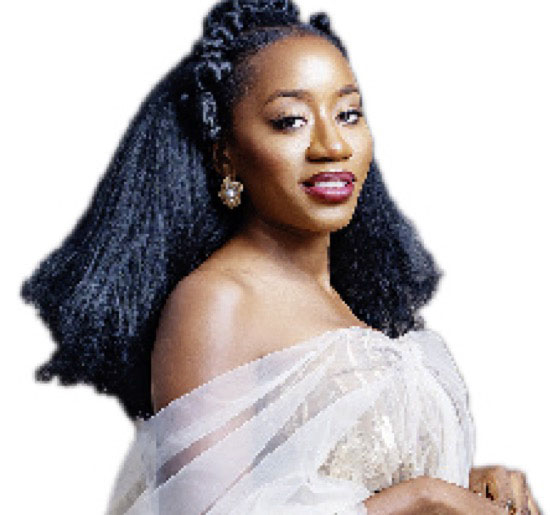
Nigerian-born singer, songwriter, pianist and film composer, Kaliné Njoku, better known as Kaliné, blends jazz, R&B, highlife and soul into a sound rooted in her African heritage. Beyond music, she has composed soundtracks for films including The Wedding Party II, The Royal Hibiscus Hotel, Eyimofe and the award-winning Breath of Life.
Featured on CNN Africa’s Ones to Watch in 2020, Kaliné is a gifted artiste whose music explores love, vulnerability, strength and womanhood.
In this exclusive interview with Sunday Sun, she opens up about her music, creative journey and inspirations.
You have built a career that spans singing, songwriting, piano performance, and film composition. Looking back at your journey, how would you describe the evolution of Kaliné as an artiste, and what has changed most about your approach to music over the years?
I think the biggest change has been moving from trying to demonstrate everything I can do musically to becoming much clearer about what I want people to feel. Singing, songwriting, the piano and composing for film have never felt like separate identities to me. They are different ways of telling a story. Earlier in my career, I was perhaps more concerned with finding my place and proving myself. Today, I am more comfortable with the fact that my sound does not have to fit neatly into one category. I care about musical honesty, beautiful arrangements and creating moments that stay with people long after the performance is over. I am still evolving, but I feel more grounded in who I am as an artiste.
As a person who trained at Berklee College of Music, and who has contributed to several notable Nigerian film productions, how has your experience as a film composer influenced the kind of music you make as a recording and performing artiste?
Film composition teaches you to listen beyond the obvious. Sometimes the most powerful musical choice is not the biggest sound, but the space you leave for an emotion to breathe. Working in film, including on productions such as Breath of Life, has strengthened my understanding of pacing, atmosphere and the relationship between music and narrative. That absolutely influences my songwriting and live performances. When I sit at the piano or arrange a song, I am thinking about where the listener is emotionally at the beginning and where I want to take them. I want a song to feel like an experience, not simply a collection of notes.
Your music appears to appeal particularly to mature listeners, including people in their 40s and above, who appreciate live instrumentation, meaningful lyrics and music that tells a story. Is this a deliberate audience you have set out to serve, and what informs your decision to create music that resonates with this demographic?
I have never sat down to decide that my music must be for people above a particular age. What I have chosen deliberately is the kind of music I want to make: music with substance, musicianship and emotional connection. It is lovely that listeners in their forties, fifties and beyond respond to that, because they often bring their own memories and life experiences to a song. But I also meet younger people who connect with the same things. I do not believe meaningful music belongs to one generation. If anything, I would love to create a space where different generations can enjoy the same performance together.
Nigerian music consumption is increasingly driven by younger audiences, social media trends and songs designed for instant popularity. Does staying true to your style sometimes make it difficult to compete for attention, particularly among younger listeners?
Of course, there are moments when you look at the speed of the industry and wonder whether you should be doing things differently. Visibility matters, and I cannot pretend that social media and streaming have not changed how music reaches people. But I do not see younger audiences as the problem, or popular music as the enemy. There is extraordinary creativity in Afrobeats and in the way Nigerian artistes have taken our music around the world. My challenge is to find equally imaginative ways to introduce my own sound to new listeners without changing its essence. I want to be more intentional about digital storytelling, collaborations and how people discover the music, while remaining true to the music itself.
One challenge many independent and alternative artistes face is converting people who appreciate their music into a loyal and active fan base. What has been your experience connecting with your audience, especially in getting them to consistently stream your music, attend your shows and support your projects?
That is a very real challenge, and one I am still learning to navigate. Someone can come to a show, be deeply moved, and tell you how much they loved it, but that doesn’t automatically translate into a stream the following week or a ticket for the next concert. Appreciation and sustained support are two different things. I have learnt that you cannot simply release music or stage an event and expect people to find their way back to you. You have to keep building a relationship, communicate consistently and give your audience reasons to stay connected between performances. For me, the next phase is about turning those beautiful individual moments into a stronger community around the music.
Other News
Your December 3 concert, Christmas With Kaliné, will feature the AfroSymphonic Orchestra. What inspired this year’s concept and the decision to incorporate an orchestra into the performance?
What should people expect that will make this edition different from previous concerts?
Christmas has always carried a sense of memory, family, anticipation and togetherness for me. I wanted Christmas With Kaliné to capture that feeling, not simply through familiar songs but through the entire musical experience.
Bringing in the AfroSymphonic Orchestra lets us explore a richer, more cinematic sound while retaining the warmth and intimacy people associate with my performances. This year, the emphasis is on nostalgia, storytelling and the joy of ushering in the Christmas season together. We are creating a continuous live musical journey rather than a stop-start concert. Whether you are coming with friends, family or simply because you love beautiful music, I want you to leave feeling that Christmas has truly begun. Christmas With Kaliné takes place on Thursday, 3 December 2026, at Terra Kulture in Victoria Island, Lagos. Tickets are available via my website and on Tix Africa. I would love you to join us for an evening of music, nostalgia and the magic of Christmas.
Live music is central to your artistic identity. With the Nigerian music scene increasingly dominated by DJ-driven performances and high-energy concerts, how important is it to preserve the culture of live instrumentation, and do you think Nigerian audiences are beginning to appreciate it more?
I think there is room for all kinds of performances. DJs have an important place in our music culture, and a brilliant DJ can create an unforgettable experience. But live instrumentation offers something different. There is a conversation happening on stage between the musicians, the singer and the audience. A phrase can stretch, a piano can answer a voice, and something unexpected can happen that will never be repeated in quite the same way. That is precious. Nigeria has a deep heritage of live musicianship, and I would love to see more stages, venues and audiences supporting it. I do sense an appetite for live experiences that feel intimate, sophisticated and musically rich. We need to keep nurturing that appetite.
Having performed alongside international music greats and built a career that spans music and film, what opportunities do you think Nigerian artistes who operate outside mainstream Afrobeats still need to access to compete internationally?
I think the world is increasingly curious about the breadth of African creativity, but the infrastructure does not always reflect that breadth. We need more routes into international festivals, music supervision, film and television, publishing, touring and cross-border collaborations for artistes whose sound sits outside the most commercially visible genres. Just as importantly, we need people who understand how to position and develop those artistes for the long term. Afrobeats has opened remarkable doors for Nigerian music. The opportunity now is to make sure those doors are wide enough for our jazz, soul, classical, alternative and other musical voices too. We should not have to sound the same to be recognised as Nigerian.
Beyond the December concert, what are the biggest lessons 2026 has taught you about your career, your audience and the Nigerian music business?
Are there areas where you feel you need to do things differently in the future?
One of my biggest lessons this year has been that making good music and building a sustainable music career both require different, equally serious disciplines. I have become more aware of how important it is to understand my audience, plan earlier, communicate clearly and surround myself with people who can help turn a creative vision into something commercially sustainable. I have also learnt not to confuse being visible with making a meaningful connection. The people who truly engage with the music are incredibly important, and I want to serve them better. In the future, I want to be more consistent in releasing and sharing my work, more deliberate about partnerships and more strategic about how each project builds on the last.
Looking ahead to 2027, what should your fans anticipate? Are there plans for new music, an album, more international performances, collaborations or further involvement in film scoring?
I want 2027 to be a year of greater consistency and reach. New music is very much part of the direction I want to take, and I am thinking carefully about how to bring the different sides of my musical world together, from songwriting and piano-led performances to the cinematic influences that come from composing for film. I would also love to take the live experience to more audiences, including beyond Nigeria, and explore collaborations that feel musically authentic. Film composition remains an important part of my creative life. I am not ready to announce specific releases or dates just yet, but I can say that the ambition is to create more, share more and make it easier for people who connect with my music to be part of the journey.