Follow Us on Google
…To preserve Nigeria’s reproductive population
From Fred Ezeh, Abuja
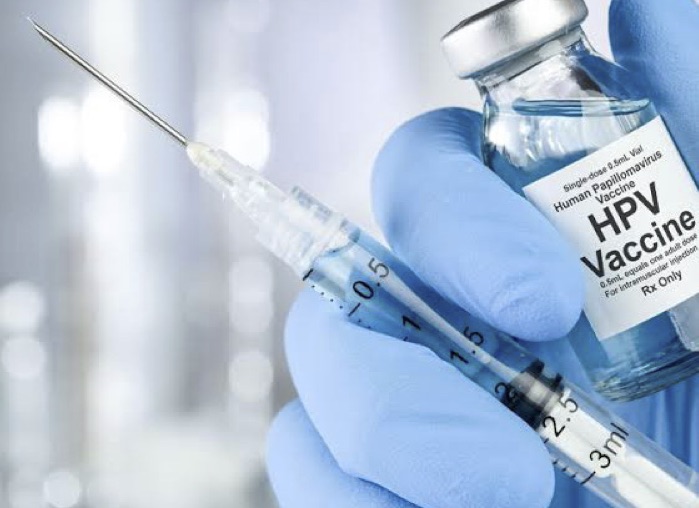
On October 24, 2023, Nigeria launched the Human Papilloma Virus (HPV) vaccine. The launch marked the formal introduction of the vaccine into the National Routine Immunisation programme of Nigeria.

This was after several years of campaign by health care experts led by Oncologists on the need for the procurement and introduction of vaccine to curtail the rising cases of cervical cancer among young females.
Over the period of the search, people involved in the project focused their search brand of HPV vaccine that could be effective against the HPV type that is prevalent in Nigeria, considering different the demography of people that are mostly affected by the virus.
Out of different types of HPV vaccines that were available, notably, 9-valent HPV vaccine (Gardasil 9, 9vHPV); quadrivalent HPV vaccine (Gardasil, 4vHPV); and bivalent HPV vaccine (Cervarix, 2vHPV), the Federal Government approved Gardasil HPV vaccine for use in Nigeria.
Sixteen (16) states and the FCT were chosen to participate in the first phase of the vaccination, with plans to expand to 21 states in May 2024. As of November 30th, 2023, over 4.6 million adolescent girls have received the vaccine in the chosen states and FCT.
Executive Director of NPHCDA, Dr. Muyi Aina, described the vaccine as a “magic step” towards safeguarding the future of the girl-child in Nigeria by protecting them from the threat of cervical cancer, insisting that HPV vaccine is trusted, safe and highly effective against cervical cancer.
Similarly, stakeholders in health care sector were convinced that the effective deployment of the vaccine can save the lives of over 8, 000 Nigerian women who die yearly ot cervical cancer which is a preventable disease.
Initially, it was agreed that the vaccine be given to young people between ages 10 and 18. But many people suggested that it should be brought down to 9 to 15 years because many female children are becoming sexually active earlier than expected.
What is HPV?
HPV is one of the Sexually Transmitted Infections (STIs). There are different types of HPV. Each has its unique features hence only a medical diagnosis can determine the type and its dangers to health.
Being a sexually transmitted infection means that someone can easily contracted the virus through vaginal, anal, or oral sex with someone who has the virus. But it is most commonly spread during vaginal or anal sex.
It also spread through close skin-to-skin touching during sex. A person with HPV can pass the infection to someone even when they have no signs or symptom.
Signs of HPV in human
In humans, HPV presents in different forms. But the most common sign of HPV is warts, which can appear in genital areas or somewhere else in the body. These warts usually appear as a small bump or group of bumps in the genital area. They can be small or large, raised or flat.
Medical research noted that HPV has the capacity to cause cervical and other cancers, including cancer of the vulva, vagina, penis, or anus. It can also cause cancer in the back of the throat. These signs could take years, even decades, to develop after a person gets HPV.
However, medical research indicated that people with weak immune systems, including those with HIV, maybe less able to fight off HPV. They may also be more likely to develop health problems from HPV. But there is no way to know who will develop cancer or other health problems from HPV except from medical diagnosis.
Before the introduction of HPV vaccine
The fear of cancer was the “beginning of wisdom” in Nigeria and even beyond. This was because many people are being brought down, untimely, by different kinds of cancer every year. While people with existing cases are struggling to manage it, new patients are being added to the figure.
About 8,000 lives, mostly female, are lost annually to cancer in Nigeria. The rising number of new cases of different cancer in Nigeria was becoming alarming and a source of concern to medical professionals, hence the intensified push for procurement and inclusion of HPV vaccine in the routine immunization programme.
There has been a sustained campaign by Oncologists over the years using different platforms, on the need for people to avoid certain risk factors that could increase their chances of cancer. But in spite of several efforts and campaign, the number of new cases of different cancer continued to rise on annual basis.
An investigation by The Sun Newspapers in 2019 indicated that a case of cervical cancer, which was majorly caused by HPV, was on the rise, particularly among younger females. This could, perhaps, be due to early exposure to sexual activities.
Data obtained in 2019 from the Abuja Cancer Registry at National Hospital, Abuja, confirmed the significant increase in number of new cases. The data particularly indicated a steady and scary rise in new cases of cervical and breast cancer.
It revealed that in 2014, Abuja Cancer Registry alone recorded 42 new cases of cervical cancer. In 2015, the figure rose to 54, and came down to 48 new cases in 2016 even though many were doubtful of the figure due to the prolonged industrial disharmony in the health sector, which could have affected records.
Nevertheless, in 2017, the figure of the new cases rose to 84, and in 2018, the figure jumped to 120 new cases. But data from the Federal Ministry of Health, in 2020, noted that Nigeria recorded 12, 000 new cases of cervical cancer and 8, 000 deaths.
This alarming figure, perhaps, further pushed the government to insist on procuring the vaccine and introducing it into the routine immunization programme of Nigeria.
However, as regards breast cancer, records from the Abuja Cancer Registry also revealed that there were 127 new cases of breast cancer recorded in 2014. It rose to 222 new cases in 2015; 224 in 2016; 282 in 2017; and 343 new cases in 2018.
Officials at the registry confirmed that the new cases of cancer was becoming more among younger women as against the previous cases, adding that only few Nigerians were aware of the HPV vaccine which was meant to prevent the cancer, even though she could not confirm the efficacy of the vaccine.
She said: “The vaccine was supposed to be given to young people between ages 10 and 18, but many people are suggesting that it should be brought down to 10 to 15 years because many children are becoming sexually active earlier than expected.”
Campaign against myths, misinformation
To avoid the ugly experience of COVID-19 vaccine in 2020, where many people were fed with false information about COVID-19 vaccine resulting in early resistance of the vaccine, the Federal Government through NPHCDA and other stakeholders began early campaign and advocacy on the safety, efficacy and effectiveness of the vaccine against the HPV.
There were deployment of pictorials and video messages at various locations especially in rural communities and schools to neutralize the fears and prove to people that the vaccine was safe and effective against HPV that causes cervical cancer.
Community and religious leaders were engaged through the platform of the Traditional Leaders Committee (TLC) on PHC delivery, to mobilize support of the traditional and religious leaders in sensitizing the communities, particularly the targeted population to enable accept the vaccine for their own good.
Former NPHCDA Executive Director, Dr. Faisal Shuaib, at one of the meetings with the traditional and religious leaders in Abuja, reminded them of the successes achieved against polio and other communicable diseases through their support and collaborations.
He maintained that they are key stakeholders in PHC services, stressing that by encouraging HPV vaccination within the targeted population, they would become advocates of life and guardians of health.
He said that their involvement in this will help to dispel myths and fears, thus fostering a culture of prevention and care. This step aligns with the teachings of compassion, protection and stewardship that your faiths emphasize.
He asked them to consider the impact of their collective endorsement of HPV vaccination, which would obviously safeguard the future of Nigerian youth, thus allowing them to pursue their dreams unburdened by health concerns. “We uphold our duty to care for the vulnerable, ensuring equitable.”
Where to catch targets
Suggestions were made that schools, religious centres and other places of social gathering for young adolescent girls would be the best locations for the administration of the vaccine.
This was because the people being targeted with the vaccine can easily be found in such places and convinced to take the vaccine.
Foreign partners
The Managing Director of Country Programmes Delivery at GAVI, Thabani Maphosa, highlighted the efficacy of the HPV vaccine in the prevention of cervical cancer among young woman. “Over 16 million girls could be protected in Nigeria by 2025 if the HPV vaccine is properly deployed to locations across the country,” he said.
UNICEF Representative in Nigeria, Cristian Munduate, said, “In our shared quest for a brighter future, the HPV vaccine in Nigeria represents a monumental stride towards safeguarding our girls from the grips of cervical cancer.
“This vaccine doesn’t just prevent a disease; it promises a life where our young women can thrive, unburdened by the spectre of this grave health concern.”
She said that UNICEF, in collaboration with the government and other partners, will ensure that every eligible girl, irrespective of her location or circumstances, has access to the life-saving intervention. “Together, we are scripting a narrative of hope, resilience, and a healthier Nigeria.”
Stakeholders’ speak
Meanwhile, while some doctors and other health care experts were in support of the introduction of the HPV vaccine, many were doubtful of the safety and efficacy of the vaccine, hence they kicked against it.
However, a Consultant Oncologist at the National Hospital, Abuja, Dr. Festus Igbinoba, few years ago, confirmed that there are increasing cases of cancer in Nigeria and Africa, with several institutional research confirming that.
The reason, according to him, was largely due to increasing diagnosis opportunities and establishment of cancer centres that makes it possible and easy to detect cancer in life.
He said: “Some 10 years ago, there were few places for Computer Tomography (CT) and Magnetic Resonance Imaging (MRI) scan, and that made it difficult to get accurate dialysis. But that has improved tremendously now, with room for more improvement.”
He also attributed the increased number of cancer cases to reckless and unhealthy lifestyle. “Our lifestyle is changing rapidly or has changed. More people consume alcohol, tobacco, engage in indiscriminate sexual activities, which expose them to cancer causing virus.
“Years back, our women marry as virgin or engage in sexual activities at late 20s. But that’s not the case today. You will be shocked that children of 14, 15, 16 years old are already sexually active.
“Also, our fathers drank palm wine which is mild, natural and has lesser percentage of alcohol. But the case is different now. People consume drinks with high alcoholic content, and sustained use of alcohol is harmful to the body. Pollution is another major cause of cancer.”
Igbinoba, agreed that some of the lifestyles that predisposes to cancer are addictive, and that has been the reason for the difficulty in stopping or reducing the dangerous lifestyle.
Howbeit, he suggested that people eat fresh foods and avoid chemicals infected foods. In addition to that, people should be mindful of their environment and what they consume especially Genetically Modified Foods (GMF) which are harmful to the body.
On the contrary, some pro-life advocates, shortly before the formal introduction of the vaccine asked the government including the lawmakers to halt the planned introduction of the vaccine citing the dangers to human health especially the reproductive health.
Chairman, Global Prolife Alliance (GPA), Dr. Philip Njemanze, released a statement, raising significant concern regarding potential health risks, including the potential for abortions and infertility, particularly among young Nigerian girls.
He said a study by researchers in the US revealed that Gardasil brand of HPV vaccine and cervix, currently being administered to girls in Nigeria has proven ineffective and harmful in black women, and has great negative impact on their reproductive health.
He said the vaccine protect against two HPV types, HPV 16 and 18, which are associated with 70 per cent of cervical cancers and 50 per cent of high-grade cervical lesions. Black race, Hispanic ethnicity, and higher area-based poverty are salient predictors of lower HPV16/18 positivity among women with high-grade cervical lesions.
“We hold deep concerns regarding the potential consequences of this vaccination initiative and its broader implications for the health and well-being of Nigerian girls. Our conviction is that taking these measures will ensure the safety and reproductive health of our young population.”