Follow Us on Google

A memorable character starts with a reason to exist. Before an audience notices the costume or the colours, the character needs a role in the story: someone to follow, question, laugh with or worry about.
For young creators developing short films, games or digital comics, moving that idea into 3D can make it easier to explore how the character looks from different angles. New AI tools offer a way to create an early model from a description or sketch. The creative decisions, however, still belong to the artist.
A useful first project does not need a large cast or a complicated animation. One original character, one clear story and a willingness to revise can provide plenty to work with.
Begin With the Character’s Role
Imagine a short animated story about a young bicycle courier who discovers that a parcel contains something unexpected. Before designing the courier, the creator can ask a few questions: Is this person confident or cautious? Do they enjoy surprises? What kind of environment do they travel through?
The answers can guide the design. A practical courier might wear comfortable clothing and carry a weathered delivery bag. A more theatrical character might decorate the bicycle with colourful accessories. Neither choice needs to be complicated, but each should fit the personality and setting.
Write a short character description before generating visual ideas. Include the character’s role, a few personality traits and any objects that matter to the story. This gives the artist a way to judge whether later designs still reflect the original idea.
Build a Recognisable Silhouette
A character needs to be readable at the size and distance at which an audience will see them. A figure that looks distinctive in a close-up may become difficult to recognise in a wide shot.
Start with the outline. For the courier, the shape of the helmet, delivery bag and clothing could help the audience identify the character before they notice smaller details.
Sketch the character from the front and side. The drawings do not need to be perfect. Their purpose is to answer practical questions: How large is the bag? Can the character move their arms freely? Does the clothing support the energetic movement the story requires?
Colour and surface detail can come later. If the character’s main shape is unclear, adding more patterns is unlikely to solve the problem.
Explore a 3D Character Concept
Once the basic direction is clear, a creator can use a written description or original sketch to explore a 3D version.
For example, the courier might be described as a cheerful young adult wearing a simple helmet, a loose jacket and a rectangular delivery bag. The creator can then compare the generated shape with the sketch and decide which details work for the story.
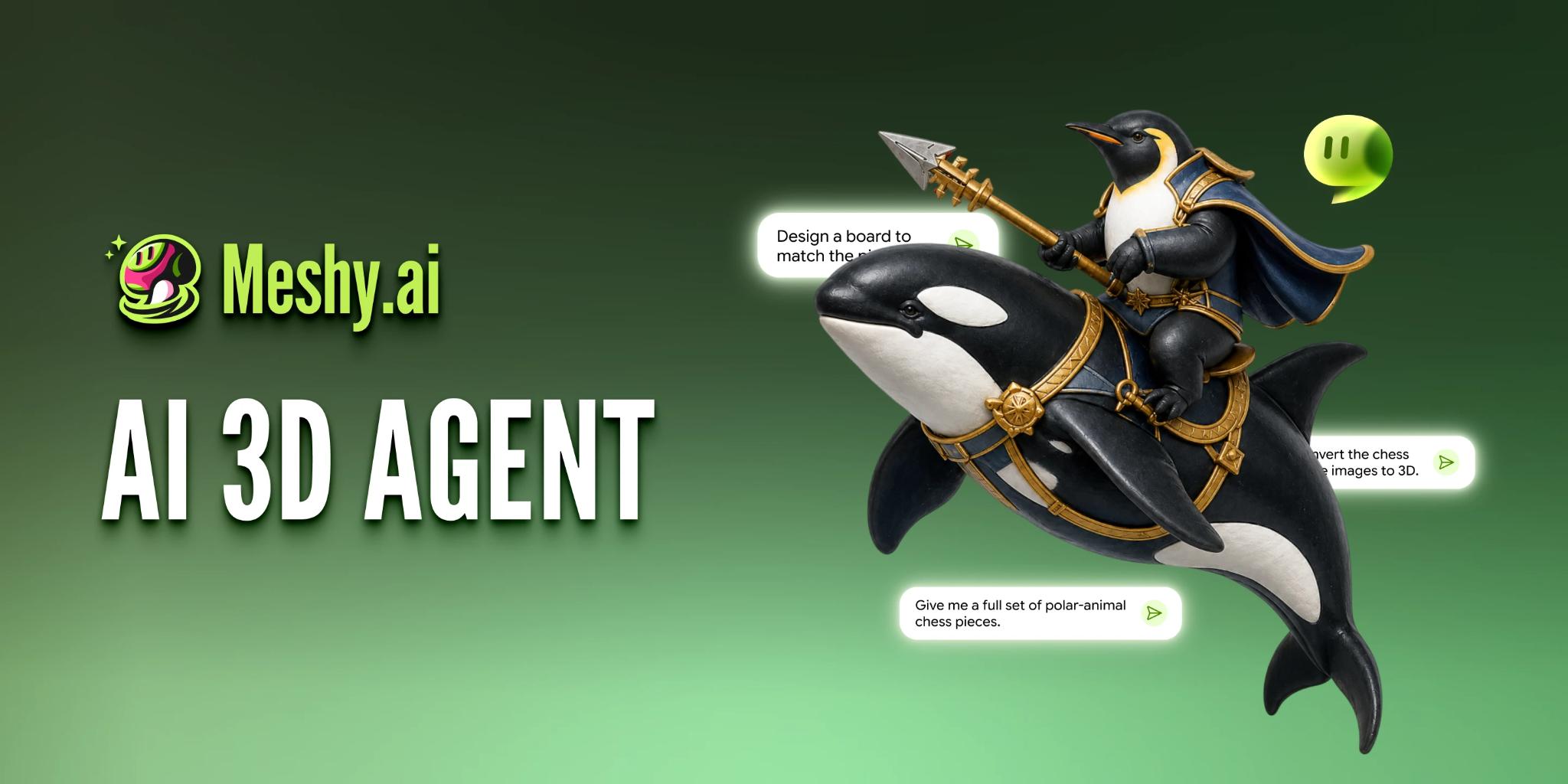
Meshy 3D Agent supports a conversational workflow for developing 3D models from an idea, photo or sketch. It first suggests several 2D concepts, then turns the one the creator picks into a 3D model, which can be adjusted by asking for changes in the chat. A creator can use an early result to examine the character from several angles and identify areas that need further work.
The first model is a starting point. A delivery bag may look right from the front but sit awkwardly against the character’s back. Clothing may merge with the arms, or the helmet may have details that were never part of the design. Rotate the model and compare it with the original brief before deciding what to keep.
Check Whether the Design Supports the Story
A character can look appealing in isolation and still be difficult to use in a scene. Return to the actions the story requires.
If the courier needs to ride a bicycle, consider how the legs bend and where the hands will reach. If the character opens the delivery bag, its position and straps need to make sense. If a surprised reaction is central to the story, the face must be visible from the intended camera angle.
At this stage, a few simple test poses or sketches can reveal problems. The creator might find that a very large collar hides the face, or that a bulky bag blocks the movement of the arms.
Adjust the design before polishing small details. A simpler character that performs the scene clearly is often more useful than a detailed one that is difficult to animate.
Prepare the Model for Animation
A 3D character concept and an animation-ready character serve different stages of production. Before adding movement, the creator needs to examine the model’s geometry and how its parts are connected.
Areas around the shoulders, elbows, hips and knees deserve particular attention because they change shape as the character moves. An artist may need to clean up or rebuild parts of the mesh, create a suitable skeleton and adjust how the surrounding geometry responds to it.
Then test the movements the story actually needs. For the courier, that might include reaching for the handlebars, turning the head and lifting the delivery bag. A character that looks correct in a standing pose may reveal problems during those actions.
The amount of work depends on the project. A character shown in a single still image may need less preparation than one performing a full animated sequence.
Make the Character Your Own
Originality involves more than changing the colour of a familiar character. Think about how the character’s choices, surroundings and experiences influence their appearance.
For the fictional courier, a repaired jacket could suggest frequent travel. A small charm on the delivery bag might connect the character to a friend or family member. Those details have a purpose in the story rather than existing only as decoration.
Creators can draw inspiration from many places, including fashion, everyday objects and local environments. When using photographs, artwork or another person’s character as a reference, check the applicable permissions. Do not assume that an image is available for reuse simply because it appears online.
Keep the sketches and notes that show how the design developed. They help collaborators understand the character and give the creator a record of the choices made along the way.
Understand How AI Content Is Used
Before sharing a model with collaborators or using it in a commercial project, review the terms of the tool and any third-party materials involved. Usage rights, attribution and ownership conditions can vary. On Meshy’s free plan, for instance, Meshy owns the outputs and makes them available under a CC BY 4.0 licence with credit to Meshy, while paid subscribers can keep their models private and own them.
Copyright treatment can also depend on the country and on the human contribution to the final work. The U.S. Copyright Office’s guidance on AI-generated content discusses how human creative contributions and modifications can affect copyrightability under U.S. law. Other jurisdictions may take different approaches.
For a project involving a client, production company or distribution agreement, clarify how the character will be used and seek advice relevant to the applicable location when needed.
Share the Work Behind the Character
A portfolio entry becomes more informative when it shows how the character developed. Include an early sketch, a 3D concept and a later revision, alongside a brief explanation of the decisions made.
For the courier, the creator might explain that the original bag was too large for the riding pose, so it was reshaped and moved higher on the back. A second image could show how the helmet changed to keep the character’s face visible.
These details show the artist’s judgement. They also help potential collaborators understand which parts of the work were explored with digital tools and which were refined by hand.
Frequently Asked Questions
Can beginners use AI tools to create a 3D character?
Yes. A beginner can use a description or sketch to explore an initial concept. The result should then be inspected and refined for the intended project.
Is an AI-generated character ready for animation?
It depends on the model and the required movement. Characters often need geometry clean-up, rigging and deformation tests before they can be used reliably in animation.
What makes a character design feel original?
A clear role, personality and visual choices connected to the story help make a character distinctive. Original sketches and thoughtful revisions also help the creator develop an idea beyond its first version.