Follow Us on Google

The Match Is on TV, but the Football Audience Lives Across Five Screens
The 2026 World Cup made one thing difficult to ignore: the broadcast is now only one layer of the football experience. Nigerian fans watched matches, argued in group chats, followed creator clips, used prediction products and moved between websites and streaming platforms during the same tournament. SuperSport later reported 19.1 billion social-media views across its World Cup campaign and 677 million video views; Nigerian users made up 21.2 percent of its Predictor audience. The figures are enormous, but the more useful observation is structural. Football attention now travels between television, streaming, short video, interactive products and creator-led coverage without waiting for the match to end.
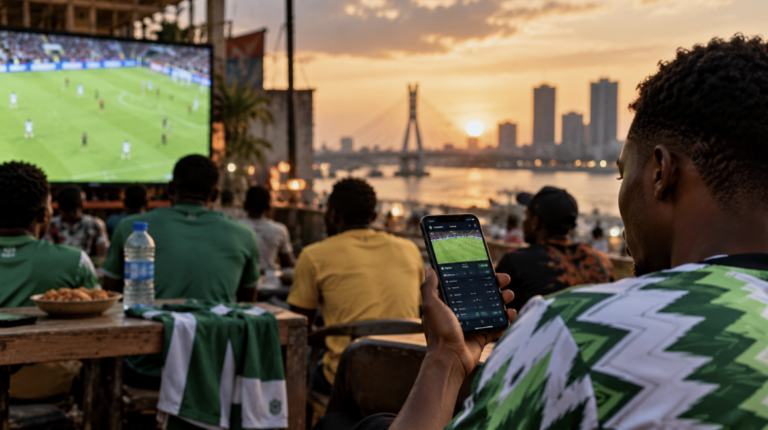
The second screen has become part of matchday
The phone no longer waits until halftime. It sits beside the broadcast from the first lineup alert to the last post-match argument. Fans check player news, screenshots, short clips, live statistics and commentary while the match continues elsewhere.
That creates a fragmented audience rather than a smaller one. A broadcaster may own the live picture, while creators, fan pages and publishers own the surrounding conversation. The commercial value sits in understanding how those pieces connect.
Prediction games turn viewers into measurable users
Passive viewing tells a media company that someone stayed for the match. An interactive product reveals more. SuperSport’s Predictor registered 175,615 users and 3.81 million predictions during the tournament, with Nigeria contributing just over one-fifth of registered users.
Prediction products do not automatically imply betting, but they demonstrate a useful media principle: action is easier to measure than attention. A click, completed challenge or return visit gives publishers a stronger behavioural signal than an impression alone.
Creators extended the match beyond 90 minutes
SuperSport said its pan-African creator programme generated 18.1 million views and 8.8 million engagements.
A creator can publish before kickoff, react during the match and continue with analysis after the final whistle. One fixture becomes several content windows with different levels of intent. A lineup reaction and a tactical review may cover the same match, yet attract users at completely different points in their football routine.
Someone eventually has to value that traffic
A sports creator may know which videos move quickly without knowing which advertiser should buy the resulting BetoHolic traffic. The useful commercial layer begins with audience profiling: GEO, source, volume, quality and the type of football content producing the clicks. operates as a direct iGaming traffic buyer that works with betting and iGaming brands and sets terms according to traffic source, volume, GEO and quality. For a football publisher, the relevant use case can remain sportsbook-only: the team can match an approved sports audience with a betting offer and a suitable CPA, RevShare or Hybrid arrangement. The integration can then be tied to a specific match, creator video or promo code rather than scattered across unrelated content. Once the link is tracked, the publisher can judge commercial value from conversions instead of social applause.
A view becomes valuable when it can be attributed
Second-screen traffic moves quickly, which makes attribution important. A publisher needs to know whether a user came from a match preview, a post-game clip or a generic profile link before comparing results. The specialist explainer at https://betoholicteam.com/en/betting-and-gambling-traffic-arbitrage/ describes the core funnel as traffic source, creative, landing or pre-landing, offer, then registration or deposit. That sequence turns an abstract audience into something measurable. CPA rewards a defined qualifying action, while RevShare ties earnings to longer-term activity. Neither metric replaces editorial judgment; it simply shows which content sent commercially relevant users.
Live football produces short, predictable peaks
Football traffic is volatile, but not random. Lineup announcements, kickoff, goals, halftime, penalties and the final whistle create repeatable moments when searches and social activity jump.
The 2026 World Cup offered the biggest version of that behaviour. Weekly league football offers a smaller but more regular one, giving publishers repeated chances to compare formats and traffic quality.
The post-World Cup opportunity is weekly, not exceptional
A World Cup produces extraordinary reach, then disappears for four years. Club football returns every weekend. European competitions add midweek peaks; international windows and transfer periods add others.
The useful takeaway from 2026 is therefore not to recreate tournament-scale numbers. Football works as an always-on content system where broadcast, short video, predictions, search and affiliate traffic perform different jobs. A publisher that knows which layer creates repeat visitors, which produces clicks and which converts can value its audience with far more precision than a total-view counter ever could.