Follow Us on Google

By Kenneth Udeh, Abuja
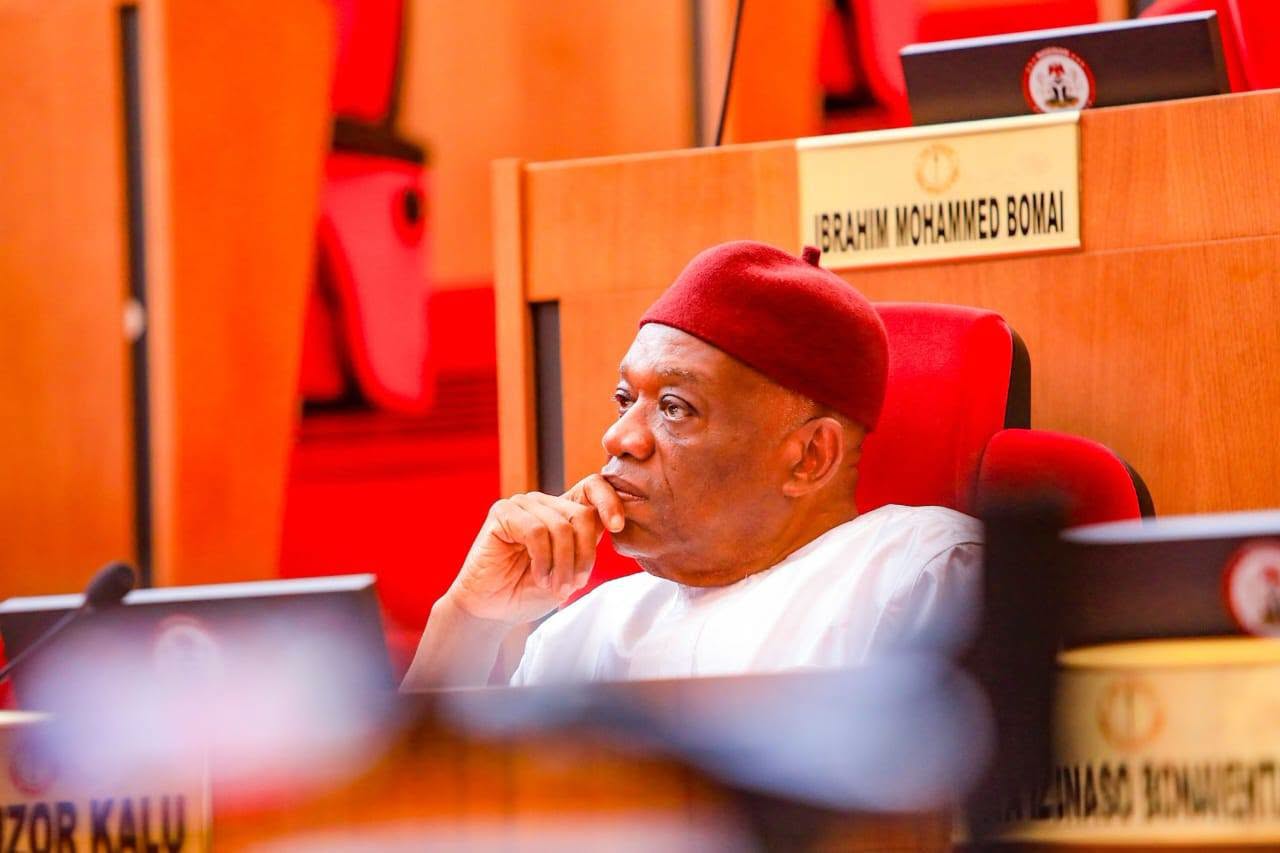
With more than 120 road projects, over 100 school blocks, scholarships for youths, human empowerment programmes and three Senate awards for constituency development to his credit, former Abia governor and Senator representing Abia North, Orji Uzor Kalu, is showing no signs of soft-pedalling on his legislative footprint, with his sponsorship record now standing at 52 identifiable bills since his election to the Senate in 2019.
Kalu, who currently chairs the Senate Committee on the South East Development Commission (SEDC), has maintained an impeccable legislative agenda stretching across poverty eradication, education, healthcare, agriculture, transportation, industrial development, environmental protection, security, taxation and institutional reforms.
His legislative activities have yet again attracted attention following the introduction of two additional bills in October 2026, seeking to establish a Federal College of Agriculture in Ohafia, Abia State, and to establish a regulatory framework for medical X-ray and imaging practitioners in Nigeria.
The latest developments further demonstrate the lawmaker’s approach to representation, which combines constituency infrastructure development with legislative interventions aimed at addressing national challenges and creating opportunities for economic and human capital development.
An examination of the legislative inventory supplied by the lawmaker’s office shows that Kalu has sponsored 50 distinct bill entries from 2019 to 2025, after removing two duplicated entries, while the two recent 2026 proposals bring the identifiable total to 52.
The bills cover a range of aspects of national development, with some seeking to establish new federal institutions, others proposing amendments to existing laws, while several seek to introduce new regulatory and economic frameworks.
POVERTY ERADICATION AND SOCIAL PROTECTION
One of Kalu’s most significant recent legislative interventions is the Social Welfare Service Bill, which seeks to establish an institutional framework for reducing extreme poverty among vulnerable Nigerians and strengthening the country’s social protection system.
The bill, which scaled second reading in the Senate, followed the presentation of its general principles by Kalu.
Leading the debate, the Abia North Senator described extreme poverty as one of Nigeria’s most serious national challenges.
“In spite of the various interventions over the years, millions of Nigerians still lack access to basic necessities,” he said.
He explained that the absence of a centralised, coordinated and data-driven institution had weakened the effectiveness of existing social welfare interventions.
The proposed legislation seeks to establish a Social Welfare Service with structures across the 36 states and the Federal Capital Territory to coordinate welfare programmes, identify vulnerable populations and improve the delivery of government assistance.
Its proposed interventions include food and cash transfers, education stipends, housing support, assistance to marginal farmers, credit schemes and allowances for elderly citizens and persons with disabilities.
The bill also proposes a national register of beneficiaries and the establishment of safety centres to improve accountability and ensure that social protection programmes reach their intended beneficiaries.
According to Kalu, who made this known exclusively to The Sun, the proposal represents an attempt to move poverty reduction beyond fragmented interventions towards a more coordinated and sustainable national social protection system.
EDUCATION: EXPANDING ACCESS THROUGH FEDERAL INSTITUTIONS
Education remains one of the most prominent areas of Kalu’s legislative interventions.
His proposals have consistently targeted the establishment of federal educational institutions across Abia State, increased funding for basic education and the expansion of access to technical and specialised education.
Among the institutions captured in his legislative inventory are the proposed Federal College of Education (Technical), Arochukwu; Federal Polytechnic, Abiriba; Federal University of Medical Sciences and Biomedical Technology, Umunna, Bende; Federal University of Technology, Ovim, Isikwuato; and Federal College of Agriculture, Isiochi, Umunneochi.
His latest proposal for a Federal College of Agriculture in Ohafia further expands this educational agenda.
The Agricultural Research Council of Nigeria Act (Amendment) Bill, 2026, seeks to amend the existing legislation to incorporate the proposed institution into its statutory framework.
If enacted, the institution is expected to expand access to agricultural education, research, technical training and skills development in Abia State and the South-East.
Other education-related proposals include the amendment of the Compulsory, Free Universal Basic Education Act, 2004, to provide for increased funding of basic education, as well as the amendment of the Education (National Minimum Standards and Establishment of Institutions) Act, 1985.
Kalu has also proposed the establishment of the Nigeria Chinese Language Village as an inter-university centre for Chinese studies.
These interventions complement his constituency-based educational programmes, including scholarships and support for students pursuing academic opportunities within and outside Nigeria.
ELECTRIC VEHICLES AND THE GREEN ECONOMY
Beyond education and social welfare, Kalu’s legislative portfolio reflects an interest in emerging industries, environmental sustainability and Nigeria’s transition towards a diversified economy.
A major example is the Electric Vehicle Transition and Green Mobility Bill, 2025, which seeks to establish a national framework for electric vehicle adoption, local manufacturing, investment and the development of charging infrastructure.
The bill has attracted commendations from stakeholders in Nigeria’s automotive industry, including KIA Motors Nigeria, Cedric Masters Group and Jet Motor Company.
The companies have described the proposed legislation as an important step towards developing Nigeria’s electric mobility industry, encouraging local assembly, creating employment opportunities and reducing dependence on imported vehicles.
The proposal also seeks to encourage investment through fiscal incentives, promote local content development and support the establishment of charging infrastructure across the country.
Other economic and environmental proposals include the Green Economy Bill, the National Food Bank Bill, the National Marine Development Bank Bill, the National Agricultural Technology and Innovation Bill and the National Agriculture Technology Board Establishment Bill.
His earlier proposal to promote energy efficiency in public buildings and another seeking to prevent and control atmospheric air pollution further demonstrate his legislative interest in environmental sustainability.
HEALTHCARE, PROFESSIONAL REGULATION AND PUBLIC SAFETY
Kalu’s legislative interventions also extend to healthcare delivery, professional regulation and public safety.
Among his proposals is a bill seeking to achieve universal health coverage and sustainable health development through primary healthcare and appropriate financial risk protection mechanisms.
His latest healthcare intervention is the Medical X-Ray and Imaging Practitioners Council (Establishment) Bill, 2026 (SB 1070).
The bill seeks to establish a regulatory council responsible for supervising the training, registration and professional conduct of medical imaging practitioners in Nigeria.
It covers several professional categories, including X-ray technicians and technologists, sonographers, radiotherapy technologists, nuclear medicine practitioners, MRI and CT technologists, cardiovascular technologists and other specialists.
The proposed council would establish professional standards, conduct examinations, accredit training institutions, maintain a register of qualified practitioners and regulate medical imaging facilities. A major objective is to protect patients and healthcare workers against risks associated with inappropriate exposure to ionising radiation.
The bill also seeks to improve professional accountability, strengthen diagnostic services and prevent unqualified personnel from undertaking procedures outside their authorised professional competence.
Other healthcare and public safety proposals include the Nigerian Electricity Health and Safety Bill, the Chartered Institute of Environment and Safety Management Bill, the Criminal Legal Aid Bill and the amendment of the Fire Service Act.
TRANSPORTATION, SECURITY AND INSTITUTIONAL REFORMS
Kalu’s legislative inventory also contains proposals addressing transportation infrastructure, national security, public administration and institutional accountability.
These include the Nigerian Railway Corporation Act (Repeal and Re-enactment) Bill, the Nigeria Railway System Reform Bill and a constitutional alteration proposal seeking concurrent legislative powers for federal and state governments on railway matters.
Other proposals target the maritime sector through the Coastal and Inland Shipping (Cabotage) Amendment Bill and the National Marine Development Bank Bill.
On security and institutional development, the lawmaker has proposed the establishment of an Armed Forces Service Commission to promote federal character in the armed forces, alongside an amendment to the Armed Forces Act seeking fixed tenure for service chiefs.
His legislative interests also cover the National Crisis Prevention, Response and Recovery Agency Establishment Bill, the Nigeria Police Act Amendment Bill, the Bank Employees (Declaration of Assets) Act Amendment Bill and the Code of Conduct Bureau Amendment Bill.
The National Tax Crimes Commission Bill is another notable proposal, seeking to strengthen the country’s tax administration and compliance framework.
FULL INVENTORY: 52 BILLS SPONSORED BY ORJI UZOR KALU
The following is the consolidated inventory of the 52 identifiable bills supplied by the lawmaker’s office, with the duplicated entries removed and the two recent 2026 bills included.
Administration of Criminal Justice Act, 2015 (Amendment) Bill, 2020.
National Food Bank (Establishment) Bill, 2021.
Constitution of the Federal Republic of Nigeria (Alteration) Bill, 2021, seeking concurrent legislative powers for federal and state governments on railway matters.
Nigerian Railway Corporation Act, 1955 (Repeal and Re-enactment) Bill, 2021.
Armed Forces Service Commission (Establishment) Bill, 2021.
Federal Colleges of Education Act (Amendment) Bill, 2022, seeking the establishment of Federal College of Education (Technical), Arochukwu.
Coastal and Inland Shipping Act (Cabotage) Amendment Bill, 2022.
National Tax Crimes Commission (Establishment) Bill, 2022.
Federal Polytechnic, Abiriba, Abia State (Establishment) Bill, 2022.
Other News
Compulsory, Free Universal Basic Education Act (Amendment) Bill, 2022.
National Environmental Standards and Regulations Enforcement Agency (Establishment) Act (Amendment) Bill, 2022, seeking to address atmospheric air pollution.
Federal University of Medical Sciences and Biomedical Technology, Umunna, Bende, Abia State (Establishment) Bill, 2022.
Chartered Institute of Environment and Safety Management (Establishment) Bill, 2022.
Armed Forces Act (Amendment) Bill, 2022, seeking fixed tenure for service chiefs.
Statutory Corporations (Modifications, Etc.) Act (Amendment) Bill, 2022.
Bank Employees (Declaration of Assets) Act, 1986 (Amendment) Bill, 2022.
Nigeria Film and Video Censors Board Act (Amendment) Bill, 2022.
Code of Conduct Bureau Act (Amendment) Bill, 2022.
National Agriculture Improvement Board (Establishment) Bill, 2022.
Journalists and Media Professionals Protection Bill, 2022.
Universal Health Coverage and Sustainable Health Development Bill, 2022.
Nigeria Chinese Language Village (Establishment) Bill, 2022.
Court of Appeal Act/Constitutional Alteration proposal on the number of Justices of the Court of Appeal, 2022.
Green Economy and Poverty Eradication Bill, 2022.
Nigeria Women Trust Fund (Establishment) Bill, 2022.
Energy Efficiency in Public Buildings Bill, 2022.
Nigeria Police Act Amendment Bill, 2022.
Professional Bodies (Special Provisions) Act (Amendment) Bill, 2022.
Compulsory Guidelines for Establishing Public Institutions Bill, 2022.
Fire Service Act Amendment Bill, 2022.
Citizens Welfare Bill, 2022.
Nigerian Electricity Health and Safety Bill, 2022.
National Crisis Prevention, Response and Recovery Agency (Establishment) Bill, 2022.
Finance (Control and Management) Act, 1958 (Amendment) Bill, 2022.
Criminal Legal Aid Bill, 2022.
Federal Inland Revenue Service (Establishment) Act Amendment Bill, 2022.
National Marine Development Bank of Nigeria (Establishment) Bill, 2022.
Nigeria Railway System Reform Bill, 2022.
National Agriculture Technology Board (Establishment) Bill, 2022.
National Agricultural Technology and Innovation (NATI) Bill, 2022.
Social Welfare Service Bill, 2022, seeking to reduce extreme poverty among vulnerable groups and establish social protection systems.
Education (National Minimum Standards and Establishment of Institutions) Act, 1985 (Amendment) Bill, 2022.
Federal Capital Territory Act Amendment Bill, 2022.
Federal Character Commission (Establishment, Etc.) Act Amendment Bill, 2022.
Creation of States and Boundary Adjustments (Procedure) Act Amendment Bill, 2022.
Co-operative Development Act Amendment Bill, 2022.
Federal University of Technology, Ovim, Isikwuato, Abia State (Establishment) Bill, 2022.
Federal College of Agriculture, Isiochi, Umunneochi, Abia State (Establishment) Bill, 2022.
2025–2026 LEGISLATIVE PROPOSALS
Electric Vehicle Transition and Green Mobility Bill, 2025.
Social Welfare Service Bill, 2025 (SB 40).
Medical X-Ray and Imaging Practitioners Council (Establishment) Bill, 2026 (SB 1070).
Agricultural Research Council of Nigeria Act (Amendment) Bill, 2026 (SB 1083), seeking to establish the Federal College of Agriculture, Ohafia.
It is, however, important to note that the Social Welfare Service proposals of 2022 and 2025 are listed separately because they appear as separate legislative entries in the supplied inventory.
The 2025 proposal is a later legislative version of the same broad policy intervention.
THREE-TIME SENATE PRESS CORPS AWARD WINNER
Kalu’s legislative activities have been complemented by his constituency development record, which has earned him repeated recognition from parliamentary journalists.
In December 2024, he emerged overall best among 108 senators to win the Senate Press Corps Award for Constituency Development for the third time, having previously won the award in 2021 and 2022.
The award recognised his sustained infrastructure projects and human empowerment interventions across Abia North.
Chairman of the Senate Press Corps, James Itodo, attributed the recognition to the lawmaker’s consistency in executing development projects and empowerment programmes for his constituents.
The recognition followed several other honours, including the Best Senator of the Year in Constituency Projects Award from the Nigerian Union of Journalists and the Federal Radio Corporation of Nigeria in 2022.
His constituency interventions have covered road construction, educational infrastructure, healthcare support, scholarships and other community development initiatives.
FROM CONSTITUENCY PROJECTS TO NATIONAL DEVELOPMENT
Beyond the 52 bills, Kalu has also sponsored numerous motions addressing national economic, infrastructural and social challenges.
These include motions on illegal gold mining and smuggling, rehabilitation of the Eastern Railway Line, maritime development, renewable energy for health centres, mental health, aviation capital flight, rural water supply, banking infrastructure in Abia North, research funding, electricity grid decentralisation, crude oil theft and healthcare access for vulnerable children.
The breadth of these interventions suggests a legislative agenda that extends beyond the immediate concerns of his senatorial district to broader national development priorities.
Although the bills are at different stages of legislative consideration and have varying prospects of eventual enactment, their subject areas demonstrate an effort to use legislation as an instrument for addressing structural challenges.
As the 2027 general elections approach, Kalu’s legislative record, constituency development projects and human capital interventions are expected to remain central to the assessment of his representation of Abia North.
For the former Abia governor, the ultimate value of legislative representation lies not simply in the number of bills sponsored but in the capacity of proposed laws to create institutions, improve public services, protect vulnerable citizens and stimulate sustainable economic development.