Follow Us on Google

One of the three presidential frontrunners, Mr. Peter Obi, has already taken a position on how he will approach the campaigns. He said he is interested in campaign of issues. There will be no mudslinging; there will be no name-calling. Obi’s position is the standard practice we were familiar with when candidates of various political parties used to traverse the length and breadth of their constituencies in the bid to sell their plan of action to the people. Obi did much of this in the campaigns leading to the February 25 presidential election of 2023. He promises to stay that course this time around.
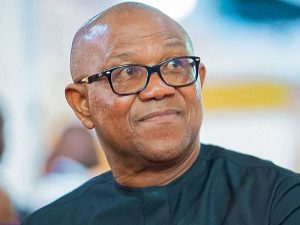
It is important to note that the approach Obi adopted in 2023 caught on like wildfire because of the method of its delivery. Obi did not delegate anybody to speak for him. He delivered his message directly on his own. That way, his message had a direct impact on the people. There were no embellishments. No misrepresentation. And no misinterpretations. His messages were directly attributed to him. It was because Nigerians found his message unique in a number of ways that earned him the mass following he enjoyed then and still enjoys up till now. Obi is not likely to leave this living, pulsating approach in favour of something jaded and unappealing. In fact, he is saying that the campaigns should be issue-based, and one of the ways in which issues can truly be brought to the fore is when they are personally taken up by whoever is promoting those issues. In other words, when a candidate fans out whatever he has to say to an aide or a proxy, the message loses its appeal. Surrogates kill the substance of a message. They dilute it with some misapplication. Sometimes, the exuberance of being seen to be speaking for a presidential hopeful could lead the surrogate into unintended errors. Any candidate who hides behind the mask should have no one to blame if his message is diluted or misapplied.
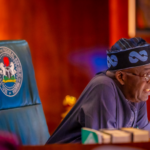
But if Peter Obi is clear on the approach he will adopt in the campaigns, the same thing cannot be said of the other frontline contenders, Bola Tinubu and Atiku Abubakar. Even before the campaigns commenced, Atiku had taken Tinubu up over certain issues that border on the president’s background. Atiku is saying that Tinubu is 90 years old as against the 70 plus contained in his declaration to the Independent National Electoral Commission. Atiku is saying that there is something wrong with Tinubu’s educational records. He wants the relevant authorities in the United States who are custodians of these records to release them to the public. Indeed, Atiku appears very angry with the opaqueness surrounding Tinubu’s records. But it is baffling that Tinubu has not, in the face of all of this, uttered a word of denial or affirmation. Instead, one or two of his aides have tried putting up a defence for him. That is what we are talking about here. These aides cannot do justice to the issue at stake. The responsibility to speak or respond to Atiku’s worries rests squarely with President Tinubu. He cannot afford to sit at a distance in a gathering that he is supposed to preside over. Even at that, there is no indication that Tinubu is prepared to engage the allegations. The latest information from the United States on the matter has it that Tinubu has, through some foreign lawyers, filed an objection in a US court to prevent the US Department of Justice and the Federal Bureau of Investigations from releasing records linking him to allegations of drug trafficking. Is this supposed to be concealment or what? The ongoing campaigns will not benefit from this dodgy disposition.
Other News
But while Tinubu has his records to grapple with, Atiku himself owes Nigerians a proper explanation on his plan to restore the fuel subsidy regime if he is elected as president. What Atiku has done so far was to drop the bombshell. Thereafter, he retreated into his shell . Just the other day, one fellow who calls himself spokesman for Atiku was seen on national television trying to explain and defend Atiku’s position on the vexed issue of subsidy. This is surrogacy at play. Such interventions cannot make sense to anybody. We do not need any overzealous talkative posing as a spokesperson to muddle up the campaigns. Let the candidates own their messages and defend them when the need arises.
In fact, a clear line should be drawn between the campaign machinery of a political party and the campaign message of its presidential candidate. It is, for instance, the responsibility of the candidate to tell the people who he is and what impact he will make if the people trust him with their votes. When the background or record of a candidate becomes a matter of dispute or controversy, no one can straighten the records better than the candidate himself. Any proxy who delves into the issue will be operating from the point of view of hearsay. He cannot stand his ground if his claims are subjected to serious scrutiny. In any case, why will the owner of a case stay at the background or hide in a cocoon over a matter that is roundly and squarely his? Such a detachment could be interpreted as being disdainful on the part of the candidate in question. Nobody who wants to preside over the affairs of the people can afford to stay distant from them or feel too big to have a direct contact with them. Campaigns should therefore not be about distancing. It should be about close relationship with those whose mandate the candidate seeks.
The political parties, on their part, can go to town with their manifestos. They have a duty to sell their ideological leanings to the people, if they have any. Under normal circumstances, a political party should stand or be known for something. It is whatever that it is known for that will dominate governance or come into play if a candidate sponsored by it wins at the polls. By that token, a political party complements the message of the candidate it is sponsoring for an election with its ideology. Both will, in the end, turn out to be mutually inclusive.
However, the regret here is that the Nigerian system is now suffused with political parties that stand for or are built on nothing. In Nigeria, one political party is as bad or as good as the other. There is no difference between them. Their messaging, whatever it may be, is shaped by the mouth and tongue of whoever that is delivering it. It is not derived from what the party stands for, because the party, in any case, stands for nothing. That is why it is easy for political actors to ceaselessly jump from one political party to another. They are not restricted by anything. Perhaps, the only role our political parties play in our present circumstance is to sponsor candidates for elections. In that case, anyone who emerges as candidate develops and owns his message. That is the juncture where we find ourselves. But how will a candidate own a message if he has not developed one himself? Those who seek to govern, at whatever level, must ponder this question.