Follow Us on Google
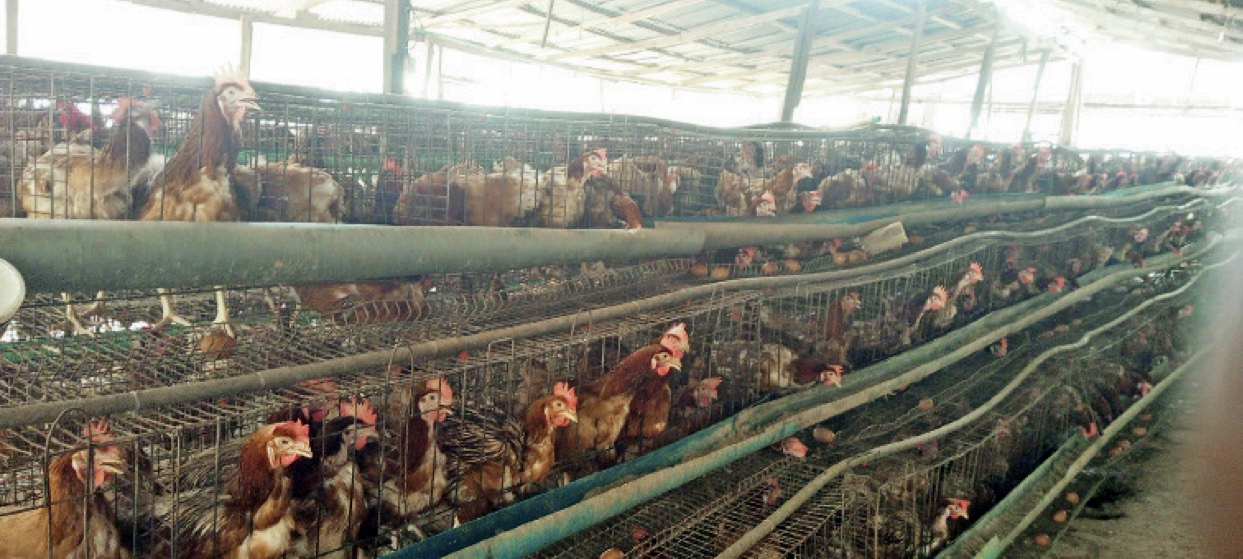
• Nigerian farmers share experiences, challenges, seek govt support
“Many farmers have left the business because they could not afford the cost of feeding the chickens. It is not too good for people to invest so much in such a capital intensive business with such high risk and yet the cost of the poultry feeds will continue to increase without any measure. Government should help us with loan facilities as it is done to farmers in the Northern part of the country.”
By Kehinde Aderemi
Elder Gabriel Okojokwu is a Lagos- based retired civil servant and poultry farmer. He started his poultry farming business in 2012 with just four chickens in his home. But today, Okojokwu said he has plenty stories to share.
According to him, the journey was not that easy initially, but he was able to cope and survive the various challenges of the business with lots of determination and consistency.
He explained that poultry farming is a capital intensive adventure with lots of risks. He added, however, that it is also a profitable business, if it is done with the right approach.
“I started the poultry farming in the year 2012 with just five pullets. A friend of mine advised me to start the business when I relocated to my house in Adamo, Ikorodu, Lagos. So, I started in my own little way with just five chickens. I just wanted to have one or two that I would be using in the house. But my friend told me that the importance of a poultry farm goes beyond that and that I could make my money on daily basis if I started well and with the right approach.
“He encouraged me to start with 100 chickens, and he advised also that my salary could be used for family upkeep, maintenance, and other household expenses .He added that my wife could be handling the poultry to engage herself.
“It wasn’t easy initially, and I nearly quit the business because my first, second and third attempts were not successful. That was because I didn’t know much about the business.
The first time, all the pullets died. I bought another 50 the second time, 47 died and it remained just three. And for the third time, I bought 100 pullets and it was just 12 that survived. I nearly fought my friend who introduced me to the business because I thought he was an enemy of progress.
“But when he noticed my worry, he advised that I should engage a veterinary doctor who is also a professional that could help in handling the issue.
“Even my pastor also encouraged me not to quit. He told me of how his late father, a poultry farmer was able to build a storey- building and also sponsored the education of all his 12 children up to the university, with the poultry farming business and all of the children, he said, were graduates today. Rather than quitting, I continued and faced the business until the time I retired from the public service a few years ago.
“So, now that I am retired, I have enough time to concentrate on the business and I have had enough experiences which had been so useful for me to build the business to where it is today “he said.
Indeed, Okojokwu’s many years of experience have turned out to be a blessing. Today, he is the CEO of Pabel Farms in Ikorodu.
He advised beginners to start with the right approach, even as he admitted that the dangers and the problem of poultry farming can be managed and addressed with the right approach.
“If you start your poultry farming with the right approach, you can be sure of getting money on a daily basis.
“It depends on the structure of the business, because for the poultry farming, it is the larger you invest, the larger the profit you get, “he stated.
Poultry farming business, the reporter learnt, is prone to disease outbreak, but he said there are ways farmers could manage such challenges.
According to him, birds are always prone to various diseases. He said: “As a poultry farmer, you don’t wait until the outbreak of disease before you start treating them. You give them adequate treatments, such as de-worming them at the appropriate time.
“Let us say every three months, we need to de-worm them. To be on the safer side, you don’t even need to wait for three months before you de-worm them and give them their normal vaccines like Lassota, Gamboroa and also give them antibiotic and also vitamins.
“You continue to treat them that, even if there is an outbreak of disease, it won’t affect them. Even if it will affect, it is only the weak ones that it will affect and everything will be managed accordingly.”
Apart from the constant disease outbreak, Okojokwu also mentioned other challenges faced by poultry farmers such as high cost of poultry feeds, climate change and waste management.
He lamented the cost of feeding the chickens, even as he pointed out that efforts should be made by the Federal Government to support poultry farmers across Nigeria.
“Many farmers have left the business because they could not afford the cost of feeding the chickens. It is not too good for people to invest so much in such a capital intensive business with such high risk and yet the cost of the poultry feeds will continue to increase without any measure. Government should help us with loan facilities as it is done to farmers in the Northern part of the country.
“ Many people could not survive the challenges because it drains their chain of businesses and we all know that poultry farming business is capital intensive.
Every day, the prices of feeds go up and there’s nothing we could do other than to feed the birds.

So, I want to appeal to the Federal Government to look into the cases of farmers in Nigeria and provide loans and other facilities for us to continue the business because the feeds are very expensive now,” he said.

He pointed out also that in poultry farming, waste management is also important.
According to him, there is a need for proper management of the waste from the poultry.

“If you didn’t manage the waste at the appropriate time, it can also affect the chickens. Many of them could not survive the heat from the waste and it also affects their productive chemistry”.
Climate change, he stated, is also a major challenge for poultry farmers.
“Farmers are having issues these days because of the excessive heat, the weather is hot these days and even those that are producing the hatches are not doing fine because of the excessive heat.
Other News
“The weather is harsh these days and it doesn’t allow the egg to produce at the appropriate time. And excessive heat also affects the young ones coming up. Even the ones that are lying, also the heat affects them that they don’t produce well. And even if they produce, the size of the eggs would be small.
“When the sun is too much, you minimise the feeding, you give them more water than food because the more they eat, and the more they develop fats. And the fats make them to die easily. So, when you give them food once in a day, the rest has to be water and water because of the heat.
“At this time of the year, it’s excessively hot. And also when it is cold, it also affects them because immediately with that change, they also change their chemistry.
So, when it is time for cold, you need to find something like ginger or garlic to put in their water that will heat their body, both the pullets, the laying birds to be precise because broilers love cold. It doesn’t affect them much. It’s only heat that affects broilers the most”, he stated.
He highlighted the most common mistakes most poultry farmers do.
“They overlook things. The drug they are supposed to give, they won’t give and they say it doesn’t mean anything. It doesn’t count. And if you use this same negligent approach, it may be too costly,” he said.
Unlike Mr Gabriel Okojokwu, who retired as a civil servant to venture into poultry farming, Abdul Afees Opeyemi Obe is a graduate of Pure and Applied Mathematics from Ladoke Akintola University.
Rather than join his fellow young, fresh graduates to struggle for non-available jobs, the enterprising young man elected to follow his passion in poultry farming. And looking back today, he is always happy that he is contributing his quota to the development of the nation.
He explained that his contributions as a poultry farmer are noticeable because he is part of an industry that solves people’s problems in agriculture. Obe is the CEO of Phrendli Links Resources, a company that handles poultry and industrial productions.
He described poultry farming as a lucrative business, adding that that the business is categorised into three stages – meat production, egg production and feather production. He said the last bit is no longer in practice.
The 43- year- old farmer stated also that back in the days, birds’ feathers are used for producing house hold items like pillow and others.
Obe pointed out also that egg production in poultry farming is also in two categories namely, table egg and hatchable eggs that are produced from the copulation of male and female birds.
“Once they meet, they produce fertile eggs because there is a living embryo in the eggs. These are the eggs we put in the incubators and hatching machine to get new breeds. The process will go on for like three weeks before they produce day-old chicks. A day-old chick may be in different breeds like broiler, nobler or pullets. It largely depends on the type of birds.
“Table eggs are the ones poultry farmers like me produce for food. Table eggs are the common eggs that we produce for food. So, it now depends on the type of poultry we want to go into.
“For instance, meat production in poultry farming involves rising of birds for the purpose of meat consumption. A good example is that of the broiler that we have here. We also have nobler as well as cockerel. Among those three set of birds, broiler has a very rapid growth. Within six weeks or maximum seven weeks, if you feed them well, give them their normal feeds that they’re supposed to consume, they will attain the normal table size – table size, in the sense that their normal weight will be okay for consumption.
“So apart from this one that is good for meat production, we also have noiler birds. It’s another type of species.
“They grow well also, but not as fast as broiler. We also have cockerel. They don’t grow like the other two species but they are the layers of eggs. It is the feed that you give them that induce the production of eggs. Broilers are not egg layers; you can’t keep them for egg production and their lifespan is shorter than that of the layers.
“Unlike the layers, if you keep them in the farm now, once they start lying, if you manage them well, at least they can still lay eggs for you for like two and a half years, maximum three years before you discard them. Once they get to like two and a half years old of laying eggs, they start declining in performance in terms of their eggs production.
“You will not even be told when you see your revenue, what is coming in for you. You conclude within yourself that this thing is not profitable again. Then you push them out because you should know that the time is coming that these birds will not perform as expected any longer. You need to prepare for replacement before they start declining. And before you know it, nothing will be left for you as profit again”, he said.
According to Obe, the biggest advantage of poultry farming business is that it provides opportunities for farmers to be problem -solvers.
“As poultry farmers, we solve a lot of problems. For example, we meet people’s needs as poultry farmers. One thing I have learned in life is that one should be a problem- solver if you want to be valuable in the society. So, I am happy that as a poultry farmer, I am able to solve people’s problems, because whenever our customers come to the farm, they get our products and once they’re able to buy the products, their problem are solved,” he stated.
Obe maintained that though there are challenges facing poultry farmers, he assured that the future of the business is bright.
“For the past 12 years, I have been involved in poultry farming business and Allah has been faithful to me.
“The future is bright even though many people are going out of the business because of the huge amount of feeds, cost of maintenance; the few of us that could endure the situation are not doing badly.
“These days, the demand for table eggs is higher than the supply and that is a great challenge for us. At the same time, it helps to ratchet up our profits. But as we continue to fill the gap, we are appealing to the Federal Government to support our efforts. It is not a bad idea if government gives us loans or grants to assist us farmers.
He spoke about disease outbreak and how farmers are coping with the crisis that is, most times, natural.
“Poultry farming is capital intensive and there are so many measures we are taking in order to avoid outbreak of diseases in our different pens. We always engage in daily routine checks. These are the things you need to do in your farm because once there’s an outbreak, it might wipe off all the birds.
“So, we do daily normal routine check because we should not wait until there’s an outbreak before we give them the necessary treatments like the monthly vaccines and medications. We give them on monthly basis to prevent any outbreak.
“The medications, including the vaccines are very essential even though they don’t guarantee 100 per cent assurance, but they will reduce the fatality of the birds. We fumigate the pens, which is the poultry housing for the birds.
“Many of the diseases that affect birds are airborne diseases we cannot even see. They work within the air. What we do is that once we notice any weak bird, we isolate it from others in order to safe others from contacting the disease. Diseases are easily transmitted among the birds, so the isolated birds will be treated quickly and separately and when it gets better before we return it to where we took it from.”
Another challenge facing the poultry farmers, according to Obe, is the spate of insecurity. He stated that insecurity has really affected the farmers. He expressed concern about the spate of insecurity in the north, insisting that many of the farmers that produced maize in the north could not go to their farms because of the insecurity in that part of the country.
“The major sets of people that produce maize are the farmers from the north. Nobody can go to the farm, let alone produce maize. So it makes the cost of maize and all other feeding materials to be very expensive. So, people are going out of the business and that makes the demand for table eggs to be higher than the production.
“When production is more than demand, so there is a glut and poultry farmers would drop the prices of the products because eggs are perishable products.
Meanwhile, Mrs Oluwakemi Ayannuga, who’s also a retired staff of First Bank has been in the business for over 15 years after spending 24 years as a banker.
She started her poultry farming business gradually in her residence five years before exiting the banking job. Today, the former banker is the CEO of Wind of Change Farm in Lagos, and according to her, the business is doing well to the glory of God.
“I started my poultry farming business about 15 years ago with just ten broilers at my residence. It didn’t pick up very well initially, and I felt it wasn’t worth the efforts. But the person that encouraged me to start the business advised that I should continue.
One day, I went to church and before I came back from church, five of the chicken died. I told my adviser but she didn’t see it as a big deal. She said I needed to learn from such experiences and that I should not be discouraged.
“That was how I continued till today. I started poultry farming business from my home, but when people started raising issues, I then decided to come here to establish my business and to the glory of God, we are praising God today”, she stated
“The biggest challenge for us now is the prices of feeds and the unavailability of pullets. Before you can get a 16-week-old layer now, you will be told to pay N9000 naira. So, for instance, if you have one million naira now, you can only get just 100 pullets and that is even if it is also available. If you order a-day-old chick now, you may not get it until November. It is not available as such.
“Like all businesses, poultry farming has its ups and downs and if you are not strong enough financially, spiritually and physically, it may be difficult because it is too expensive to maintain and sustain. Now there’s constant demand for table eggs because the layers are not that available.
“To avoid any outbreak, I do my daily routine check on my pen and I make sure anybody that comes to my farm is also sterilised,” she stated.