Follow Us on Google
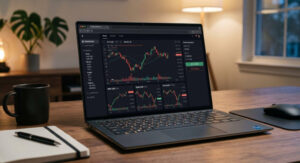
The rapid growth of web technology is changing the way individuals access global financial markets, with browser-based trading platforms offering traders an alternative to traditional desktop software.
Over the past decade, advances in financial technology have made it possible for traders to monitor market movements, analyse price charts and execute trades directly through a web browser without having to install dedicated software on their computers.
The development is particularly relevant to the global Contracts for Difference (CFD) market, where traders speculate on price movements across a range of financial instruments.
Traditionally, accessing online trading platforms often required users to download applications, install software and configure their devices before they could begin trading.
Browser-based platforms are removing some of these technical requirements.
With an internet-enabled device and a compatible browser, users can log into their trading accounts and access available market information without being tied to a particular computer.
This flexibility is becoming increasingly important as traders work and travel across different locations and use multiple devices.
The ability to access markets through a browser can also be useful when markets experience sudden movements.
Global financial markets can react rapidly to economic data, interest-rate decisions, central bank announcements, corporate earnings, commodity price changes and geopolitical developments.
For traders monitoring such events, having access to charts, live price information and trading functions through a browser provides another way of responding to changing market conditions.
However, technology does not eliminate the risks associated with financial-market trading.
CFDs, in particular, are leveraged financial products, meaning that both potential gains and losses can be amplified. Traders can lose money rapidly, depending on market movements and the level of leverage used.
Browser-based access therefore addresses convenience and accessibility, rather than the underlying risks of trading.
Another major development is the ability to monitor different asset classes from a single platform.
Depending on the broker and jurisdiction, CFD platforms can provide access to markets covering foreign exchange, commodities, stock indices, individual stocks and cryptocurrencies.
This can allow traders to follow movements across several markets without having to switch between multiple applications.
Other News
For example, movements in commodity prices can influence currencies and stock markets, while changes in interest-rate expectations can affect several asset classes at the same time.
Having multiple markets available through one interface can therefore make it easier for traders to monitor broader market developments.
The simplicity of web-based platforms is also contributing to their growing adoption.
Not every trader requires a highly complex trading environment for everyday activities. Basic functions such as live prices, charts, account information and order execution are often central to routine trading.
Browser-based terminals can provide these functions through a web interface, allowing users to access their accounts without installing additional applications.
The trend is part of a wider shift towards multiplatform financial services.
Many brokers now offer combinations of desktop software, mobile applications and browser-based platforms, giving users different ways to access their accounts and monitor financial markets.
The move towards browser-based trading does not necessarily mean that desktop and mobile platforms are becoming obsolete. Instead, it reflects growing demand for flexibility and access across different devices.
Among brokers operating across the global CFD market, JustMarkets is one of the firms offering access to CFD instruments through different platforms, including browser-based trading.
The broader development, however, extends beyond individual brokers.
As financial services become increasingly digital, web technology is reducing some of the technical barriers between retail traders and international markets.
For users, the attraction lies in being able to access market information and trading tools without being restricted to a single device.
But easier access also makes financial education and risk awareness more important.
Before trading CFDs, users need to understand leverage, transaction costs, market volatility, applicable regulations and the possibility of losing money.
The evolution of browser-based trading ultimately reflects a wider transformation in financial technology: global markets are becoming increasingly accessible through everyday digital tools.
As internet connectivity and web-based financial services continue to expand, the browser is becoming another important gateway through which retail traders can interact with global financial markets.