Follow Us on Google
By Steve Agbota
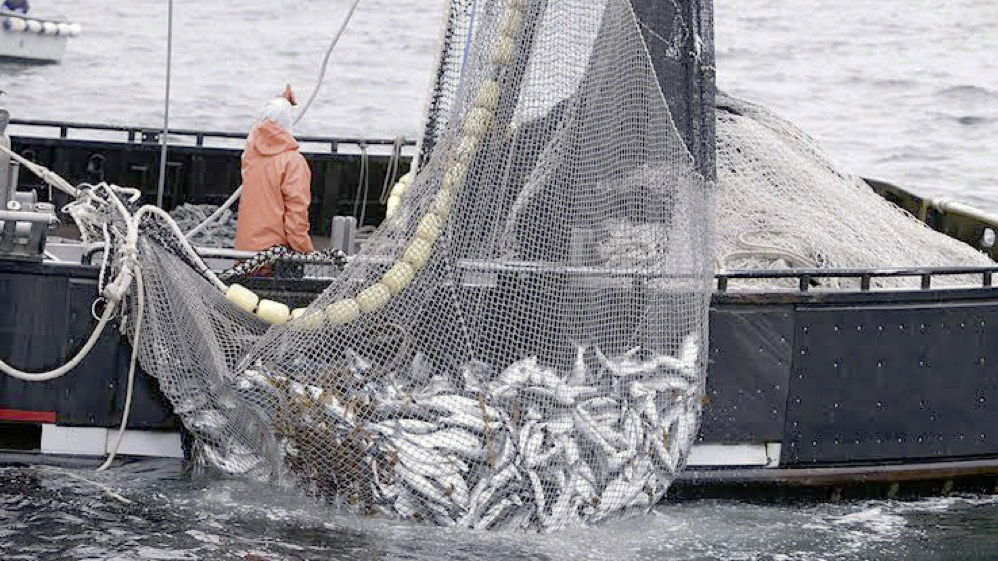
Despite its vast marine resources and more than 200 commercially valuable fish species, Nigeria remains heavily dependent on imported fish. Rather than harnessing its rich maritime endowment to become a leading fish-producing nation, the country spends over $1 billion annually on fish imports to meet domestic demand.
The growing reliance on imports continues to drain scarce foreign exchange, weaken local production and deny the economy over 500,000 direct and indirect jobs.
The situation, experts note, is very worrisome, especially for a country with a coastline of 852 kilometres bordering the Atlantic Ocean in the Gulf of Guinea and a maritime area of over 46,000 sq km, fresh mangrove swamps, creeks, coastal rivers, estuaries, bays and offshore waters.
For emphasis, 28 of Nigeria’s 36 states can be accessed through water, with over 250 ethnic groups. It is estimated that one quarter of Nigeria’s population lives in the coastal zone.
More so, eight out of the 36 Nigerian states, with 25 per cent of Nigeria’s total population, share the Atlantic Ocean coastline.
Tongues are wagging that despite these endowments and abundant resources in its oceans and seas to back its economic diversification and development drive, the country is yet to take full advantage of the abundant ocean economy and resources to expand its economy.
Being Africa’s largest population and one of the continent’s biggest aquaculture industries, the country possesses nearly every natural advantage required to achieve fish self-sufficiency.
Daily Sun learnt that Nigeria’s annual fish demand exceeds 3.6 million metric tonnes. In comparison, domestic production is about 1.4 million metric tonnes, leaving a supply gap of over two million metric tonnes that is largely filled through imports.
However, stakeholders said the narrative can change with the strategic investment across the fisheries value chain to transform the sector from an import-dependent industry into a major driver of economic growth, food security and creating 500,000 employment opportunities.
On fisheries and aquaculture, the Minister of Marine and Blue Economy, Dr Adegboyega Oyetola, said the ministry is prioritising the sector as a key driver of food security, job creation and export earnings, saying that efforts were underway to reactivate fishing terminals nationwide and provide support for artisanal fish farmers.
According to him, it is no longer acceptable that Nigeria continues to spend huge foreign exchange on fish importation, adding that the government is determined to end fish imports.
He pointed to a recent increase in local fish production from 1.1 million metric tonnes to 1.4 million metric tonnes in 2025, the first such rise in a decade, as evidence of progress, while stressing that more would be done to meet domestic demand and tap into export opportunities.
In a major boost for the sector, Oyetola revealed that the United States had approved Nigeria’s Turtle Excluder Device, a certification that enables Nigerian shrimp exports to access both U.S. and European markets.
At a recent stakeholders’ event, President of Dangote Industries Limited, Alhaji Aliko Dangote, expressed concern over Nigeria’s continued dependence on fish imports despite its vast marine resources, revealing that the country spends nearly $1 billion annually importing fish to bridge a widening domestic supply gap.
Dangote, whose paper was presented by the Managing Director of Dangote Ports Operations, Mr Akin Omole, said the situation presents one of the biggest investment opportunities in Nigeria’s marine and blue economy.
He said that Nigeria’s local fish production rose from approximately 1.1 million metric tonnes in 2024 to about 1.4 million metric tonnes in 2025, yet the country still records an estimated annual fish supply deficit of 3.6 million metric tonnes.
He noted that the huge shortfall has forced Nigeria to rely heavily on imports, resulting in an annual import bill of close to $1 billion.
“This is not merely a food security challenge; it is an industrial and investment opportunity,” Dangote said. He stressed that strategic investments across the fisheries value chain, including aquaculture, hatcheries, feed production, cold-chain logistics, fish processing and export infrastructure, could significantly reduce import dependence while stimulating economic growth.
According to him, with the right policy environment and stronger private sector participation, investments in the fisheries value chain could create more than 500,000 jobs, strengthen national food security, conserve foreign exchange and position Nigeria as a competitive exporter of fisheries products.
Dangote observed that although Nigeria possesses enormous marine resources and an extensive coastline, the country’s blue economy remains largely underdeveloped.
He noted that the sector currently contributes less than three per cent to Nigeria’s Gross Domestic Product despite the nation’s 853-kilometre Atlantic coastline, expansive Exclusive Economic Zone and vast inland waterways.
He attributed the underperformance to inadequate infrastructure, regulatory bottlenecks and limited access to long-term financing, insisting that unlocking the sector’s full potential would require sustained private sector investment backed by consistent government policies.
The industrialist also reiterated that the government alone cannot finance the transformation of the marine and blue economy, calling for stronger public-private partnerships to accelerate investment in critical sectors.
He identified priority investment areas to include port infrastructure and logistics, maritime manufacturing and shipbuilding, fisheries and aquaculture, marine technology and data services, marine renewable energy and coastal tourism.
Dangote maintained that every generation is presented with defining economic opportunities, describing Nigeria’s marine and blue economy as one of the country’s greatest untapped assets.
He urged investors to take advantage of the opportunities presented by the sector, saying Nigeria already has the natural resources and policy direction required to build globally competitive maritime industries.
“The true measure of success will not be the policies we formulate, but the industries we build; not the strategies we publish, but the jobs we create; not the investments we announce, but the prosperity we deliver to millions of Nigerians,” he said.