Follow Us on Google
Recent estimates place the number of out-of-school children at 18.5 million to 20 million. This is embarrassing for a country like Nigeria with its abundant resources.
In this report, some Nigerians are suggesting what should be done to end or reduce this figure drastically.
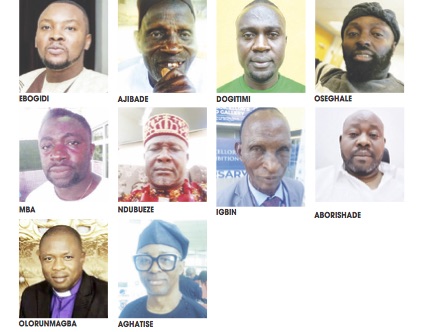
We should tackle insecurity, cultural barriers – Obinna Ebogidi, peace advocate; Port Harcourt
The number of out-of-school children in Nigeria, now estimated at between 18.5 and 20 million, is a national emergency. We cannot solve it with isolated interventions. Government must make basic education truly accessible by improving school safety, supporting teachers, and expanding community-based solutions such as school feeding, flexible learning centres, and partnerships with traditional and faith leaders to keep children in school, especially in rural and conflict-affected communities.
To reduce the numbers drastically, we also need to tackle the reasons children stay out of school – insecurity, poverty, cultural barriers, and weak accountability. If federal and state governments work together, fund basic education properly, and track results transparently, we can begin to pull millions of children back into the classroom and secure this country’s long-term development.
Government should declare education free at all levels – Alhaji Tajudeen Ajibade, veteran journalist; Kaduna
The government, especially at the state level, has lots of misplaced priorities and no advice can change them. They are aware of this time bomb, but because their children are in schools and hopefully, they have the impression that their children will also lord it on these innocent and abandoned children in future. They left what they are supposed to do for the poor and their children, only to pursue things that are mundane. The children they abandoned yesterday are the ones terrorising the entire society today. The United Nations has on many occasions sent warnings to those in authority not to allow the issue to get out of hands, but they looked at the other ways when their houses catch fire. The fire is going round the whole country and nobody should think it is a northern region phenomenon. I will suggest that the time has come for government to declare all education free at all levels. If we allow those children roaming around the street to know that they were being cheated, the calamity may be too much to curtail.
Government should provide security in schools – Sam Dogitimi, journalist; Yenagoa
It’s clear that kidnapping and other terrorist activities in the country have largely caused this menace. So it is incumbent on the government to tackle Nigeria’s current security challenges before things get even worse, and also provide adequate security in schools.
This, in my view, would help states and local governments to solve their peculiar
Government should strengthen school feeding – Uyi Uduebor Oseghale, UK
Nigeria has an estimated 20 million children out-of-school. This is a national emergency that cuts across poverty, insecurity and cultural barriers. The response needs immediate action as well as long-term reforms. The government should expand the conditional cash transfers and link them directly to school attendance. Payments should go to mothers in low-income households. It should also strengthen school feeding to increase attendance, improve nutrition and support local farmers. The government should also provide flexible schooling options in hard-to-reach areas. This includes mobile schools for nomadic groups, accelerated learning for older children, and second-chance programmes for girls who left school early.
The Federal Government should also improve security in conflict-affected states and fund the Safe Schools Declaration fully. It should build more schools in rural communities to increase enrolment.
Government should set up taskforce to ensure compulsory education – Rev. Emmanuel Olorunmagba, cleric, Kaduna
The staggering number of out-of-school children in Nigeria is just too alarming and very embarrassing. And we must admit that this is one of the major reasons crime, especially terrorism is escalating in Nigeria. As a Yoruba adage says, “a child that is not built today will tomorrow sell the house that one built.
A country that doesn’t place high value on the education of children will face severe negative consequences from the uneducated and untrained children. Therefore, one of the surest ways to fight crime and terrorism is for the government to do whatever it takes to reduce illiteracy. And what the government needs to do to drastically reduce the number of out of school children are; provide free and compulsory education from primary to secondary school, so that we can be certain that the government is playing her roles in ensuring every child gets educated at least up to secondary school; set up task force to enforce compulsory education from primary to secondary school, whereby parents/guardians that refuse to send their wards to school can be made to face the law. To encourage private schools at all levels to grow and also create conducive environment for private schools to succeed. And drastically curb the issue of excessive and multiple taxations that are having serious negative effects on private schools and that is contributing towards hiking of school fees.
Government should make going to school rewarding – Stanley Mba, media practitioner – Umuahia
Other News
No doubt, there has been increase in the number of school drop-outs in the country. From what is happening in the country today, it appears going to school is not only a waste of time and resources, but also a crime for those who chose the path. I’m saying this because it sounds absurd that someone will spend four to six years in some cases and when the person comes out, he or she will be jobless.
Youths are disenchanted from going to school since when they come out, they would be roaming the streets without any tangible thing to do. For this to be checked, government should provide jobs for the teeming youths to make going to school attractive.
Government should make jobs available for those who went to school – Chief Ikechukwu Ndubueze, public analyst; Umuahia
It is unfortunate that the way things are in the country today, youths do not see the need to go to school. The get-rich-quick syndrome that is prevalent in the society presently has made the youths to see going to school as a waste of time. This is more so, when some who did not go to school and who through hook and crook make money will be given a pride of place in society, while someone who went to school and has no money, will be relegated to the background in the scheme of things. To reduce the number of school drop-outs in Nigeria, apart from government making good jobs available for graduates, the society should de-emphasise the undue recognition attached to material wealth in the country regardless of how it was made and emphasise more merit.
Reversal of low public perception of going to school – Dr Mike Obulu, medical practitioner, Makurdi
The worst enemy of school enrolment and retention is public perception. If educated folks are promptly employed and remuneration is attractive, every child will flock to school. But if public perception is that education doesn’t really influence your progression in life, there will be clearly lack of interest.
Faith groups, private sectors should join government to tackle the challenge – Steve Aborishade, child rights activist; Makurdi
We may have to look at the issue of out-of-school children holistically in suggesting a way out. To be sure, different factors have been responsible for Nigeria having this level of children out of the school system. And if we look at the region where this is so pervasive, we can understand why this is so. In the North, for instance, we have experienced a whole lot of insecurity, where we have a jihadist group declare war on education. Several students have been kidnapped leading to schools shutting down. This is true of the situation till now.
Also, in the same region, formal education has had to face serious cultural and religious challenges contributing to decreasing enrolment figures.
A bigger issue that cuts across the different regions of the nation is the low budgetary profile for education at both the local, state, and federal levels that constitutes the core challenge facing the entire nation. As is the situation in other climes, a solution to this problem will be when individuals, corporate entities, faith groups, and others see the need to join government as a partner, and invest in education. That may be the only way to change the tide.
Government should partner private sector – Kelvin Aghatise, lecturer; Benin
The government should partner private institutions to reduce school fees. School dropouts in this country are actually on the alarming rate especially the times we live in where innovations and technology is the only thing that can drive the economy system.
So when country has very low number of students in schools or very high level school dropout, it is a source of concern.
And one of the ways we can actually do this is to see how government, if possible, can partner with private sector to introduce free education or reduce the amount of school fees that are being currently paid in most of our tertiary institutions.
Government should rekindle interest in education – Osaseri Igbin, lecturer; Benin
Parents should begin to emphasise the importance of education to their children. They should try to ensure that the least education they can give to their children is a first degree.
More so, the government should endeavour to provide job opportunities for the citizens of the country because some persons lost interest in education when they saw that those who graduated from the universities have no jobs. So, in order to correct the issue of out of schools children, the government must do the needful.