Follow Us on Google
• Says indigene, settlers dichotomy fuelling conflict
From Jude Owuamanam, Jos
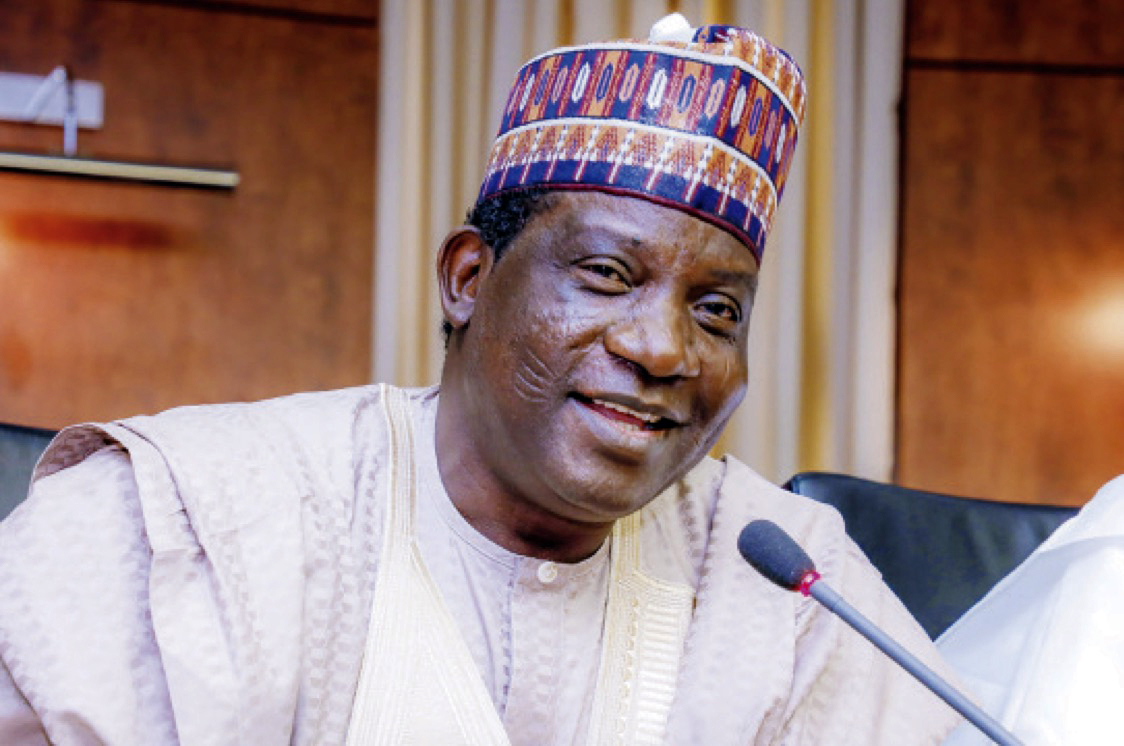
Former Governor of Plateau State, Simon Lalong, who now represents Plateau South Senatorial Zone in the National Assembly and Chairman, Senate Committee on INEC recently spoke on a number of issues, including the recurring crises in Plateau State and why he wants to return to the senate in 2027
Some of those opposing your desire to return to the Senate are some of your aides whose political career you helped to build in the APC. How do you feel about that?
I feel honoured, not only honoured, I also feel dignified because before I left office, I’m sure you knew what happened. A lot of things were done that they didn’t want Plateau to hear the name Lalong again. You saw the circumstances of the election. I was the director general of a Muslim/Muslim ticket in a Christian environment. It wasn’t easy for me, I must confess. Not only for me, it was not easy for my party, it was not easy for my family. We went through a lot. I never knew we would get it (the presidency), but I was very hopeful that we would deliver the president. When the president was elected, I knew that a lot of people would come back to APC. So that was why when I saw people coming back, one after the other, one year, two years, three years, and now we have more than 30 governors..
How do you feel giving up the leadership of the party to Governor Mutfwang?
But if you know my character very well, I’m not a sit-tight person. In most cases, I like to be a gentleman. While people were running, fighting in each state about leadership, my Catholic upbringing helped me to remain focused. Well, my Christian upbringing, particularly Catholic upbringing. People say I am very passionate about Catholic. Yes, some people thought I was going to be a reverend father. Even right from primary school, we were taught by reverend sisters and fathers and that was the kind of spirit at that time. They were announcing me to be a reverend father. I didn’t know until when, somewhere, I slipped. My father said, I’m the first born. So that Catholic upbringing gave me a different aspect of life; that life is not all about being greedy, life is not all about being selfish. But that life is about being generous, being accommodating, and being fair. So if I see a leader, I will not tell him to be in leadership every time. Today, by the grace of God, I happen to come back again. I have not seen it in many states. It’s very rare for somebody to go to the House of Assembly, become speaker, and come back the second time, and become speaker. You can count just a few of them. Once you are speaker, you escape and escape the first four years, (that’s if you’re not removed before then), before you come back again, you will not be speaker again. I’ve not seen anybody in Plateau with that kind of credentials. So God gave it to me. So when you talk about something like leadership of a party, it’s nothing to me. So yielding leadership to Mutfwang was not a problem to me because I have been a leader in many respects.
Can you give us a brief highlight of some of your major achievements at the Senate and why you want to be re-elected?
Well, first of all, let me tell you, it is not easy to be a first-timer in the Senate and even be given responsibility of any sensitive committee. They are sensitive and are very important committees. I’m not saying some of the committees are not important, but you know what we do at the national level. At the national level, there is something they call ranking. If you had followed my screening as minister, the President of the Senate said they were going to give me the opportunity to take a bow and leave. I saw my interest or responsibility as senator representing the Southern Zone, far beyond the Southern Zone. Everything about Plateau State was my responsibility. Members of the House of Representatives will have issues, they will run to me at the Senate. They even made me the leader of the National Assembly Caucus. Because of all the issues affecting Plateau, I was to take a decision as a former governor, the only former governor there. So responsibility started from there. We addressed issues about challenges in Plateau State, like these issues about insecurity. Back in the Southern Zone, some of the responsibilities will also include establishment of schools. I had primary school. We constructed primary schools, many numbers, in different places. I provided solar lights in all of them. Before I left, there were certain issues that we left uncompleted. For instance, I had influenced the establishment of the mother and child, a 100 bed hospital in Kwande. So it was my duty as senator representing Plateau to see to the completion of that hospital. I did a lot of things that space and time cannot allow me to enumerate all. But my footprints are there not only in the southern zone, but in all other parts of the state.
Other News
So how do you feel with the present state of APC in Nigeria, especially that some of the vibrant members are out now to challenge the institution that is somehow shaking the foundation of the party?
Well if you recall, it started in PDP. Thank God my journey started from PDP. When it came to issues like this, it is not the first time. Many governors were all running to the PDP from other parties. Now it is APC. Again a lot of people left PDP. A lot of governors moving from all the old political parties back to APC. Don’t forget it is election year you know politicians when it comes to election year, they are not thinking of party again they are thinking of their ambitions. They are also thinking of how to realise those ambitions. So I won’t be surprised that everybody is running back to APC. I am also inclined to believe that if you have this kind of population in politics you will also not go and sleep and think all is well. You should also prepare strategies because the more you come the more the interest, the more the conflict in interest. So it depends on how you are able to manage it. The national chairman is from my state, even though people will say he had no experience, but I know experience in politics depends on how you are able to learn very fast. So I must commend him that he learnt a lot within a very short time. He had never been elected, not a former governor. But was a minister for just a short time. But it prepared him for national office and I must say that within the short shortest possible period he has done his best in managing the affairs of the party.
What about the allegations that with the influx of elected officials into APC, the nation is gradually drifting Nigeria towards a one-party state?
No. Of course you know those things are what people are saying recently. The same happened when people were moving into PDP. Even the international community was saying that President Obasanjo was trying to make Nigeria a one-party state, But that never materialised. So how is it going to be possible? Nigerians, being what they are, very politically savvy, cannot even allow such a thing to happen. Our plurality won’t even allow that to happen. What is happening now is that people of like minds are coming together to rescue the country from slipping into anarchy.
Talking about electoral reforms, many people are criticising some aspects of the new Electoral Act, which they said are skewed to favour the ruling party. One of the most criticised aspects of that law is the one that gave electoral officers sweeping powers to decide on ballot papers that are not officially stamped. As the chairman of the committee on INEC, what are your views on these criticisms?
Now let me tell you something that happened. In the history of Nigeria, I have not seen anywhere the National Assembly took time, in addressing the issue of constitutional amendment, especially in respect to amendment of the electoral law, like what we did. Two years, consultations. And you know, Nigerians, when we are doing consultations with a lot of adverts here and there, some people will not come until the dying minute. We ask civil societies to give them their input. We asked the Nigerian Bar Association to give their input. We asked the judiciary to give their input. We asked security, the police, to give their input, those who are responsible for security when elections are conducted. So all the different sections of Nigeria were involved in making the new electoral law. At the end of the day, we compiled this and we started doing even zonal consultations again. We went through zonal consultation for two years. Two years. Yes, I met them when they had finished one year. But I took it over and we added another one year with heavy consultations here and there. And we arrived at what we have. We produced a document. What we produced was completely a compilation of the views from the judiciary, from litigation lawyers, from political parties, all of them gave their own opinions. So when we compiled it, we made the first presentation and by the time we finished, it was no longer the opinion of a group. It’s no longer the opinion of INEC, no longer the opinion of the opposition.
For more than two decades, insecurity has been ravaging the state and you once served as the chief security officer of the state. What do you think are the solutions to these problems?
When you hear me talking about insecurity in the state, you would have heard me say that if we continue to do the same thing, we cannot get different results. Insecurity in different states had different dimensions. In our own case you knew what happened. I worked under former Governor Joshua Dariye as speaker. We had a state of emergency followed by impeachment. Even my own seat was threatened with a recall process. There was nothing that was not exhibited on the Plateau, which would have served as lessons for the incoming regime. We had Operation Safe Haven, which was intended to put the crises to an end. When Goodluck Jonathan became president under Governor Jang again, he declared another state of emergency when there was a problem with local government elections. He did not remove Governor Jang. He added another outfit to Plateau security, Operation Rainbow, which was like state police. Two state of emergencies, two outfits. But that did not bring peace to the Plateau. When I came into the office, the situation was very bad. There were areas that Christians were not going to, like Angwan Rogo and Bauchi roads. And Muslims were not going to Jenta. Because of all these, civil servants were not paid. There were nine months of outstanding salaries because insecurity had taken over everything. People were running away from Plateau, selling their properties and running away from Plateau. For six months, teachers were on strike; judiciary for five months. We found insecurity everywhere and Operation Safe Haven did not solve the problem. I have been asked, what did you do differently that calmed the situation in Plateau State? What I did was to go through the reports of past commissions of inquiry on past crises. There was the Niki Tobi report, Justice Fiberesima etc. There was a high-powered commission set up by President Obasanjo with late Solomon Lar and Ambassador Yahaya Kwande, a Christian leader, a Muslim leader, to assess and look at the general problem of Plateau State and provide a lasting solution to it. So in my own case, I set up a committee to review all those commissions. I allowed inclusiveness in my government and that’s how we enjoyed relative peace during my time.