Follow Us on Google

From Uche Usim, Abuja
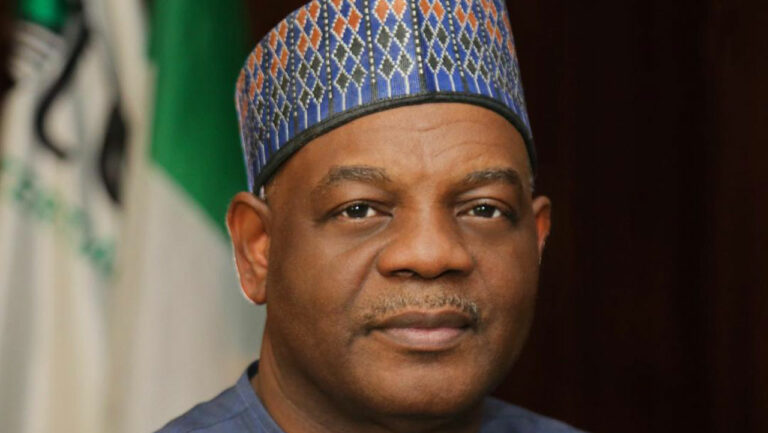
For Dr. Rabiu Suleiman, information communications technology (ICT) holds the key to protect, unlock the huge potential and totally revolutionize the oil and gas industry
He thus called for massive investments in ICT, being the driver, unifier and custodian of the global economy.
Suleiman, a former technical adviser to the Ministry of Petroleum Resources and former group executive director, corporate services, Nigerian National Petroleum Corporation (NNPC), cites examples of Saudi Aramco (an equivalent of the NNPC) and other reputable, petroleum companies in the world where ICT has totally redesigned their operations,+ leading to lower operational cost, greater efficiency and higher revenue generation.
From January 2008 to July 2009, Suleiman was the manager, Health, Safety, Environment and Quality Assurance of Nigeria LNG, Bonny.
In November 2015, he was appointed Group Executive Director, Corporate Services of NNPC before he was seconded to the minister’s office to head the Technical Advisory Team as Senior Technical Adviser on Refinery, Downstream and Infrastructure.
Passionate about the oil and gas sector, Suleiman is also calling for a comprehensive training of young graduate engineers and fortifying them with robust ICT skills to take the petroleum industry to the next level.
He speaks more about the oil and gas industry.
What are the challenges plaguing the oil and gas industry?
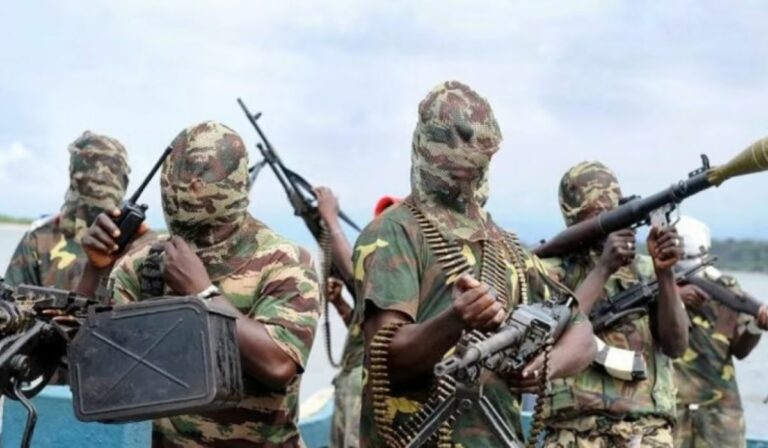
The oil and gas industry is seriously challenged. There are various reasons and areas of challenge. The major challenge today is security or insecurity. Other challenges include; general economic recession, the recent COVID-19 pandemic that almost grounded the entire world economy and more. Many countries passed through recession, there was the lowering of oil reserves because production was halted in some countries and therefore, production became low and of course, there are other challenges related to high production cost. If you narrow down and do a comparative analysis between Nigeria and other countries, the cost of production per barrel in Nigeria is significantly very high. It went as high as $32 per barrel and crude oil price at the international market went as low as $9/barrel in the 90s. But quickly, it went up to $40/barrel later and then crashed to below zero by COVID-19.
We reached a time in the history of oil and gas that producers will look for those to offtake crude and be paid. Nigeria being smart as a nation, instead of being desperate and shutting down oil wells, (which if you shut down operations, the cost of coming back is huge), what Nigeria did was to go outside the country and identified storage facilities while waiting for the COVID-19 panic to end so we could sell it. That’s what we did in order not to sell at minus a dollar per barrel. That was very innovative and I commend the GMD of NNPC for doing that. We also had an investment challenge. Because of the insecurity which I mentioned earlier on, a lot of investors were unwilling to invest because of the fear that they will not recoup their investments due to hostilities in oil-producing communities. So, there was a pushback from them to funnel investments into the oil and gas industry.
Of course, we’re very much aware that Africa is an investment destination, that’s a fact, whether we like it or not. Europe, America and Asia are getting saturated for investments. There’s a lot of cash flow but little investments. It’s only natural that, where natural resources are found, investments move there. So, whatever we do as a global village to provide securitisation of financing is something that must be done not only by the government, but also the investor.
Why insecurity went high was that even the IOCs were not paying attention to security challenges like empowerment of the youth, development of sound corporate social responsibility. So, when you take petrodollar investments in billions and the host communities live in abject poverty, what do expect? There will be hostility and hatred, complaints and these snowball into major crises. So, the strong will always fight to get what they feel they should get. That’s part of the reasons why the challenges are enormous.
But Nigeria is somewhat different. While other countries lower the number of rigs going into their country, surprisingly, more rigs are coming into Nigeria. Only recently we discovered oil in commercial quantities in northern Nigeria. Today, we have a rig in the north. We have a flare system up there.
But of course, technology is key. The conventional conversion of crude oil into normal gasoline, diesel, kerosene and aviation kerosene is no more in vogue. Technology has so advanced. When you take a country like Japan, in some refineries, there are 57 different types of refined products coming out of fractional distillation of crude. So, there are many things you can do with crude oil. Not necessarily crude to petrol, diesel and all that. You can do analytical reagents in the laboratory. You can manufacture so many things in the petrochemical industries. I’m one of those who don’t believe that the advent of electric cars will see to the poor utilisation of crude. Yes, for conventional products. But with ICT, you can discover much more products that the market is demanding.
In what ways can we deploy and deepen ICT usage in the sector?
The ICT sector should target the young graduate engineers by giving them some specialist training so that they can understand ICT as a tool rather than as an opportunity. In all process plants, ICT plays a significant role in optimisation, efficiency, technology advancement and all that. The most sensitive equipment in the process plants in the oil and gas industry is the programmable logic controllers, online analysers and all other instruments that control process, temperature, flows and pressure.
So, if a company such as Huawei focuses attention on optimisation, efficiency, control and improvement, maximisation of production it will be very good.
Today, we’re talking about artificial intelligence and many other things. It’s my honest opinion that ICT is a key player in terms of optimisation, safety and profit.
ICT is also key in security. Today, we have 5,250km of pipeline criss-crossing Nigeria. When we started, we already knew ICT was going to play a significant role. Each of the segments of these pipelines, has along the same corridors optical fibres together with the pipes as they go along. That’s the wisest decision we made 40 years back. You can easily integrate various ICT components in terms of monitoring of volume flows, temperature, attack, corrosion, contamination, communication, you can tie all these to a dedicated command and control centre.
Look at Saudi Aramco for instance, it has a very big advanced command and control centre where they can see everything happening, whether it is the wellhead, on the pipeline, within the plant or another place. They can see everything from that centre and can command activities. Only investment in ICT makes this possible remotely.
Typically, Port Harcourt Refinery is highly advanced in ICT. It was built in 1989 and commissioned by us. I was involved in that project from the scratch. It was attached to an ICT firm from Japan.
ICT is really key. You hear the use of robots and artificial intelligence.
What is missing in our industry is lack of awareness and I’m happy that Huawei is here and they’re going to participate in the international conference and have a stand there in order to create such awareness. I’m very happy with the rapid growth of Huawei that is growing happily into the international market and competing favourably with other international brands, especially in telecommunications. We can see the keen competition between the cell phones of Huawei and others. ICT plays major roles across sectors; aviation, maritime, oil and gas, telecommunications and more.
Look at the three Nigerian refineries, none of them is producing aviation kerosene, why? Because of the ingress of water into the system and the inability of the laboratory to detect moisture content and poor knowledge of operators who are reluctant to apply new technologies because they are afraid to carry out certain decisions.
That’s why I harped on creating awareness in ICT and targeting the youths.
That is what Japan did. It identified many oil producing countries and set up a training institution where they pick engineers from these countries and invite them for training in Japan for free. Why? Because Japan is not an oil producing country. It needed to protect its energy security and so they wanted to be a friend to all oil producing countries. Anywhere they go and knock on the door, the door will be opened. I’ll encourage Huawei to do the same thing. Identify key, young, professional engineers and incentivise them with training. That is what I’m also providing for them at the NNPC today so we can close the skill gap between the young engineers and what’s happening in the world.
ICT technology is running with the speed of light. What’s the challenge? Obsolescence. As you grow in ICT, because of the rapid growth in science and technology, obsolescence sets in so quickly. Africa doesn’t have that kind of resources to install a new technology and a new innovation comes in next year, then they have to discard the old one and go for the latest. In ICT, you make sure that the technology you have has a base line that should be able to communicate with any new technology you want to adopt. You bring it down, install the new technology, couple it back and it’s able to offer the same service and efficiency.
What of migrating to green energy?
I was the first Group General Manager, Renewable Energy of NNPC. I see a lot of potential in that space. In 2015, President Muhammadu Buhari went to Paris to attend the United Nations General Assembly on carbon emission and global warming (COP 21) at which place Africa was told to stop gas flaring by 2030. To demonstrate commitment, our president signed 2020 without consulting anyone. He went a few months later to ratify the position in the USA. That was huge. I was Chairman of an Inter-ministerial Committee that identified all sources of gas flaring, generated policy and convinced the government that the gas being flared by IOCs doesn’t belong to them and that’s why they’re flaring it. Put any penalties, they will pay. The OML given to anyone is silent about the gas. So, the government took possession of it. That’s what we did. Instead of wasting it, we convert it to wealth. We created a waste to wealth programme. So, you take gas from the oil well head and convert it into power, ethanol and many more.
We are not there yet; 2020 has passed. This is 2021 and the target is 2030 but we have gone very far as a nation.
Nigeria is abundantly blessed with renewable energy sources. Sunlight is abundant; from here in Abuja to the far north. It can be captured and converted into solar systems. The main engine for growth is to have uninterrupted power supply. We also have many solar power projects going on. There is 100 megawatts of solar power that I initiated in Kano State. We have many others going on in other parts of the country. We have small power panels that you can throw into the roofs in villages. We also have energy from windmills. Not much is being done here. We have hydro power resources, big dams and rivers. The first power source before we discovered oil was the Shiroro hydro power plant. It’s being highly politicised. Many presidents come and go without commensurate investments in it. This government has tried and made commitments on it but I’m still sceptical. In two years time, this regime will be out and whether we can take this project to an irresistible point before another administration, I’m not sure about it. So, alternative energy sources are key but it needs a lot of awareness. Who is the biggest culprit in environmental pollution? The oil and gas industry. We release the highest tonnage of carbon and heat into the atmosphere and it contributes to global warming. Those without knowledge of this in the oil and gas industry are asking why we should go into other areas other than oil and gas. NNPC has planners who wondered what the Corporation had to do with agriculture as an oil and gas company. Before I left office, we made a policy that whoever produces biodiesel, NNPC must buy.