Follow Us on Google
Chairman, Federal Civil Service Commission (FCSC), Prof. Tunji Olaopa, has outlined some measures to develop the nation’s economy.
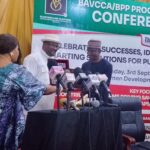
The renowned bureaucrat and professor of public administration, spoke at the maiden international conference of the Faculty of Management Sciences, Federal University, Lokoja, Kogi State, on the “Future of the Nigerian Economy.”
In Olaopa’s lecture entitled, “Achieving a Robust and Inclusive Economy: Prospects and Challenges,” he examined the current trajectory of the Nigerian economy, the situation of the key sectors, the leadership forthrightness and creativity being brought to bear by President Bola Tinubu, while offering a range of recommendations on how governance and policy reforms would consolidate a robust and inclusive economic growth
In his recommendations, he noted that, “the government must necessarily tilt policy designs inwards, towards a self-sustaining development paradigm, even as the nation cannot but draw strength from the opportunities offered by the global economies to stand strong. We, therefore, must reverse the consumption-production discrepancy, which implies paying rigorous attention to enabling local content that rides on a made-in-Nigeria consumption value reorientation and cultural adjustment.”
According to Olaopa, Nigeria cannot afford to benchmark past policy failures by sustaining a pattern of growth with a “largely untransformed economic structure; one that is uneven and socially non-inclusive, and therefore, generating limited sources of new employment. Such a low employment intensity is historically linked to an economic structure that is heavily dependent on oil and gas, which by its character, is heavily capital and non-labour intensive in terms of its production process.”
Olaopa decried what he identified as ‘skills mismatch in youth unemployability’ caused by the government’s education policy, which erroneously tends to emphasise formal, technical, and vocational education training to the detriment of traditional apprenticeship and non-formal training.
He recommended that policy action be directed at re-organising the traditional apprenticeship, and non-formal national vocational training systems as a way of increasing their capacities and capabilities to generate employment in the informal sector of the economy.
He said: “This is expected to be an active complement to the Nigeria’s six level national vocational qualification framework, which links the education and training systems in terms of industry and competency-based qualifications
Besides, the national diversification strategy needs to be holistic. The new agricultural policy reforms must, therefore, include land reforms that give titles of lands to farmers, so they are at once enabled to gain the economic benefits of holding such titles within a value-chain that transforms the lands to assets.
“The industrial relations paradigm in the country needs to be radically confronted for fundamental recalibration. For it to be developmental and not continue to serve empty non-value-adding populist political undertones, it must embed shared passion for installing a new national productivity paradigm rooted in technical-rational collective bargaining construct. Current labour activism in favour of workers’ welfare rides too unreflectively on a ‘something for nothing’ work orientation, and therefore, nondevelopmental however well-intentioned.”