Follow Us on Google
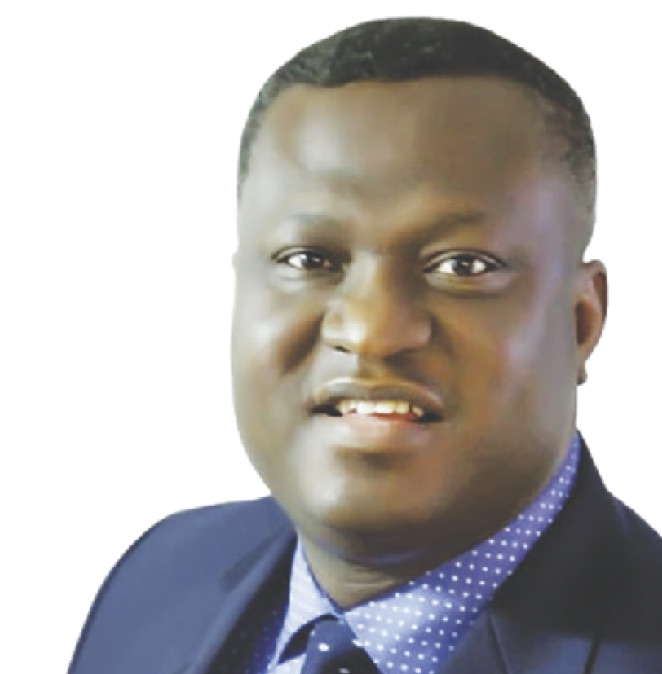

•Nigerians die in poverty sitting on wealth because their properties don’t have legal titles
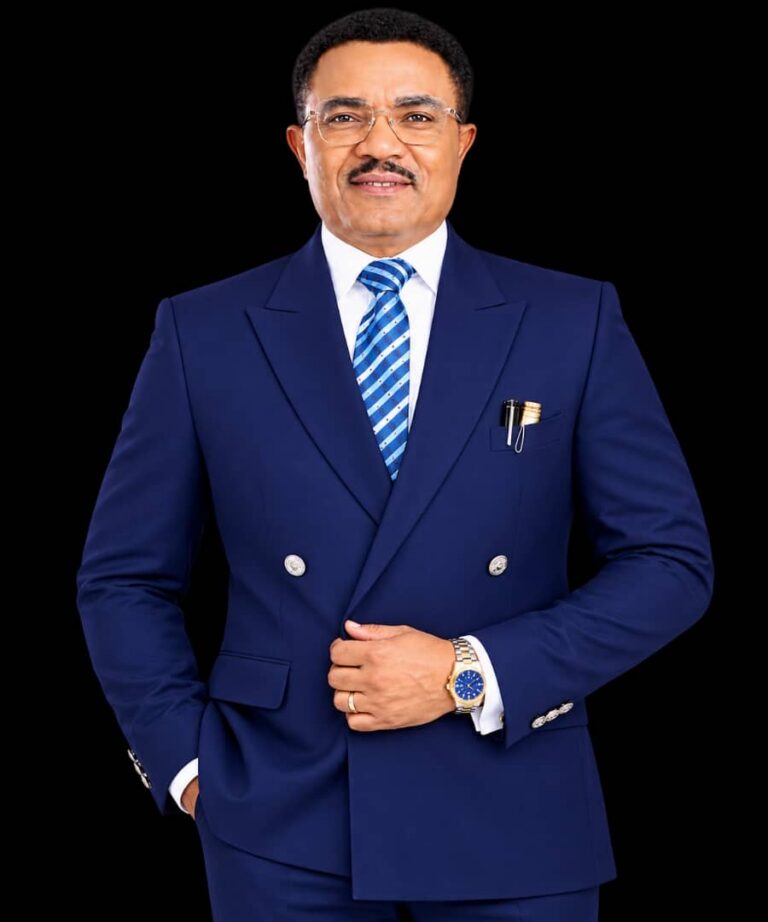
Managing Director and Chief Executive Officer of Kings Court Realtors, Mazi Emeka Okoronkwo, has said that most Nigerians die in poverty sitting on wealth simply because they don’t have legal titles to their properties.
He urged state governments to issue certificates of occupancy (C of O) to property owners in order to bring them in to the formal property system.
In an interview with VINCENT KALU, one of the leading estate valuers in Nigeria, noted that Nigeria failed to achieve the ‘Housing for all 2000’, a global mantra to address housing challenges the world over, because of the lack of a strategy to implement it, thereby turning it into a mere paper policy.
Nigeria has a housing deficit that is huge. In the 80s, the mantra was ‘Housing for all by the year 2000’. About 25 years after, nothing seems to have been done. How can this housing deficit be addressed?
In the first place, United Nations agreed that everyone should have access to decent housing. Nigeria was a signatory to that charter in 1984, when the late General Muhammadu Buhari was the military head of state.
But then, it is one thing to wish that there is housing for all, and the second thing is the strategy to implement it. What we lack in Nigeria is thinking through about solutions that will lead us to where we desire to be. It is one thing to put paper policies. There are so many paper policies. But when you double down on them, they don’t connect. It’s a hoax. It’s not built on something that is stable.
Now, if you want to decompose a problem or peel the onion, to begin to identify where the problems are, the basic thing is access to land. That’s a big challenge. Now, you can come to a state that is less than 15 per cent occupied, but the other 85 per cent of the land are not in supply. They can’t be used. The population can only use the land that is in supply. What do I mean by supply? – Infrastructure, access to road, access to amenities. And then, proper titling, and identifying who can give you legal title over land. Those are the problems.
So, if we want to solve housing for all problems, the first thing to address is how to consistently on a year-by-year basis expand the supply of land for the use of the citizens. How do we begin to, on a strategic basis, enlarge and expand the access to infrastructure – water, electricity and good road network. How do we have a speed line where people can actually gain legitimate titles to the property that they acquire? How do we bring them to the formal property system, because property ownership makes you accountable in any society? So, those are the problems.
Except we address these issues very well, we’ll continue to dream. Probably, in the next 10 years, we’ll do housing for all by the year 2050. It won’t lead anywhere.
The first thing, like Jack Wales said, you don’t just wish that something happens. You have to come up with a plan. What is the plan? We don’t have a national plan to ensure that young people that are growing now, which are supposed to understand the way they live, and pattern society in such a way that it will accommodate their own nuances, idiosyncrasies, likes, and all that, different from the way the old generation lives; different from how we evolved as a cultural people. The Yoruba have the way they live, the Igbo have the way they live, and the Hausa have the way they live and so on. How do we have a policy that incorporates all these things, and encourages people to develop, depending on the choices that they make? That’s the most fundamental thing. Except we have that plan, we’ll keep celebrating policies that will never work.
How can the Housing Ministry both at the federal and state levels fill in the gap, maybe, using the private sector?
The role of the private sector is a catalyst for development. What we as professionals do is to provoke conversations that bring the realities we see on the streets to the people in governance, so that policies can support activities on both sides. But, when you isolate the professionals who deal with everyday realities; who understand what the problems are, who know what solutions can address the issues; the problems will get solved. If they are isolated from the entire panoramic, the real plan, and the entire approach to solving this problem, we’ll continue to have all these gaps.
To start with, the ministry as relevant as the Ministry of Housing should be manned by somebody, who is not only knowledgeable in spatial industry, but somebody who has lived a life of practice. Then you graduate into policy. Then you know where the rubber hits the road. For instance, in the Ministry of Justice, you can never see a medical doctor going to be Minister for Justice, or Attorney General of the Federation, there’s always a lawyer in practice. They go there because they understand what the issues are. And they then ship policies that are able to bring lasting solutions to the citizens in that aspect. But in this field now, I don’t know. Sometimes the appointments are purely political. Sometimes the appointments are there for reasons that continue to confound you if you seek to understand what the issues are, or even understand what the priority of this particular minister is. The problems will never end, but at least you can identify what it is that you want to solve.
So, if you see a minister that comes there and says, okay, my objective is to ensure that I democratise access to land so that we can have all the lands in the country titled, it becomes a strategy. Or, another person comes in to say, okay, I want to ensure that we can use technology to develop alternative methods of building so that the cost of construction in the country can come down. It will be an objective. Or another one can say, okay, I want to come now and develop the practice base so that a lot of the people that are going through a lot of challenges in the country, because they are being served by unknowledgeable professionals, get a lot much more access to proper professionals and practice. It can be a strategy. Any of these things would help. It would just help push the needle forward. But, if you don’t have such plans, if your interaction with the community is very poor, you would just drain water and do foyers and leave the place.
Nigerians are groaning over the sudden hike in cost of accommodation. The salary earners cannot meet up with house rents. What brought about this, and how can it be addressed?
You can’t address it because real estate is a store of value for anybody who invests in it. What has happened is that real estate is reacting to the devaluation of our currency.
People invested in real estate. For instance, if you borrowed money at the cost that it was before now and you’re repaying the bank, and maybe, today, based on the devaluation and all that, they have revalued your loan structure and your loan structure is more than you have bargained, your only source of revenue from there is the rental. What are you going to do? That is still the point, which is why we are saying that the government is too complex. It exists to solve complex problems. And the society will continue to throw up complex challenges.
Before you make policy decisions, you have to be able to look at the entire gamut. The things it’s going to affect. We are in this industry. Some people live in places where their one year rent will take five years of their salary today to pay. It wasn’t like that three years ago. So, this is the consequences of the policy changes that we have seen during this period.
Unfortunately, we have to deal with it because that’s what the reality is today. And consequently, that is also affecting the cost of money. So, those are the things that before a policy is formed, the impact on society must be checked. It is not just so much about people that are paying rent. What about people that are in mortgage, people who borrowed money against their facilities, against their properties, having to pay at this rate?
That’s what happened when we were younger, under General Ibrahim Babangida, where those people who borrowed money suffered; a lot of industries collapsed. You borrowed $1 million, and then, all of a sudden you were paying $5 million. And your revenue, your business, was unable to support it to pay back. That is the decapitalisation. That’s the problem. This thing would have been factored in.
I believe that the same way they set up AMCON to address the default that came with the banking industry and all that, there should have been a system that would be able to support the people, especially the organised civil service who are in rentals, to show a structure that would continue to enable them to be able to pay their rents. Because you have to be alive, you have to be somewhere. You have to sleep in a room to wake up to be able to be productive in society, to be able to support those things. When there were no such programmes, what we’re seeing today was only a matter of time, it was going to happen.
There are too many ejections going on, there are so many cases in the courts. These are normal everyday decent people, but they are just unable to meet the obligations because of how the economy was managed.
What has been the contribution of the Nigerian Institution of Estate Surveyors and Valuers (NIESV)?
The point is that we’ve been around for 50 years and more as the Nigerian Institution of Surveyors and Estate Valuers (NIESV). Unfortunately, the contributions that we are able to make in the country have not unleashed the kind of results that would be expected. We are the midwife for economic development in any capitalist society. For instance, just for clarity, anything that you want to do that exchanges value between two people or three, the most credible way to be able to champion that cause is to establish an independent, verifiable, and authentic opinion of value. That’s where we come in. We midwife economic development to create wealth in a capitalist society. Unfortunately, one of the critical anchors of capitalism is collateral disbursement. And collateral disbursement would have to do with your acts and your ownership of property, real property. When we mention property, a lot of people think that it is pointing to one land, one house. No, property is a complex system. It’s a bundle of rights. It is your ability to claim ownership over something that can be recognised by all parties. In England, the highest of them is called the Fee simple in absolute. It means that that title is good against the whole world. It can be traded upon. It can be leaned upon. It can be mortgaged. Now, if you look at the entire Nigerian system, only 17 per cent of our property base in Nigeria can be mortgaged, can be borrowed over, have legal titles. That is the problem.
In a city like New York, the amount of credit mortgage that is created on a daily basis, on an hourly basis, is similar to what we do in Nigeria in five years, because people can trade, people can unleash the potential. There are so many latent assets in the country. If you’re a bona fide Nigerian, you must have an inheritance somewhere. Those inheritances are around the world if you have title over them, you can borrow over them. Here, people die in poverty sitting on wealth simply because there are no legal titles over it. You can’t create it. It is the role of policy. That’s what we’re saying.
That is, you cannot develop a capitalist system without enhancing and deepening access to ownership, to properties, and that’s the right of every Nigerian to have. It is the same way every Nigerian is entitled to a passport. If all Nigerians can have a passport, can have a licence to drive, why can’t every land in Nigeria have a title? The moment we have that, it will amaze you the amount of potential, economic potential that we can unleash on the system. Much more so, we have a very dynamic society. People are not lazy here. People are ready to walk. People are looking for that leg up to be able to actualise their dreams and all that. So that’s the problem. We are here. We are ready to do it, but we need policy. That’s the problem. The hampering thing is the policy.
Why are the titles being delayed? I know a property owner in Lagos, for over 15 years he has been struggling to get a Certificate of Occupancy (C of O). It may be the situation across the country.
That’s why we’re saying that we are professionals; what we do as a public intellectual is to provoke conversations. And then, as an academic, what we do is to research on things that are issues in society and provide solutions. By mixing an academic breakthrough with a professional experience, we can present these things at the table of policymakers to be able to champion and fashion our policies that will ensure that we can make progress.
This question continues to agitate and confuse a lot of people. Just like asking me, why don’t we have power in the country? It’s one of those things. But, again, you know, for anything to be done by government, the government does what the people demand. Although government is supposed to serve the people, but the people need to agitate that this is their right to do it.
Creating a formal property system in any society is difficult. It’s a very complex thing. That is why capitalism hasn’t worked in the old communist countries, because they did not understand the intricacies, the complexities of migrating into a complex formal property system.
That is the key to the progress that the West has made, England, Germany, America, all that. In England, this system took them over 250 years to develop.
Today, now, we are not reinventing the wheel. We have professionals who can do it. All we need is the will on the part of governments. South Africa has moved farther than Nigeria, because when South Africa got independence and opened up, the people thought that the journey was going to take a lifetime, but they’ve made tremendous progress in that regard, much more than we have done.
You cannot do it in isolation of people in my industry, because we are the midwife. We understand how these things are done. And it’s not a matter of government bureaucrats coming up with things.
It’s a complex process that we’ll have to be able to develop and do. But, the reassuring thing is that it can be done. We have enough professionals in Nigeria today that will be able to help almost every state government in Nigeria make progress. And in my own way, I’m saying that every state can have a plan to say on an annual basis, I want to put in two more people into the formal property system; two more people. We have a strategy that can get this thing to work. Two more people incrementally on a yearly basis, you will be amazed what we can achieve in the next five years. If two more people are in the formal property system around 36 states in Nigeria on an annual basis, it will be amazing.
Again, I’m challenging the bank managers, the bank directors around the country. They should be funding this thing because putting two million more people in the formal property system is expanding the base of your borrowing community with credible collaterals. And then you’re able to unleash a lot much more on your books and profits. They should actually be championing this and not making all these magic profits of granting mortgage to people that bought things and come back and pay them in part.
But we can do a lot more to develop our stock on the real estate market. Because if people have access to these properties and they have access to credit, we’ll develop a lot more properties. The same economic principles, more supply. If you supply more, the price goes down. If there is less supply, the price goes up. That’s the problem.
A lot of people want to build, but you want to build where tomorrow you’re not going to be told that you don’t own the land anymore. Those are the issues.
Before, when you talk about properties, it was just estate agents, professional estate valuers that you would think about. But now, lawyers seem to have taken over the estate management profession. Is there a nexus between the two professions?
This is one controversy I don’t want to jump into. But just so that we can both understand ourselves. You see, the legal profession is a noble profession, a respectable profession.
The estate surveyors and valuers are known as the noble professionals. And we respect each other mutually. But just to keep it simple, you know, the lawyers have been longer in Nigeria. And experientially, the lawyers sell fear. And each time, people are warned about likely consequences, they want to go to where they imagine there will be safety.
But, for you to be able to understand how this thing works, there is Sports law. Now, the lawyers do not dictate how the sports or the particular game is played. The law protects how it is played. There is Medical law. The lawyers do not dictate how the doctors operate on the patients. The doctors, out of their developed practice, establish their procedures. The law protects the process and practice. There is agricultural law. The lawyers do not tell the farmer how to plant or how the crops or whatever is developed. But when they establish that this is their own principle, the law protects it.
Now, the law does not administer how people own property. No. Property ownership is cultural. It’s established, depending on what the society understands on how they transfer property or how they acquire it. But the law then comes to protect the rights. So, again, I would think that the people you find in the real estate space are lawyers that are not very busy, really. Because if you’re really a very busy lawyer, you would understand that this is not the place where you should spend all your time; there are people that this space belongs to. And then, because everything that is done in a formal society must have a contract, lawyers’ role is actually to formalise the understanding between parties when a contract is entered into.
It is not the lawyer’s role to establish value. He doesn’t know the ABCD or how values are estimated. He doesn’t know it. It is not the lawyer’s role to understand the need of clients when it comes to real estate. They are not trained to know it. It is the lawyer’s role to document the understanding and ensure that they produce a contract that explains the understanding between parties and obligations, and it is signed. If they stay in that path, which we invite them all the time to do, it will be okay.
But, to come into the fray creates a lot more problems. And unfortunately, we continue to watch and offer opinion and resolve a lot of all these things because they are ill-prepared for it. Their temperaments are not prepared for it. We create relationships from training because you bring two people to live together. The only best way for them to live together is to introduce them into friendship. It doesn’t help lawyers. Lawyers like contention. So we need to expand this.
Across the country there are crises here and there over property repatriation. You see a community, before you know it, the state government has taken over and repatriated the land. What’s your association doing about this?
This has been extremely worrisome. Not just for us in Nigeria, but even internationally, different colleagues have been emailing, asking what is going on. Unfortunately, I don’t think that we are pricing the consequences properly. Because what we are doing is that we are attacking the entire foundation of our capitalism. Because the whole structure of capitalism is built on title to land ownership.
Let me be clear. A title to land is granted to you by a superior authority in land. In Nigeria, it is the government. When government gives you a Certificate of Occupancy (C of O), that title is like the fee simple in absolute. That title is a symbol of the integrity of the nation to protect its territorial integrity. The same way, if invaders come into our land, we send our military to attack them. That is the same force with which government should protect any land that has a C of O in Nigeria. I’m not talking about commercial disputes. I’m talking about the basic ownership.
If the government gives you a title to land that has a C of O, it is mandatory that government uses every power at its disposal to make sure that it protects you from anybody that questions or challenges the title, because if it doesn’t, it is like going to attack a building at its foundation. It will collapse. It is that title that builds the credibility, the confidence with which the bank can entertain any demand for collateral business.
It is a different thing if you have a title to land and there is a commercial dispute. If you have entered into a commercial transaction and you are unable to pay, the court can decide that your property can be taken, sold, repossessed so that you can defray an economic exposure.
It is a different thing than waking up tomorrow to say that they gave you this title, and it was your land for 10 years and today, the government is withdrawing the title. That is anathema; it shouldn’t happen in a capitalist society. The moment you start it, then there is fluidity, and it can happen anywhere.
People have properties for different reasons. People invest in properties for their children, for their future, even for charity, and then all of a sudden you withdraw that. Everything collapses; you don’t know who had borrowed money to get the property.