Follow Us on Google
By Rita Okoye
In a bold step towards securing Africa’s food future, Nigerian agricultural expert Precious Oviawe has unveiled new research that blends cutting-edge technology with time-tested organic practices to address one of the world’s most urgent challenges: climate change.
His latest study, titled AI and Climate-Smart Farming: Ensuring Food Security Through Organic Methods, provides a compelling blueprint for integrating artificial intelligence into sustainable agriculture, particularly in Nigeria and other vulnerable regions.
“Climate change isn’t a distant threat—it’s already disrupting rainfall, degrading soil, and threatening the food systems millions depend on,” Oviawe told our correspondent. “To protect our future, we must turn to innovations that work with nature, not against it.”
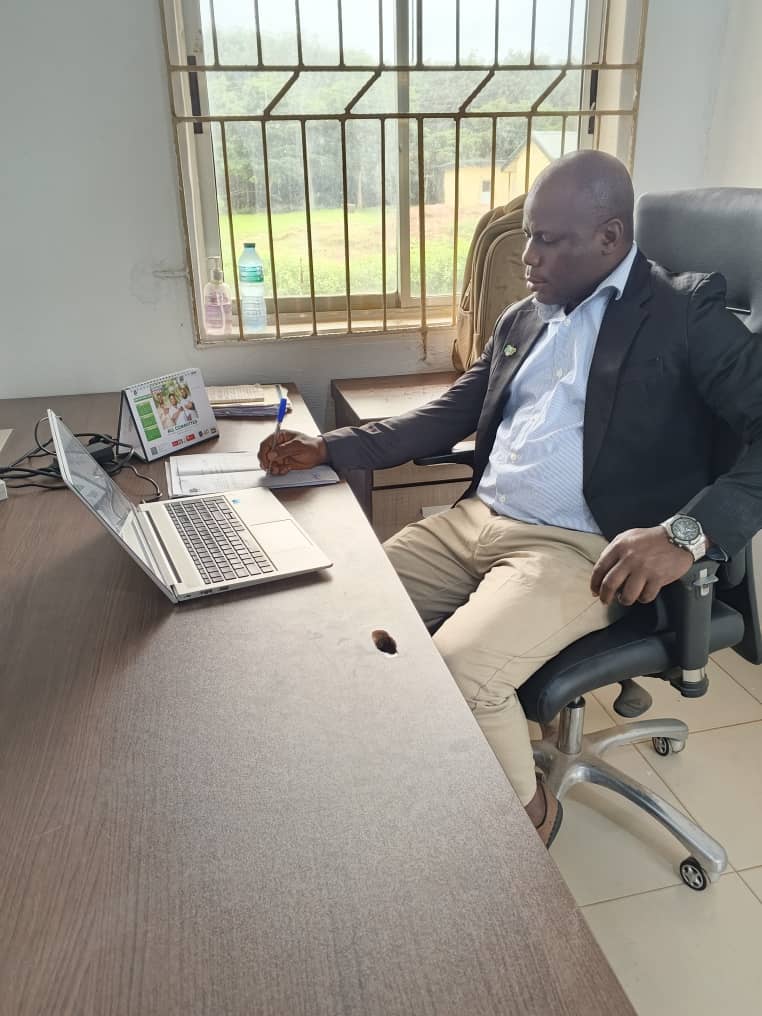
With nearly 20 years of field and leadership experience in agriculture, Oviawe brings both technical expertise and practical insight to the table. His career, from overseeing rubber plantations to promoting eco-friendly crop production, has given him a deep understanding of the pressures faced by farmers. This lived experience shapes his commitment to solutions that are as equitable as they are effective.
Central to his research is the idea that AI and organic farming are not mutually exclusive. Instead, he argues, they are powerful allies in building resilient food systems. The study explores the use of AI-powered tools such as soil health monitors, crop disease detectors, and localized climate forecasting models to empower farmers with real-time, actionable data.
“Artificial intelligence gives us the ability to forecast pest outbreaks or rainfall patterns with much higher precision,” Oviawe explained. “When farmers have that kind of insight, they can take timely action, reduce losses, and minimize environmental damage. That’s where AI meets sustainability.”
Rather than replacing traditional farming knowledge, Oviawe sees AI as an enhancement—a way to optimize decision-making without compromising ecological values. His research emphasizes the use of AI within the frameworks of organic farming, where synthetic inputs are avoided, biodiversity is prioritized, and soil health is foundational.
“A farmer using organic methods needs to understand when and how to apply natural inputs like compost or neem oil. AI can tell them exactly when the soil is deficient or when a pest population is likely to surge. That level of precision strengthens, not weakens, traditional systems,” he said.
Oviawe’s study also highlights the potential of AI in Greenfield agricultural development—newly established farms on previously unused land. In these contexts, where infrastructure is being designed from the ground up, his research recommends adopting climate-resilient crops from the outset to build in sustainability and adaptability.
“Greenfield sites are a blank canvas. You can design eco-friendly, tech-enabled farming systems that are ready for the realities of climate change,” Oviawe noted. “It’s a rare opportunity to do things right from the beginning.”
One of the most innovative aspects of his research is the focus on climate-resilient crops—varieties that are bred or engineered to withstand extreme weather events like droughts, heatwaves, and floods. His work details examples such as drought-tolerant maize, flood-resistant rice, and pest-resistant legumes, which are vital in ensuring stable yields under worsening climate conditions.
“These crops don’t just survive—they thrive in challenging environments,” he said. “They reduce the need for chemical inputs, use less water, and ensure that farmers can harvest even when the weather is unpredictable.”
However, Oviawe is quick to point out the barriers to widespread adoption. His study identifies digital inequality, limited access to technology, and gaps in farmer training as major challenges. “You cannot deploy high-tech solutions in low-resource communities without proper support. There must be investments in infrastructure, education, and policy frameworks,” he stressed.
This advocacy is not just theoretical. Oviawe has led hands-on training programs for local farmers, teaching them how to produce organic fertilizers and use basic tech tools for monitoring soil and crop health. These initiatives, he says, have resulted in increased productivity, stronger community ties, and greater resilience to climate stressors.
His unique career path—from sales assistant at the Nigerian Bottling Company to Divisional Manager at Rubber Estate Nigeria LTD—has seen him supervise rubber tapping teams, manage maintenance systems, and oversee agricultural production on a large scale. This rich professional background informs his grounded and people-centered approach to technology adoption.
“Technology alone isn’t enough,” Oviawe said. “It must be accessible, trusted, and tailored to the needs of real people. Otherwise, it risks becoming just another disconnected solution.”
In recognition of his leadership, Oviawe has received awards for long service and fire prevention—testament to his dedication to safety, excellence, and environmental stewardship. But he maintains that the real success lies in seeing local farmers empowered, food systems strengthened, and young people inspired to enter agriculture as a viable, meaningful career.
Looking ahead, he urges Nigerian policymakers and international stakeholders to prioritize support for climate-smart agriculture. “We need to fund more research, improve digital literacy, and ensure that these innovations reach the grassroots,” he concluded. “Blending tradition with technology is not optional—it is our path to a food-secure future.”