Follow Us on Google
By Chinyere Anyanwu, [email protected]
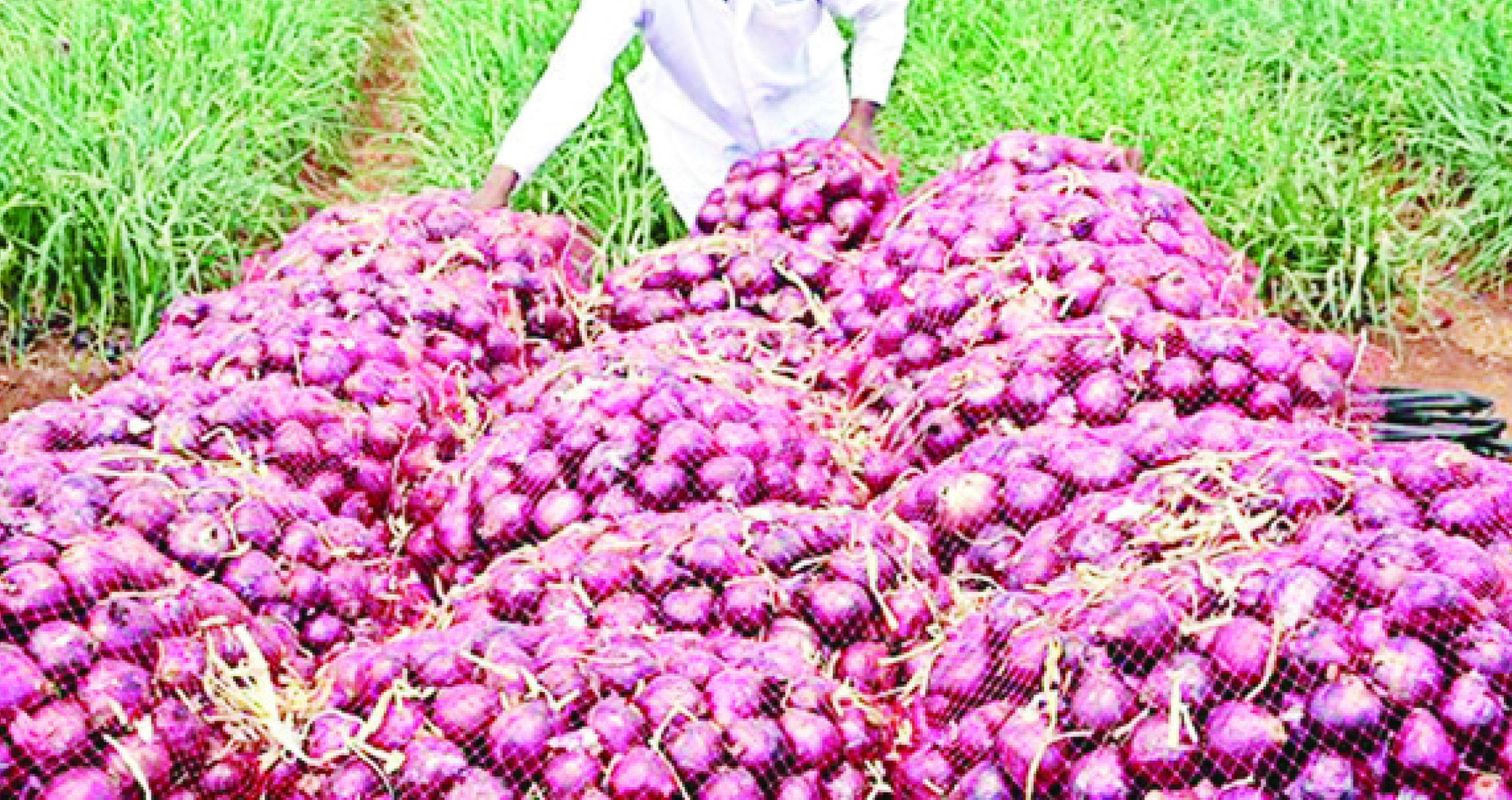
Price of Onion, a major condiment and cullinary delight in most meals is gradually soaring beyond the reach of many Nigerian households in a sudden twist that economic experts are finding difficult to explain.
Before now, it was usual to see price of the commodity rise toward the third quarter of the year, only to crash toward the start of December into the new year.
But for this year, many have been wondering why price of onions has kept rising leaving most consumers wondering why they have to pay more than three times for the same quantity of onion bulbs in the last few months.
For instance a bag of onions by this time last year sold for between N60,000 and N70,000 but in the last two to three months, the price of the same size of bag of onions has been fluctuating between N100,000 and N150,000. Apart from the high cost, the sizes of onion available in the market today are a far cry from what consumers used to enjoy in previous years.
It is the tiny ones that are majorly on sale currently.
This also means that the high cost of onion has considerably impacted the upkeep allowances of many households as those who could make do with onions of N100 have to now spend N500 or more for the same quantity.
A caterer, Mrs. Omone Odijie, said her production cost has been jerked up a great deal owing to the exorbitant cost of onions, among other ingredients, as she now spends more than double the amount she used to spend on onions. She said this has also immensely affected her charges as her customers are now paying more for the same services.
A number of reasons have been adduced as being responsible for the exorbitant price of onion as investigations have revealed.
An onion seller at Oto market, Alhaji Hassan Maigari, explained that the crop has become very expensive because of the rising cost of production.
According to him, “onion is planted during the dry season so irrigation is necessary for its production. The onion farmer uses generator and fuel to pump water for irrigating the farm and you know the cost of fuel now. The costs of other inputs like fertiliser are also on a steady rise. Then the cost of transporting the harvested produce to the market is also an added reason for the high price of the crop in the market.”
Another onion seller at Mile 12, Musa Ibrahim, attributed part of the reason for the cut throat price of onion this year to the farmers’ export of the produce to neighbouring West African countries, including Benin Republic, Ghana, Togo, Niger Republic, Burkina Faso, Mali, Côte D’Ivoire, among others.
Ibrahim said, “Nigeria has begun to explore export opportunities on the continent and onion is one of the food crops being exported. I think this has affected the price of onions at home because the bulk of the produced crop and the large bulbs are exported.”
On why the sizes of onions currently available in the market are small, one of the sellers in Arena Market, Oshodi, Yussuf Alimi, explained that they the sellers deliberately avoid buying the big bulbs because they are too expensive now and consumers may not easily purchase them. This, he said, will result in their business capitals being tied down.
Onion is one of the most consumed vegetable crops in Africa, especially Nigeria. It is a perishable staple that cannot be preserved without a proper repository after harvest.
Nigeria is the second largest onion producer in Africa after Egpyt and the seventh-largest producer in the world, accounting for about 10 per cent of the global onion production. Onion production on a large scale starts in the dry season (February, March, April) with Kebbi, Kaduna, Sokoto, Plateau and Bauchi being the major producing states. Onion delivers health benefits, which include boosting immunity, reducing cancer risk and lowering blood sugar. It has anti-inflammatory, anti-bacterial, anti-viral, anti-allergenic properties and also takes care of cardiovascular health, respiratory health, bone health, digestive health, skin health, eye health, and hair health, among others.