Follow Us on Google
By Steve Agbota
Stakeholders in the nation’s maritime industry have said that Nigeria will continue to be recognised among the global maritime decision making nations if the federal government can establish the national carrier for indigenous shipowners to lift the nation’s crude oil and other cargoes by flying the nation’s flag.
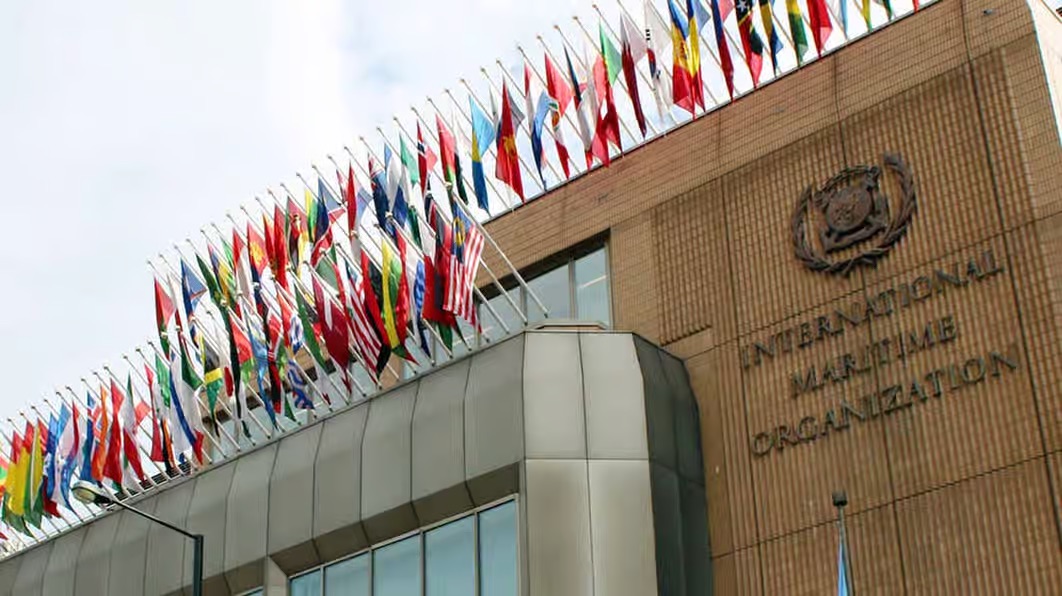
Nigeria finally won the International Maritime Organisation (IMO) Council seat under category C in London on Friday after 14 years of failed attempts.
Having secured a seat on the IMO Council, stakeholders speaking to Daily Sun emphasised that now is the ideal time for the federal government to consider disbursing the long-awaited Cabotage Vessel Financing Fund (CVFF), valued at over $700 million, to indigenous shipowners. The fund would enable them to acquire vessels to operate under the Nigerian flag on international waters.
Experts further argue that Nigeria stands to gain significantly from its IMO Council position if even five to ten percent of cargo and crude oil transportation is allocated to local shipowners. By doing so, indigenous operators could source vessels to carry the nation’s flag globally, boosting local participation in maritime trade and strengthening Nigeria’s presence in international shipping.
Leke Oyewole, a seasoned maritime security expert and former Senior Special Assistant on Maritime Services to ex-President Goodluck Jonathan, said Nigeria will benefit significantly from being a member of the IMO Council because it will be in the “inner caucus.”
According to him, the inner caucus determines the policies of the maritime sector together with the major players.
He stressed that it is unfortunate that smaller countries like Liberia have consistently been in Category A, saying they have not done anything extraordinary beyond the cargo they handle. “And how did they come about the cargo? They simplified their flag, allowing many people to fly it, and the cargo carried on board those ships is registered in Liberia. So they sit alongside the US, Australia, China, to make decisions.
“Nigeria falling in and out of Category C is not something to be proud of at all, and we can do much more. If we want to remain there, to be among the decision-makers and jointly take vital decisions in the global maritime sector, all we need to do is ensure that our cargo in Nigeria, mainly crude oil, is ceded in certain percentages to indigenous shipowners. That can happen.
“It has looked like a chicken-and-egg situation for so long, but it is not impossible. When you go to the banks for financing, they ask, ‘Where is your cargo?’ When you go to the cargo owners, such as NNPC, to request cargo, they ask, ‘Where is your ship?’ So it becomes a chicken-and-egg scenario.
Other News
“I had proposed a solution in the past: the federal government could declare that in the next six months, five to ten percent of crude oil cargo will be ceded to indigenous shipowners. On that basis, they can seek funding or hire vessels to carry Nigerian cargo on Nigerian ships to international destinations. That would almost immediately restore our national flag and pride in international harbors,” he explained.
He said that from there, Nigeria could relaunch a national carrier in the maritime sector globally. “So I think beyond just being in this category, we need to work on sustaining it through proactive policies that improve our cargo. Those international ships that carry our crude oil contribute to their countries’ benefit, while it is not added to Nigeria. We need to understand these dynamics and do better.
“It is not enough. We have sat with the major players, and little or nothing came out of it. But we must actively ensure that Nigeria derives significant benefits. Meanwhile, I would like to congratulate Dr. Dayo Mobereola, the NIMASA DG, for his feat, and the Minister of Marine and Blue Economy for this success. I want to congratulate the entire maritime sector and Nigeria for this achievement. We can make very good use of it and optimize the benefits,” he added.
He advised the Minister of Marine and Blue Economy to approach the President to ensure that the Nigerian indigenous shipowners’ association can maintain and improve the country’s status at the IMO. “It is not enough for Nigeria to sit there and be voted out in a few years. We must bring benefits to the country by ensuring that NNPC allocates crude oil to indigenous shipowners. By Nigerian law, 50% of Nigerian cargo should be carried by Nigerian ships, though we cannot handle that fully yet.
“But starting with five to ten percent, Nigerians can provide the required vessels. With adequate cargo, we will be recognized. Look at Liberia, they only have vessels flying their flag carrying cargo worldwide. We have crude oil, exporting about two million barrels daily. We can use this to improve our cargo and then speak with the major players to be among the global decision-makers. That is what I expect the Minister to take to the President, not just a medal for joining Category C, but strategies to sustain and improve it,” he explained.
However, Isaac Jolapamo, the founding father of indigenous shipping in Nigeria, said, “To me, it is a status symbol. I congratulate them. We have won it before, twice during the Obasanjo era, but we kept losing the seat when we were not serious about maritime development. Having won the seat, more work is needed because the seat itself is symbolic unless leveraged.
“In Southeast Asia, countries like Indonesia, Malaysia, and Singapore are in Category C. We are the only country south of the Sahara serious about maritime development. This seat should have been ours long ago, and we should now aim for Category B. Those responsible must act correctly; otherwise, we risk losing it next time,” he said.
He added that for Nigeria to make a real impact as an IMO policy-maker, it must focus on developing local shipping and international trade. “Some think I’m selfish for saying this, but you cannot discuss maritime issues without ships at the center. Without ships, what control do you have?” he added.
Meanwhile, Charles Okerefe, a lecturer at the Maritime University, said, “Congratulations to Nigeria, but winning the seat is more than just prestige. It is a wake-up call to put our own house in order. Do we have a national shipping line? How well is the industry run? We need blueprints for the sector, training for seafarers, and well-developed institutions for competency certificates. Winning the seat is an opportunity to address these internal issues and drive the nation’s maritime industry positively.”
He emphasised that sustaining the council seat requires innovative thinking, proper disbursement of the long-pending CVFF, and the development of a national shipping line.