Follow Us on Google
By Emma Jemegah
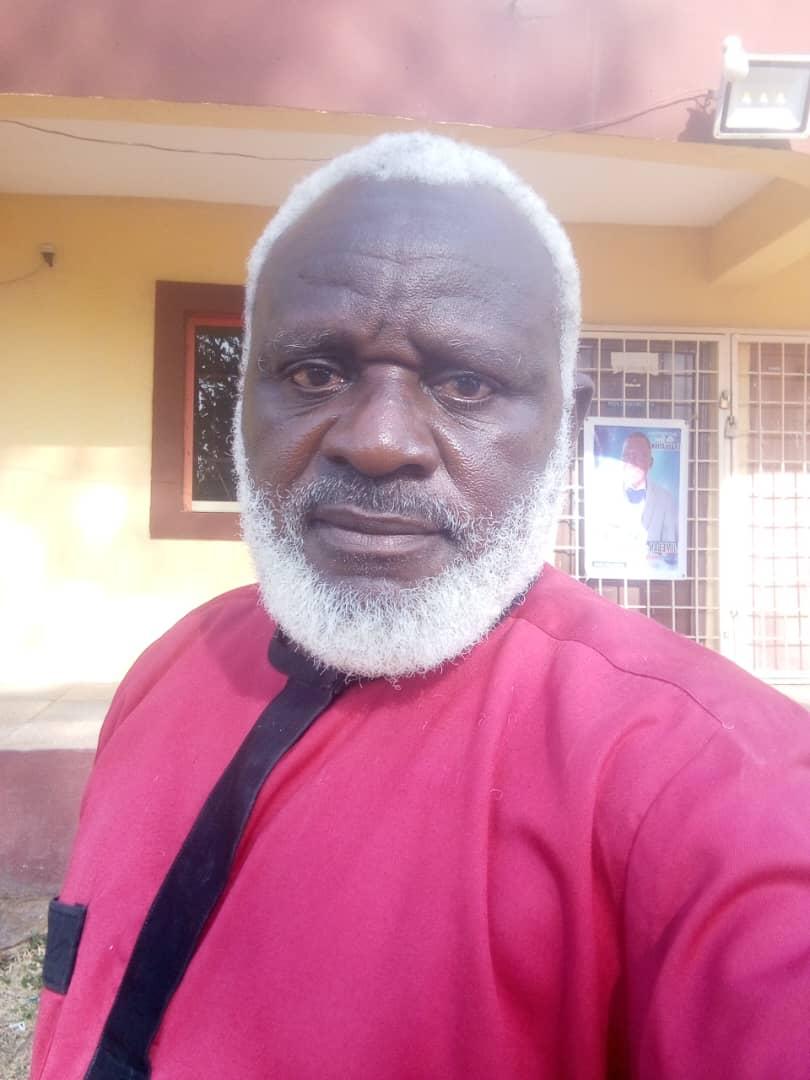
Moses Akuhwa Kpakor is from Mbaikyan kindred in Nanev District, Kwande Local Government Area of Benue State. He is the fourth child of his parents, Mr Daniel Kpakor Adagi and Mrs Rachel Dooshima Kpakor, in a family of 14 (seven boys and seven girls). A former footballer who rose from the dust of Gboko to play for the Super Eagles, he was in the famous team that lost to Algeria in the 1990 Nations Cup in Algiers.
In this interview, Kpakor goes down memory lane to share the story of his life as a footballer, which began on the streets in Benue State and took him to the national team at the peak of his career. He also shares his thoughts on whether Nigeria should hire foreign coaches or not for the national team, and what can be done to regain the lost glory of the country in sports.
Was it by coincidence that you played football or by design?
I believe I got into football because I was born in a football family. I learnt our father was a sportsman. He engaged in football and a few track events, particularly 100m and 200m races. More than that, I had two of my senior brothers, Kwaghgba and Terfa (both deceased) who were already big football names in the state playing for Kwande United Football Club of Adikpo-London as I was growing up. You know, in those days, we began with street games and I would play for the junior team, and would later play in goal for the big boys. Therefore, being a footballer in life is more of genetics than of anything else.
Where did you start big-time football after playing in the streets?
I played for Hawks of Makurdi (now Lobi Stars), and that was in 1982. In fact, Hawks was the first football team I played for, and I was then a student at Government Teachers’ College, Makurdi. The second football club I played for was Electricity Corporation Football Club of Jos. That was in 1983 and we had good players like Sylvester Ekoja, Bernard Ogbe, Paul Ogah, Danladi Abebe (Skipper), Vet, etc. I also played for BCC Lions of Gboko from 1984-1986, and from 1988-1998. I also played for Abiola Babes of Abeokuta in 1987. I had a brief stint with Prison Social Club of Buea in Cameroon.
How did the environment influence you to engage in football?
Yes, naturally the environment has so much influence on our ways of life – positive and negative. So, Benue has a weather condition or climate that is very good for sports participation, and if you go back in time, you will see why we had some of the best athletes in this country in many sports. Besides, our society at large, at least in my days, viewed sports as a way of demonstrating one’s cultural or regional dominance. Remember, for decades, Mighty Jets of Jos overwhelmingly dominated football in the North-Central Region, and in fact, in the whole of Northern Nigeria. Therefore, my generation was like a gift from the Heaven of heavens to our people, for us to demonstrate our physical, technical and mental dominance through football. All is now history, how we all saw the dominance of the defunct BCC Lions of Gboko on the Nigerian and African football stage. The people, the fans, the boys and girls, the husbands and wives, the traditional fathers and mothers, the churches and the clergies and the businessmen and women etc. The support and acceptance of the game in Benue State undoubtedly spurred this generation to attain the heights it did. That’s why till today, the disappearance of BCC Lions from the Nigerian soccer scene still hurts the people. Particularly, we who gave our energy, made sacrifices, and gave our dear lives to take this club to the pinnacle of African football. It’s like we wasted such energies and sacrificed for nothing. Well, the good memories still linger, and that’s my consolation sometimes.
How was football when you were growing up and how do you compare it with modern football?
There are several things that differentiate the game today from my time: the officiating today by far is better, the football fields today, my God, are by far better than those of my days. Today, the advent of the Internet and technology have improved both players’ performance and knowledge, and has also improved coaching.
However, it doesn’t mean these improvements have taken us anywhere better than where we were in the past. They haven’t really. Why? Because football or administration generally is like a system – what affects one part, affects the others. The players’ welfare issue is the one big issue we need to fix if we are sincerely serious about rekindling the past glorious years of our football. I mean we are having management of clubs forwarding fake insurance covers for their players in the 21st century! It’s sad, and I see how many players die in our league and discover their clubs did not have insurance covers for them? What about their salaries, how regular are such salaries? It’s really funny that players in Nigeria are sacked at any time. Have they not signed contracts? Then, they have to run out their contracts to the end. Twenty-six years after we retired from football, football players are still suffering from injustices we suffered. But the truth is, like I said earlier, this is like a system, what affects one affects the others. So, until those who are responsible solve these issues, we cannot rediscover our lost glory, nor get back to our golden years. There are many other differences.
How was your feeling when you were invited to the national team camp?
I was so excited beyond description. You know why? I had been invited to the Green Eagles’ camp from 1981-1982, 1984-1986 and was not given opportunity to play a match. So, here I come again in 1989, just a few weeks after captaining BCC Lions to the 1989 FA Cup win over Iwuanyanwu Nationale of Owerri, and more than that, being called upon to start a game was something so fulfilling. While playing for Greater Tomorrow Academy of Adikpo-London in 1980, I set a goal to play for the Green Eagles of Nigeria and had been working very hard towards this goal. Even as some of my teammates used to mock me, the more I trained, and continued to train with determination and focus.
Other News
So, on this fateful day, I was here at last wearing a Green-White-Green Nigeria’s jersey and ready to win my first cap for Nigeria after eight years of stewardship. It was a dream come true.
Who do you prefer, a local coach for the national team or a foreign-based?
I would like to have any coach for our Super Eagles, whether he is an indigene or foreigner. It doesn’t matter to me at all. More so because of my experience in the game as a player, and as a coach, and most of all with my educational advancements in sports management and administration. In fact, I recently apologised to the Super Eagles coach, for opposing his choice out of emotions. For I had thought that now that Nigeria has many of our glorious former players as qualified coaches, it’s nice to have them coach our national team players. I mean, the Finidis, Amunikes, Adepojus, Amokachis, etc. because they played the local league, African football and conquered European football and more than that, they have quality coaching licences from Europe, an opinion I still hold, and would continue to hold, anyway. I had thought we have better coaches here than Chelle and it’s only better to go for the better. Well, but I only swallowed my words after watching our national team for some time under the tutelage of Chelle. I discovered only how well he has been able to manage this team; he has absolute authority, discipline, charming attitude, democratic, and more than that, he has given the players autonomy and it shows in their movements on the pitch and off the pitch too. He has unbelievably turned around our team, and I believe he is the right coach to lead us to the higher heights if the NFF gives him many years in charge.
Did you dream of becoming a football player or it was by accident?
I knew, as a child, that I was going to be a footballer because, as I told you earlier, our father was one, and two of my late senior brothers Kwaghgba and Terfa Kpakor were already big football names in Benue. I didn’t play football by accident but I played the game because it is something that ran in the blood stream of the family: from father to the children, you know. If it were planned or accidental, I am sure people would never have enjoyed my game. My game was a mixture of many abilities and competencies. Just like Dolly Parton’s Coat of many colours. I was good in the goalpost, anywhere in the defence, anywhere in the midfield, and anywhere in attack, and also in one-on-one situations, as long as the game lasted. Hardly have you found such footballers in the world, and it’s only unfortunate that injury prevented me from joining Dutch giant, Feyenoord in 1991. It still hurts today but that was my fate.
As a young man, did you indulge in any social activity that might have contributed to who you are today?
When I was a young man there were many ways you would relax: go and play draught and cards, go to parks and sit there staring at cars passing by etc. But today, the society has unfortunately changed and there are hardly any peaceful places to relax anymore.
Casting your mind back, do you have any regret playing football? And what are the fond memories?
No. I have never thought at any time in my career to say it’s enough. Do you remember the goal I set for myself? There was no quitting in my career, no matter what. Since my focus was on playing for Nigeria, and when it happened, then my focus changed to playing in Europe as I began to have offers from Europe after the 1990 AFCON. So, for me, it was like never giving up – I granted an interview in the Nigeria Voice Newspaper in 1990 and I had set a new goal. The interview titled: ‘I Want To Be European Footballer Of the Year’.
Football and even sports in general is going down in the country, what do you consider as the reason behind this and how do we remedy the situation?
We were making great progress in the development of sports in Nigeria, but the great progress is still not good enough for us to at least consolidate where we were like 30 years ago. Suddenly, we have stagnated so much that we have lost the hope of regaining all we have lost. The first thing is to resuscitate the school sports, which was the pipeline for our national sports athletes. Two, assemble those retired international sports athletes who themselves made us proud during their days and hand over to them the tasks of scouting, discovery and development of the careers of these athletes and their welfare should be given priority. Where are the Chidi Imos, Innocent Egbunikes, who Kenyan President Arap Moi doffed his hat on, and Mary Onyali, the Queen of Track? Where is Odizor, the Tennis Duke? etc. The same goes in all sports. Training of local coaches to international standards, including coaching education, physiology and sports psychology and other related courses. Gender inclusivity is very important at this time as all sports federations have stressed. Certification of sports referees and umpires must be encouraged, monitored and improved. Players’ welfare must be looked into beyond what it has been. Players’ insurance covers must be ensured they are not fakes as the case has been over 30 years ago! We have lost many athletes on duty only to discover they were not covered by insurance while some had fake insurances. Above all, we need to partner with big sports organisations around the world to create an atmosphere through which we should be able to have sponsorship for our local competitions. In other words, let the national assembly enact a law that will encourage these sports organisations to support and make business in the country in order to encourage true sports professionalism, among numerous others.
Are you still involved in the game and in what capacity?
No. Not anymore. I quit coaching and came back to school so that I will acquire knowledge and the certificates to be a Sports Administrator. Now I am there, with a Master’s Degree in Sports Management, and this time pursuing a PhD in Sports Administration. In the next two years, I intend to pursue another Master’s Degree in Sports Marketing, and hope to continue studying as long as God gives me good health.