Follow Us on Google
• As NIMASA targets acquisition of 28 vessels to boost water transportation
By Steve Agbota, [email protected]
As the world moves away from fossil fuels to renewable and natural energy sources, Nigeria has been urged to shift its focus from oil revenue to non-oil income to sustain its economy.
This was as experts have identified the blue economy as one of the best ways government can diversify its economy from oil to boost its Gross Domestic Product (GDP) like USA and China, which generate billions of dollars from ocean economy annually.
With a coastline of 852 kilometres bordering the Atlantic Ocean in the Gulf of Guinea and a maritime area of over 46,000 sqkm, Nigeria possesses fresh mangrove swamps, creeks, coastal rivers, estuaries, bays, and offshore waters. Eight out of the 36 Nigerian states, with 25 per cent of Nigeria’s total population, share the Atlantic Ocean coastline.
Nigeria is also richly blessed with abundant resources in oceans and seas to back its economic diversification and development drive.
Consequently, some experts have said that Nigeria has no reason lagging behind in the global ocean economy but can only tap into this huge amount through emergent policy for marine sustainability and sustainable blue economy paradigm.
A well developed blue economy would be strong enough to service Nigeria’s annual budget because it encompasses all economic activities associated with the oceans, seas, harbors, ports, coastal zones, inland water –
rivers, lakes, etc. Nigeria has great potential in terms of marine living resources including marine-derived genetic resources.
Abundance of mangrove forests, seagrasses, and
tidal marsh ecosystems in Africa, and particularly
in Nigeria.“Blue Carbon’ credit trade can provide large-scale economic benefits for Nigeria.
Daily Sun learnt that apart from other enormous economic resources found in the nation’s oceans, Nigeria has over 200 different species of fishes in its maritime domain with huge economic value.
However, despite these endowments and abundant resources in its oceans and seas to back its economic diversification and development drive, the country is yet to take full advantage of these abundant ocean economy, resources to expand its economy
Consequently, Nigeria is losing out in the massive opportunities inherent in the multi-trillion dollars blue economy.
Since the concept of the blue economy began to gain traction decades ago, maritime nations have been harnessing the full benefits of the ocean economy by protecting their oceans and seas, which is why the Nigerian Maritime Administration and Safety Agency (NIMASA) invested so much in maritime security architecture known as ‘Deep Blue Project’ to secure the nation’s waters up to the Gulf of Guinea from maritime crimes.
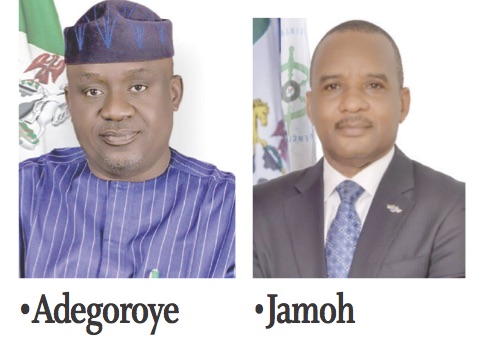
Speaking at the inaugural lecture of the Institute of Maritime Studies at the University of Lagos on the Blue Economy recently, the Director General of NIMASA, Dr. Bashir Jamoh, challenged that as a nation, Nigeria must seek economic diversification away from over-reliance on fossil fuel proceeds and look more to the wealth inherent in, around and under the nation’s waters.
“Nigeria can achieve this through the maritime domain awareness and good governance imperative. We must end sea blindness and while we await a cohesive national policy to fully kick into gear, we must all for starters become
“Blue Ambassadors” – Advocates for the blue economy,” he said.
According to him, the blue economy is every Nigerian’s economy – Civil Society have a role to play in galvanising greater national awareness and participation.
“We must rethink our waters. We need a total rethink from a ceremonial view to a commercial view – events such as Argungu Fishing Festival as well as others must be redesigned and repackaged from the standpoint of the blue economy.
“We must intentionally work to banish sea blindness amongst Nigerians. Make seaward and water-related activities more mainstreamed and attractive and private sector partnerships with Government must be harnessed for maritime cluster development
However, he hinted that NIMASA has done a lot in sensitising littoral states to take advantage of their blue economy potential by engaging with their
respective Governors to serve as the engines room for blue growth.
As part of efforts to achieve objective of blue economy, he said the Cabotage Vessels Financing Funds (CVFF) would be disbursed to indigenous shipowners, even as NIMASA is targeting the acquisition of about 28 vessels, which each of the vessel would cost about $25 million.
He added that the cabotage fund which would be disbursed to Nigerians at just 1per cent interest rate is aimed at stimulating investment in the nation’s huge blue economy and boost job creation potential of the industry. Jamoh stated that with the level of security and safety of navigation achieved in the Nigerian maritime domain and the Gulf of Guinea since the commencement of the national maritime security initiative tagged, Deep Blue Project; Nigeria is really ripped to transit from ‘crude’ to blue economy.
He stated that the Nigerian blue economy is very huge and far bigger than the Nigerian oil and gas industry, which for over 50 years has been the mainstay of the nation’s economy.
He said that it is in the effort of NIMASA to enhance Nigeria’s capacity to exploit its share of the global blue economy valued at over $2.5 trillion that it started the human capacity development initiative, which saw it establishing the IMS in six universities across the six geographical zones of the country and a full university in Okerenkoko, Delta State.
The Director General also disclosed that it is this objective that informed the three point agenda; security, safety and capacity development which his administration adopted on his assumption of office over two years ago.
Also speaking, Minister of State for Transport Mr Ademola Adegoroye said that the government would do everything possible to make it easier for ship-owners to acquire more ships to grow blue economy initiative.
Adegoroye also said that the ministry is working hard to ensure that the CVFF is disbursed before the end of the current administration.
According to the Minister of State for Transportation, the fisheries sub-sector is another area the government is working very hard to create jobs for our people and make water transport easier for Nigerians.
“Absolutely, that is what every responsible government would do but I can assure you that Government will do everything to make it easier for Ship owners to get more ships that can continue to grow our Blue economy. It makes sense for every responsible government to do that, once it gets too expensive, it becomes a problem even for our economy.
“We are hoping and praying that we disburse the Fund before the end of the current administration. We have a short time. We have barely eight weeks but I know they are working day and night to achieve this. It is possible; if not, government is a continuum. It is a government policy and nobody can do anything about it.”
Meanwhile, the Vice Chancellor of the University of Lagos, Prof. Folasade Ogunsola said that by the revelations that have been made by d NIMASA DG in his lecture, there are really a lot of untapped potentials in the Nigerian maritime industry.
According to her, since the inception of the IMS of University of Lagos, a few years ago, no fewer than 150 students have graduated in different maritime courses from the Institute while it currently has 193 students studying different maritime courses.
“Our country must not continue to depend on crude oil. We must turn to blue economy,” she said.