Follow Us on Google
By Chinenye Anuforo
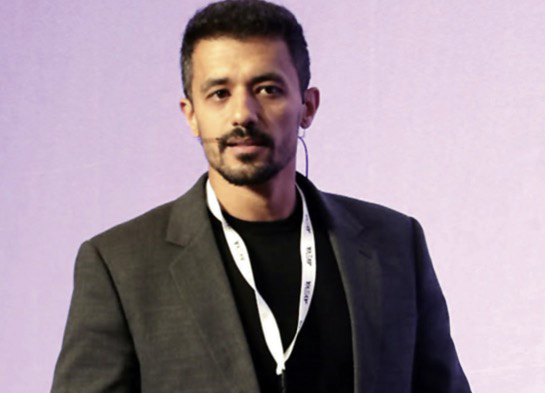
In January 2026, global industrial software company AVEVA restructured its Middle East and Africa operations, creating a standalone Africa business unit and appointing Khaled Salah as Vice President for Africa.
Since then, Salah has embarked on a strategic mission to deepen the company’s footprint across the continent, with Nigeria emerging as a key focus market.
In this interview with select ICT journalists, Salah discussed AVEVA’s Africa strategy, why Nigeria sits at the heart of its expansion plans, the role of industrial AI, local talent development, digital twins, and how African businesses can unlock value from their data.
Why Nigeria matters to AVEVA
Nigeria is really the heart of digital transformation in Africa for a couple of reasons.
First, if we look at the population, most Nigerians are young. They have the right ingredients and the right skills to take the country to a different level. Secondly, there is significant experience in oil and gas. There are major oil and gas companies here that we can support as they move to the next level of transformation.
Another factor is government initiatives. I see the government investing a lot in the transformation of the country through different digital programmes and policies. All these ingredients motivated us at AVEVA to get closer to Nigeria and invest more in the market.
When I say invest, I mean investing in our presence. Today, we had almost 15 people from AVEVA in Nigeria. I will be back again in two weeks with other leaders. We are investing in sales leadership and resources so that we can get closer to customers.
One point I always highlight is that Africa should be managed differently. Africa should be Africa for Africa. We cannot simply bring a global standard and push it into Africa. It will not work. We need to tailor our technology, our go-to-market strategy and our business model to Africa. My strategy is to utilise local talent, local students and local partners and support them to innovate using our technology.
Investing in Nigerian talent
The first investment we make is in our partners. We have technology partners here who resell AVEVA technology to customers. They are considered an extension of the AVEVA team.
We invest in them by giving them the best training, access to the latest technology and continuous engagement. We also work with universities and provide education opportunities for talent and customers.
One of my initiatives is to engage strongly with Nigerian universities. I want to establish partnerships that will allow us to place our solutions in university laboratories so students can gain hands-on experience before graduation.
The reality is that what you study at university is often different from what you see in industry. We want to bridge the gap between academic education and practical experience.
We invest in partners, invest in talent and invest in customers. Looking ahead, I also want to invest in local teams and develop Nigerian leaders within AVEVA.
Harnessing data power
Every customer has data, but many organisations are not utilising the power of that data.
A customer I met recently in Abuja told me their main challenge was increasing production while reducing utility costs. To do that, you need to bring data together and put it into context.
Many executives still do not have real-time visibility into what is happening within their organisations. They need to make calls, request reports or wait for presentations before making decisions.
What we do is bring operational data and engineering data together on a unified platform. Once you have both together, you create what we call a digital twin, a digital representation of a physical asset.
When organisations have that visibility, they can take faster decisions, save costs, improve productivity and anticipate failures before they happen.
Understanding the gaps before deployment
When we work with customers, we start with what we call a gap analysis.
We assess where the customer is today and compare that with our experience from similar projects around the world. In sectors such as oil and gas, we have worked with about 90 per cent of the major global companies, so we understand many of the challenges and opportunities.
The first step is identifying the gaps. The second step is implementation. The third step is adoption.
Other News
We do not simply implement software and leave. We help customers learn how to use it and support them throughout the change process.
Technology alone is not enough. Change management is equally important.
Why Africa needs local solutions
I strongly believe in local solutions. If you look at successful countries such as China and India, they succeeded because they focused on what worked for their local environment.
Africa also needs an Africa-for-Africa approach. We need to work with local governments and local partners who understand the environment.
I do not want to bring plug-and-play technology into Nigeria. Technology must be adapted to local realities. That is why our platforms are designed to be interoperable and open, allowing local partners to innovate on top of them.
Scaling beyond pilot projects
The technology already exists. We do not need to wait another 10 years.
The challenge today is scalability. Many organisations have pilot projects running. There is a pilot on one machine, a pilot on one production line, a pilot in one department.
The real value comes when organisations move beyond pilots and scale these solutions across their entire operations.
If a company successfully improves one pump through a pilot project, the next step is to replicate that success across all assets and operations.
For me, the next inflection point for Nigeria is moving from pilot projects to scalability.
Human-centred industrial AI
When people talk about AI, they often focus on dashboards and reports. That is only part of the story.
Real AI value comes when it creates impact in the physical world.
It is not enough for AI to tell me that a machine is operating at 80 per cent efficiency. It must also tell me what actions I need to take to improve that efficiency.
Maybe I need to change the oil. Maybe I need to reduce vibration. Maybe maintenance is required.
However, we always keep humans at the centre of AI.
AI can advise, but humans make the final decision. I will not allow AI to shut down a factory by itself. AI can recommend shutting down the factory, but a human must make that final decision.
Optimising existing assets
The world needs more energy. We have growing populations, increasing industrialisation and rising AI-driven demand.
Building new power plants, new grids and new infrastructure takes time.
One of the fastest ways to address this challenge is by improving the efficiency of existing assets.
Many older factories and industrial facilities consume more energy than necessary because they are not operating efficiently.
If we can improve efficiency by 10 or 20 per cent across these assets, we can unlock significant energy savings, reduce costs and support future growth.
That is why digital transformation is not only about technology. It is about making existing assets work smarter and deliver more value.