Follow Us on Google
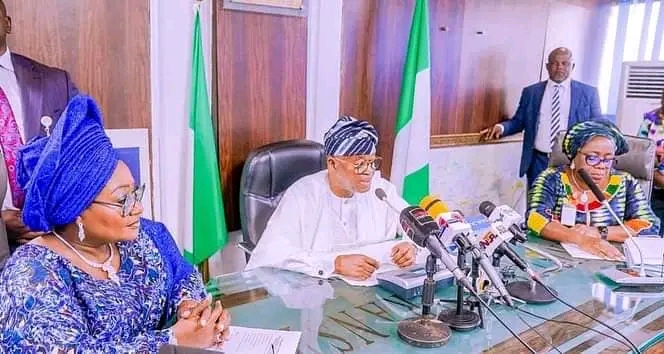
• Stakeholders urge Oyetola to appoint professionals as advisers
By Steve Agbota, [email protected]
With a coastline of 852 kilometres bordering the Atlantic Ocean in the Gulf of Guinea and a maritime area of over 46,000 km2, Nigeria is no doubt is a big maritime nation.
It possesses both fresh and mangrove swamps, creeks, coastal rivers, estuaries, bays, and near and offshore waters. More so, eight out of the 36 Nigerian states, with 25 per cent of its total population, share the Atlantic Ocean coastline.
Its maritime industry is one with the potential for unprecedented success in terms of revenue generation, employment opportunities and economic expansion with barely a quarter of this potential being currently harnessed.
At a time, the Nigerian maritime industry is poised for great global economic impact; and having the largest fleet in the African waters, it was once a source of envy to other African states.
But all of that changed with poor management and the emergence of successive governments; each one armed with poorly-thought out policies that further crippled the industry and plunged it into a deep dark decline.
This decline cut across all the government agencies in the industry.
This is the reason why stakeholders have been calling on the Federal Government to create a special ministry for the maritime sector and introduce other reforms that will bring about efficiency and productivity at the nation’s seaports.
The maritime industry has been under the Ministry of Transportation, which stakeholders argued had not really felt the impact of the ministry in terms of policy formulation and development.
Failure of the Federal Government to create a special ministry for the industry, the nation’s maritime sector was described by experts as an overlooked goldmine with its enormous potential to drive economic growth underexplored.
To change the narrative, President Bola Tinubu last week while presenting the designations of his Ministers, announced the creation of Ministry of Marine and Blue Economy and along with a new minister in person of Gboyega Oyetola who will spearedhead the ministry for the next four years.
The stakeholders in the industry were excited and commended Tinubu for the creation of the ministry. This is even as they said that the ministry would assist the Federal Government to restore the lost glory of the shipping and maritime sector of the economy.
This is even as the Director-General, Nigerian Maritime Administration and Safety Agency (NIMASA), Dr. Bashir Jamoh, also praised President Bola Tinubu for the creation of the Marine and Blue Economy Ministr with a senior cabinet minister appointed to oversee its affairs.
Jamoh said the creation of the long overdue ministry will give a boost to the President’s plans and programmes.
“I want to commend President Bola Ahmed Tinubu for creating the Marine and Blue Economy Ministry and appoint a minister to man its affairs. There are new opportunities around us, and I’m glad Nigeria, with the creation of this ministry, will explore the concept of the blue economy.
“The blue economy is the sustainable use of ocean resources for economic growth, improved livelihoods, and jobs while preserving the health of the ocean ecosystem. Blue economy activities include maritime shipping, fishing and aquaculture, coastal tourism, renewable energy, water desalination, undersea cabling, seabed extractive industries and deep sea mining, marine genetic resources and biotechnology.
“Honestly, this ministry is long overdue, more importantly, to support the diversification of the economy. Efficient management and sustainable exploitation of the marine resources in our seas and oceans, no doubt, provide a veritable tool for economic growth,” he said.
However, the stakeholders faulted Tinubu’s choice of appointing Oyetola being a learner as the minister of the ministry, as they were expecting a professional with the background of the industry to takeover the affairs of the ministry.
However, they advised Oyetola to surround himself with professionals in the industry as his advisers who will put him through in order to succeed.
Speaking with Daily Sun, a Maritime Security Specialist and Secretary General of the Merchant Seafarers Association of Nigeria, Captain Alfred Oniye, said: “We actually expect the best from the maritime sector. The Ministry of Marine and Blue Economy has been on the pipeline. We have been waiting for long for this kind of thing to come up. In fact, I was one of the first people to actually campaign for such a ministry because maritime is very wide and it controls the global economy.”
He said that the maritime sector controls over 95 per cent of the world economy, saying that such a ministry is not expected to be under a ministry and it needs to standout.
“Secondly, if you are appointing a head of such ministry, it is supposed to be an expert. In another way, if you are appointing somebody who does not have a clue or who is not an expert in the industry, the leadership needs to support himself with professionals. That is why you will definitely need special advisers or professionals who can advise you on what and what needs to be done.
“Just like having a governor of a state. The reason why a governor must have a special adviser is because they have in-depth to put them through on some issues that have to do with the state. So the same thing is applicable in maritime. I still don’t want to believe the minister won’t perform and I don’t say he will perform but the best way to perform as a leader is to support himself with professionals and get to the grassroot and make sure you are not far from the happenings in the industry,” he added.
However, he lamented that maritime is an industry where the country is seriously bleeding.
“I can categorically tell you that even the President is 50 per cent far from happening in the maritime sector. With my experience and what I have seen in the maritime industry, that industry needs serious attention.
“I wouldn’t say Oyetola won’t perform and I won’t say he would perform, but if he’s going to perform he needs to support himself with the core professionals who have enough operational experience. Maritime has three levels of qualifications. We have those with academic qualifications who have no professional idea. We have those with professionals and we have those with operational qualifications.
“I think he would need those with both professional and operational qualifications not just academics because you don’t learn driving in class. And maritime has gotten to a stage if you don’t bring in people with the operational experience to drive this maritime, you will still fail,” he stated.
He said people coordinating the affairs of maritime, 80 per cent of them are just academicians with academic qualifications while 15 per cent of them are professionals who just acquired professional certificates and think they know it all and 5 per cent are just professionals.
“But you cannot drive maritime when you don’t make the 80 per cent of people who govern that industry to be operational qualifications people. This maritime, there are things you need to put right. It is just like when somebody say he has gone to school to study maritime law and I can categorically tell you that 90 per cent of the maritime lawyers we have in this country, they only talk about the law in the book, they are not talking about the application because they are far from the happenings.
“So what you talk about in the paper is different from what is happening in that industry. It is completely different! I can categorically tell because when it comes to academically I know this job very well.
Professionally and operationally I know this job. The case is I wouldn’t say he won’t perform and I won’t say he would perform but if he really wants to perform, he needs more of operational competent people to be his special advisers so that he can actually get to the root and make this industry work,” explained.
He pointed out that Nigeria as a country is seriously bleeding through the maritime industry, saying that the economic potential in the maritime has not really been tapped.
He added that with what Nigeria has in the maritime industry, it shouldn’t be borrowing money, adding that Nigeria as a country is too blessed to be borrowing money. He hinted that the maritime industry alone can generate nothing less than $100 billion annually for this government, saying that the industry can feed each Nigerian sit at home and receive N1 million every month without working.
“It is only people who have an insight that will seize these opportunities. Maritime has what it takes to create jobs for more than 50 thousand Nigerians direct and has what it takes to create jobs for nothing less than three million Nigerians indirect. It takes someone who has insight. “And my advice to Mr Oyetola is to engage people with operational knowledge who have the grassroot knowledge of this industry and they will see that they will succeed.
We are happy with the creation of the ministry because this is what we have been campaigning for. In fact, I was part of the people who started this campaign but we look forward to a better maritime industry,” he added.
The Advisory Head/CEO, Kamany Marine Services Limited, Charles Okorefe said the ingredients are already there for the industry to thrive.
On what the Minister will be bringing to the maritime, he said: “We have been advocating this ministry for a very long time. Not that it has come, we were expecting that it will be manned even by a professional from the industry or with an industry background as it were.
“But once again, a learner is being brought into the industry. As far as the industry is concerned, it has so much to offer. There is no gainsaying that because for the first time, we are supposed to be seeing how the endowment from the maritime sector can be tapped properly especially resources from the ocean.
“When you talk about the blue economy, you are looking at a huge sector even the United Nations under the International Maritime Organisation (IMO) has been putting their focus on how to sustainably harness the resources from the ocean for the betterment of humanity,” he said.
However, he stated that luckily; Nigeria is a maritime nation that has access to the ocean and sea, so there is a lot that is expected to come out of it.
“And again, how properly are we getting our back in harnessing these resources when you are bringing someone who is not a professional to head the very sensitive ministry such as marine and blue economy,? he asked.
He said there is a lot to be expected in terms of offering from the industry, asking what about the drivers of the process to harness the potential embedded in the industry?
Meanwhile, a shipper, Mr. Simeon George, said maritime trade began to develop in Nigeria after the inglorious slave era, adding that the industry is yet to compete favourably because of wrong policies and lack of substantial ministry to pilot the affairs of the industry.
“Now the industry have a substantial ministry, we are happy but the government must consider professionals with full background knowledge to spearhead the affairs of the ministry not politicians with no knowledge of the sector.
Conversely, he said new the maritime ministry would help to correct the anomalies in the sector, saying the ministry will take care of both shipping companies, agents, terminals and others as the sector as it would no longer be under the Ministry of Transport.
He said appointing professionals to spearhead the affairs of the ministry would give the government the opportunity to focus its attention on the sector, resulting in an increased contribution to the country’s economy.