Follow Us on Google
-
2 NYSC members die
From Sola Ojo, Kaduna
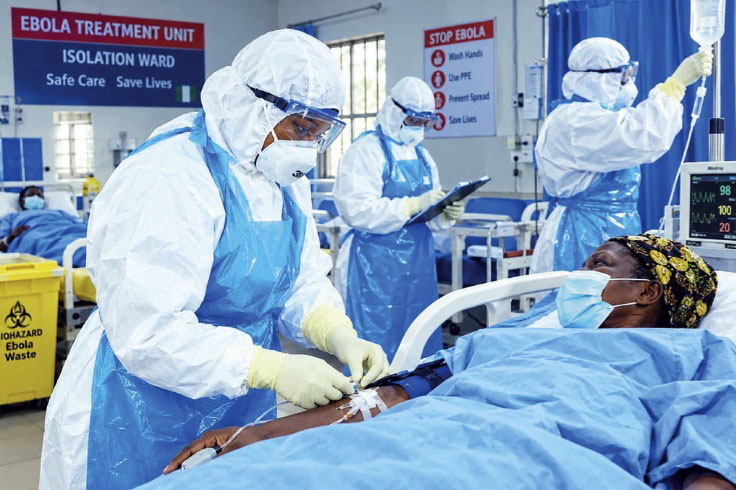
The four victims that recently got viral hemorrhagic fever, popularly called Lassa fever, at the Accident and Emergency Department of the 44 Nigerian Army Reference Hospital (44NARH), Kaduna State were among the 76 unfortunate deaths recorded in about 21 Nigerian states in the first seven weeks of 2024, data analysis on the National Centre for Disease and Control (NDDC) revealed.
The disease centre in fever update shared on its website on February 22 said 411 cases have been confirmed and 72 deaths have been recorded from the outbreaks as of February 11.
The centre described Lassa fever as an acute viral hemorrhagic fever caused by the Lassa virus. The natural reservoir for the virus is the mastomys natalensis rodent (commonly known as the multimammate rat or the African rat). The fever was named after a town in Borno State where it was discovered in 1969 when two missionary nurses died in Nigeria.

The signs and symptoms of Lassa fever are usually gradual. It starts with fever general weakness and malaise (a general feeling of discomfort difficult to explain). After a few days, headache, sore throat, muscle pain, chest pain, nausea, vomiting, diarrhea, cough and abdominal pain may follow.
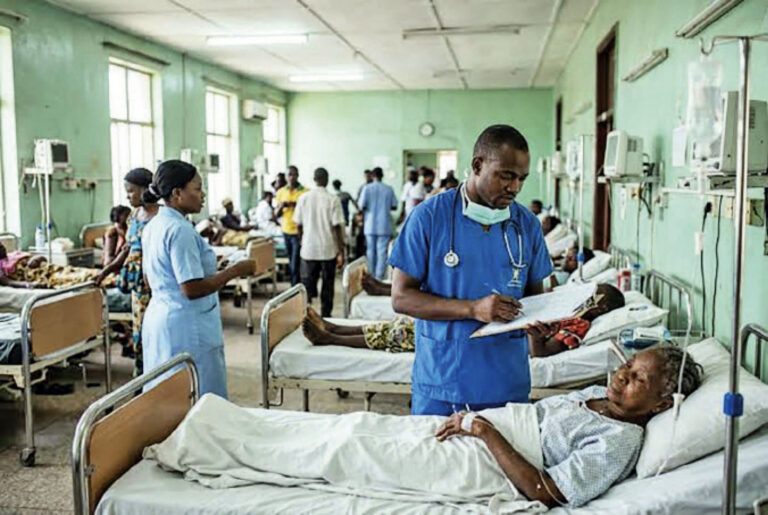
Although the authority of the military medical facility in a statement by Brig. Gen Solomon Okoigi said four persons (the patient and three other staff) died in the facility, other sources claimed that the number was more than four.
He attributed the development to the management of a patient with febrile illness thought to have been the index patient with the disease 10 days agoThe patient also died from the suspected disease condition.
“The Accident and Emergency department has been closed for a thorough disinfection process and samples have been taken from suspected contacts and the deceased and sent to the Nigeria Centre for Disease Control, NCDC, laboratory in Kano for analysis”.

Similarly, the Director of Army Public Relations, Maj. Gen Onyema Nwachukwu, pointed out that the Nigerian Army as part of its civil-military relations welfare scheme offers medical services to civilians in its host communities. Thus, about 500 civilians receive medical attention weekly at 44NARHK.
“This unfortunate development is only a setback in our efforts to give back to the society and will not stop the Nigerian Army from continuing this moral obligation to the host communities,” he said.
Both the management of the facility and Army headquarters in their separate reactions did not provide details of the four affected persons, but further investigation revealed that two of the victims were members of the National Youth Service Corps (NYSC), serving their fatherland.
In May 2017, a corps member identified as Onwuegbuzie Stanley Samuel was reportedly killed by Lassa fever at the University of Calabar Teaching Hospital in Cross River State after a few weeks of trial treatment.
“I’m sure the leadership of NYSC is working on the sad development. I will not be able to tell you their names because I’m not sure if the family of one of them has been properly contacted by NYSC.
“But I’m sure that one of them who was married to a Kaduna man was buried in Kaduna on Saturday, February 24 while plans are being worked out for the other female corps member who hailed from Anambra State by the concerned authority,” a serving corps member hinted in confidence.
A Kaduna-based medical expert, Dr. Samuel Bayero, urged residents of Kaduna to maintain a clean environment and keep their food away from rats at all times.
To him, “cleaning the environment is one key way to prevent these rats from coming into homes. We can also reactivate all those known local strategies like traps, sticky gum, physical attacks, and so on. Some use cats to send rats away. It means individuals have what works for them.
“At this time, every rat is a suspect and it is better we treat them that way. It is also important we keep our foodstuffs in tight containers where these rats cannot have access. If we see deposits of these rats in our foodstuffs, it is safe to do away with such a portion of food even though times are hard.
“We also need to avoid crowded places. For example, once it is 4pm in our hospitals, people will be trooping in to greet patients. It is good to show love to our sick relatives and friends, but the time is not conducive for that now. If it is not extremely important, let us avoid it,” he cautioned.
He further explained that “test for Lassa fever is not done in just any health facility. The sample taken from 44NARHK was sent to Kano where the analysis was done. I think nationwide, we have about nine centres designated by the NCDC for the analysis of Lassa fever and I think the closest ones to us are in Kano and Abuja.
“Health workers are being put on their toes to investigate fever of any kind. This also calls for cooperation from the public concerning resistance because this is an issue of public concern.
“Although it has not reached the point when we need to shut down schools, this information is very important in our public places like markets, schools, religious places and what have you.
“The good thing is that the state monitoring team is working and I’m sure they will continue to feed us with the right information as we progress.
“It is also important that Kaduna is not the only state that recorded Lassa fever cases. The latest reports show that about 21 states have recorded Lassa fever with over 2,000 suspected cases and about 400 cases confirmed.
“This same time last year, we were having just about 800 suspected cases compared to about 2,000 suspected cases we are having this year. In 2023, we have more confirmed cases than we currently do in February 2024.
“Today, we have about 400 confirmed cases and this period last year we have about 100 confirmed cases. It is possible the number of the suspected cases is higher this time because we are now conscious of the fever,” he added.
Meanwhile, Governor Uba Sani has since directed the Kaduna State Ministry of Health to immediately investigate and ascertain the situation at the health facility.
The governor, who spoke through his Chief Press Secretary, Muhammad Lawal Shehu, added that a surveillance team was promptly mobilised to assess the situation, and containment measures were initiated alongside the hospital management.
He advised his subjects to maintain proper food and environmental hygiene as they remain hyper-vigilant and immediately report any suspected cases of Lassa Fever to the nearest health facility.
“Kaduna State Ministry of Health has further been directed to enhance surveillance across the state in collaboration with local government health departments,” he stated.
Since there is no known licensed vaccine for Lassa fever, a cleaner environment, avoidance of contact with rodents and their excreta and fluids of an infected patient are the best bets to prevent infection.
Findings further revealed that Lassa fever-infected patients can be treated with antiviral drugs by health workers just as was the case with COVID-19, if detected early.