Follow Us on Google
From Laide Raheem, Abeokuta
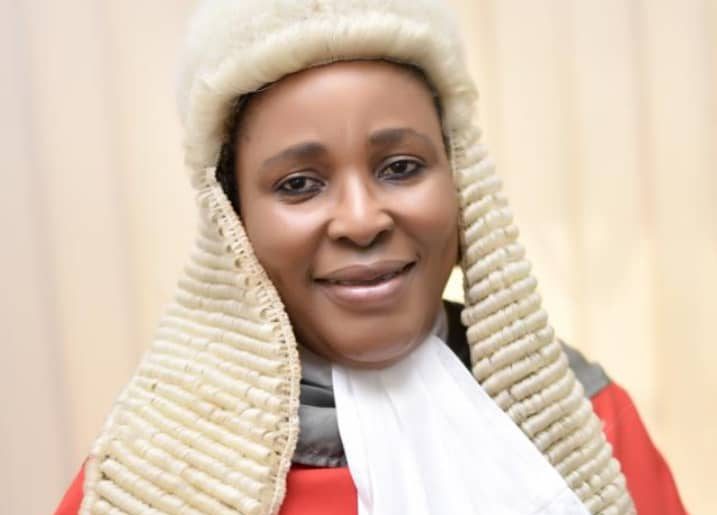
The Chief Judge of Ogun State, Justice Mosunmola Dipeolu, has disclosed that the judiciary can play a critical role in sports development by providing a legal framework that ensures accountability, protects the rights of stakeholders, and resolves disputes that internal sporting bodies cannot finalise.
Justice Dipeolu stated this at the M.K.O. Abiola Sports Arena, Kuto, Abeokuta, at a novelty football match between Ogun State Judiciary Workers and members of the Nigerian Bar Association (NBA) as part of activities marking the 50th anniversary of the Ogun State Judiciary.
The chief judge noted that whilst sports often operate under self-regulatory “private” systems, judicial intervention is essential when these systems fail to uphold universal principles of natural justice and fair play.
According to her, the judiciary roles can be categorised into four, which include: Oversight of Sports Governing Bodies (SGBs), Protection of Athletes’ Rights, Resolution of Complex Disputes, and Promotion of an Enabling Legal Environment.
She emphasised that the judiciary acts as a check on the powers of sports organisations to prevent arbitrary decision-making and corruption, including through accountability, judicial review and governance reform.
“Courts ensure that Sports Governing Bodies (SGBs) act within their own regulatory frameworks (intra vires) and do not abuse their monopolistic power over athletes’ livelihoods.
“In landmark cases, the judiciary has directly intervened to suggest structural changes to governance models, including age limits for officials and clear divisions between administrative and commercial operations. There is an increasing push in 2026 for SGB decisions to be subject to judicial review, particularly when they exercise public-like functions or receive substantial government funding,” Justice Dipeolu said.
She further disclosed that judicial systems provide a “last hope” for athletes whose rights may be infringed upon by powerful federations.
Other News
“Courts safeguard fundamental rights, including dignity, physical health, and protection against discrimination. Through doctrines like “restraint of trade”, the judiciary has historically struck down unduly restrictive transfer systems that prevented athletes from seeking new employment.
“The judiciary ensures athletes have a right to a fair hearing and that disciplinary actions, such as doping bans, follow the rules of natural justice,” she added.
The CJ posited that while most sports disputes are settled through private arbitration (like the Court of Arbitration for Sport), the judiciary remains the final arbiter for complex legal issues.
“Courts interpret and enforce multi-faceted agreements, including player contracts, broadcasting rights, and sponsorship deals. The judiciary protects the commercial value of sports by adjudicating cases involving image rights, trademarks, and “passing off” (misleading consumers about endorsements).
“Judicial rulings have been used to legally distinguish between ‘games of skill’ (like poker) and gambling, allowing such sports to be played freely without unnecessary restrictions,” Ogun CJ stressed.
Highlighting the contribution of the judiciary in sports development in Ogun State, Justice Dipeolu said the judiciary has annually organised the Chief Judge’s cup, a football match between the lawyers and judiciary workers, a table tennis competition, darts and Ayo Olopon.
She said his predecessor, Hon. Justice Olopade, established a sports arena at Isabo High Court to encourage judiciary staff to engage in healthy living through sports participation.
Meanwhile, in the final football match, Ogun State Judiciary Workers beat the Nigerian Bar Association (NBA) with a courtesy goal from Fidelis Patrick.